Showing posts with label 2015 Releases. Show all posts

December 30, 2015

Anthony Anglorus' The Prince of Prigs - Guest Post

perf5.250x8.000.indd

Anyone who believes that they are too knowledgeable to learn more and improve is both a fool and a failure-in-waiting. There is always something you can improve. In my case, whilst I was ploughing through and writing, I was also posting regularly on critique sites and listening to what others had to say.

Yes, there were a few times that I rejected suggestions - but usually, that would be because I had also received suggestions from others which I preferred. However, using a critique site to improve your work is the first tip I would offer. Your family and friends are simply not able to view your work objectively. Nor can you.

Another important point arose fairly early on; how many words should I write? All the advice seemed to point to 70,000 words, and I stuck to this target. Subsequently, I have learned that once a book passes 80,000 words, this creates a manufacturing problem which escalates the cost. As all publishers are looking solely at the question of whether they can make money from your book, something which makes it more expensive to produce is obviously highly disadvantageous.

My next valuable tip came during the submissions process. One agent rejected my work with a comment, which was “I don’t like books in first person; they limit the breadth of the storyline too much.” It hurt, but she was right; writing in first person forces you to keep the focus totally on one character and what he knows and learns. You can’t build any sort of conspiracy, can’t explain the motivation of others. Third person gives you the flexibility to build a complex tale.

Whilst writing “The Prince of Prigs”, I hit a problem; I have no experience or knowledge of battle, and did not feel competent to write about it. Yet my story had brought me to the cusp of my hero joining an army in Ireland - a country I have never really visited. For seven long months, the story sat growing electronic dust until one day, I met author Ben Kane during his epic walk along Hadrian’s wall with a couple of other authors. “Well,” he said in that appealing Irish brogue of his, “I was a vet before turning to writing, and I’ve never been to war. It never stopped me writing about it, you should just go with it. I got away with it, why shouldn’t you?”

I did go with it, but I put it off until later, deciding first to insert more about what was happening in England at the time. Then I thought it would be good to insert another highwayman, one of his contemporaries. Finally, I wove in a friendship with a leading member of the parliamentarians. Now I was ready to write about war - but wait, I’d almost used up my allocation of words! But then I spotted that if I got him to do that, then he would hate him and seek revenge. Then he could take his revenge that way but him could do that if that man spotted he. So I was able to follow my instincts and avoid writing about war.

Finally, some advice directly from me myself personally. After a lot of rejections, it became clear that the selected opening events were not sufficiently tickling anyone’s fancy. So I made the radical decision to ignore all advice and swap two events. I was opposed on this, but stuck to my guns. Once it was cleaned up, I submitted it to two small publishers. Both liked the opening. Both asked for the full document. One offered me a contract, which I liked and so had to tell the other publisher that the book was no longer available.

I know that this last advice completely contradicts everything else. But in essence, what it says is that in the final resort, your heart knows best.

The Prince of Prigs by Anthony Anglorus

Publication Date: July 6, 2015 
Bygone Era Books 
Formats: eBook and Paperback 
Genre: Historical Fiction 

Add to GR Button
The union of England and Scotland under one crown is not even a half century old, and the Parliamentarians already threaten the very fabric of the nation. These are the adventures of highwayman Capt. James Hind who, in Robin Hood fashion, steals from the Roundheads to help fund the royalist cause. When Cromwell comes to power, James, the Prince of Prigs, must be careful whom among his treacherous “friends” he trusts.

AMAZON US | AMAZON UK | BARNES and NOBLE | CHAPTERS | KOBO

Praise

"Any who view historical fiction as dry or plodding should pick up The Prince of Prigs: it wraps courtroom drama, social issues, flamboyant personalities and British politics under one cover and represents a rollicking good read even for audiences who normally eschew the genre. As for those who know how compelling it can be - The Prince of Prigs is ample evidence of the powers of historical fiction." - D. Donovan, Midwest Book Review
03_Anthony Anglorus 1

About the Author

After a lifetime of balancing books, Anthony turned his hand to writing them in 2009. His first book, The Other Robin Hood, is available as an ebook. An Englishman still living in England, he married a Russian doctor in 1999 and will be moving to rural France after reaching retirement age — but the writing will continue. He is already working on the sequel to The Prince of Prigs, tentatively titled Dark Days, Dark Deeds.

WEBSITE | TWITTER | GOODREADS

01B_The Prince of Prigs_Blog Tour #2 Banner_FINAL

December 09, 2015

Spotlight on Anna Belfrage's In the Shadow of the Storm


In the Shadow of the Storm (The King’s Greatest Enemy, Book One)by Anna Belfrage
Publication Date: November 1, 2015
Silverwood Books
Genre: Historical Fiction


Adam de Guirande owes his lord, Sir Roger Mortimer, much more than loyalty. He owes Sir Roger for his life and all his worldly good, he owes him for his beautiful wife – even if Kit is not quite the woman Sir Roger thinks she is. So when Sir Roger rises in rebellion against the king, Adam has no choice but to ride with him – no matter what the ultimate cost may be.

England in 1321 is a confusing place. Edward II has been forced by his barons to exile his favourite, Hugh Despenser. The barons, led by the powerful Thomas of Lancaster, Roger Mortimer and Humphrey de Bohun, have reasons to believe they have finally tamed the king. But Edward is not about to take things lying down, and fate is a fickle mistress, favouring first one, then the other.

Adam fears his lord has over-reached, but at present Adam has other matters to concern him, first and foremost his new wife, Katherine de Monmouth. His bride comes surrounded by rumours concerning her and the baron, and he hates it when his brother snickers and whispers of used goods.

Kit de Courcy has the misfortune of being a perfect double of Katherine de Monmouth – which is why she finds herself coerced into wedding a man under a false name. What will Adam do when he finds out he has been duped?

Domestic matters become irrelevant when the king sets out to punish his rebellious barons. The Welsh Marches explode into war, and soon Sir Roger and his men are fighting for their very lives. When hope splutters and dies, when death seems inevitable, it falls to Kit to save her man – if she can.

In the Shadow of the Storm is the first in Anna Belfrage’s new series, The King’s Greatest Enemy, the story of a man torn apart by his loyalties to his baron, his king, and his wife.


About the Author
Had Anna been allowed to choose, she’d have become a professional time-traveller. As such a profession does as yet not exists, she settled for second best and became a financial professional with two absorbing interests, namely history and writing. These days, Anna combines an exciting day-job with a large family and her writing endeavours.

When Anna fell in love with her future husband, she got Scotland as an extra, not because her husband is Scottish or has a predilection for kilts, but because his family fled Scotland due to religious persecution in the 17th century – and were related to the Stuarts. For a history buff like Anna, these little details made Future Husband all the more desirable, and sparked a permanent interest in the Scottish Covenanters, which is how Matthew Graham, protagonist of the acclaimed The Graham Saga, began to take shape.
Set in 17th century Scotland and Virginia/Maryland, the series tells the story of Matthew and Alex, two people who should never have met – not when she was born three hundred years after him. With this heady blend of romance, adventure, high drama and historical accuracy, Anna hopes to entertain and captivate, and is more than thrilled when readers tell her just how much they love her books and her characters.

Presently, Anna is hard at work with her next project, a series set in the 1320s featuring Adam de Guirande, his wife Kit, and their adventures and misfortunes in connection with Roger Mortimer’s rise to power. The King’s Greatest Enemy is a series where passion and drama play out against a complex political situation, where today’s traitor may be tomorrow’s hero, and the Wheel of Life never stops rolling.
The first installment in the Adam and Kit story, In the Shadow of the Storm, will be published in the autumn of 2015.

Other than on her website, www.annabelfrage.com, Anna can mostly be found on her blog, http://annabelfrage.wordpress.com – unless, of course, she is submerged in writing her next novel.


Tour Schedule: http://hfvirtualbooktours.com/intheshadowofthestormblogtour/
Hashtags: #IntheShadowoftheStormBlogTour #HistoricalFiction #HistFic
Twitter Tags: @hfvbt

December 08, 2015

Maureen Willett's Near the Wild - Excerpt


Somewhere in the haze of trying to reach the elusive man with black hair and blue-green eyes, I heard a distant sound. At first, it seemed to be just a part of my nonsensical dreams, but the sound got louder until it crept into my consciousness. I sat up and blinked the sleep from my eyes, wondering what was happening. Everyone was racing toward the stairs like stampeding cattle. I shook my head to get the fog out, and threw off the covers. I had to be there to catch the first glimpse with everyone else. I grabbed a blanket and wrapped it around my cotton nightgown, throwing modesty and propriety aside.

I ran to the upper deck in anticipation and searched for a spot to look over the rail. There were too many people and no room. I looked around for a MacKeighry, but they had all been swallowed by the frenetic crowd at the rails. I spotted an empty barrel by one of the mastheads, so I climbed on top of it to peer over heads, not caring that my blanket had fallen somewhere on deck. No one cared. I was not the only half-clad person caught up in the excitement.

What was before me was greatly unexpected. The land stretched out farther than the eye could see, but it held an odd, brownish hue. I sighed in disappointment. There were no emerald fields, as I had been accustomed to at home. I had never seen such dull landscape. Even the ancient town where we embarked on the ship in France had been prettier than this. Everyone onboard shouted and applauded, happy to be in this vast, new country, but I didn’t join in the revelry. This new land, no matter how promising, meant the end of my relationship with Finn, and, therefore, the end of all happiness.

As we made our way into the New Orleans harbor, there were tall weeds along the marshy land, and a boy ran along on shore, waving to our ship. I’d never seen a person with such exotic skin. It was the color of milk chocolate, and his eyes were big, brown saucers. His white smile showed missing teeth. Behind him was a dilapidated house that was probably once magnificent but now was overgrown with weeds and thick vines. Half of it had been burned. Faint whispers of a way of life before the Civil War came through with the breeze, but they were nothing more than old, unspoken secrets of days gone. The thick air felt almost menacing. There was something else in the air, too. This place was filled with mystery, and I was intrigued, in spite of longing for Ireland and Finn.

As the Belle Asisse got closer to the harbor, the water became murky brown from the runoff of the bustling harbor. And the buildings got bigger, although they appeared to be thrown together with a piece of plywood and some bricks. Everywhere people, mostly men, ran around, carrying various goods to load ships. The site swirled before my eyes. I started to fall off the barrel. Then everything went black.

###

All I could see through the fog in my head was a pair of seawater-colored eyes. They seemed to be watching over me. I wanted to reach up to the face that held those eyes, but I didn’t have the strength. It would be such comfort to feel his cheek upon mine. Noises all around scratched at my brain. Every time the blackness threatened to engulf me, he’d shake me until my head cleared somewhat. It was infuriating! All I wanted was the deep, endless sleep, but he wouldn’t let it happen.

“Please, leave me alone,” I cried, but my voice didn’t come out correctly, and no one heard me.

###

There was light overhead, a blinding, scorching light. My head felt heavy and achy.

I didn’t know how long I had been delirious, although later I’d hear that it had been a few days. Just when I felt too weak, and the darkness came close to overtaking me, I awoke. The buzzing of a fly near my ear helped me focus on something tangible while I looked around at my new surroundings. I swatted the fly away, then sat up and blinked.

The bright sunlight shined through white sheets draped over a few carefully placed logs of wood. They were actually big twigs, I realized as I looked around the makeshift tent. I was on a cot, dressed in my linen nightgown with only a sheet to cover me. Sweat dripped down the back of my neck. I tried to swallow but had no luck with a throat so dry. I carefully put my feet on the ground.

“Maeve, darling,” Ma said as she came into the tent. She grabbed me just as I was about to fall on my face. “You’re awake! Oh, thank the Lord!” She hugged me for a moment and then helped me back to the cot.

“What happened?” I managed to ask between cracked lips.

She put her hand to my forehead and smiled. “We’re not really sure. You suddenly fell ill, but you didn’t have a fever, so I had hope. You were in a deep sleep and didn’t want to come out of it. Perhaps a touch of influenza.” Her beautiful face turned to a worried frown. “But it doesn’t matter now. You’re awake.”

It hadn’t been the flu, but I didn’t want to tell Ma that. My body, and my spirit, had rebelled at this new life, this new set of rules restricting me from seeing Finn. Quite simply, my body had gone through withdrawal. Finn had once warned me that humans could inhale radiant dust by being around someone like him regularly, and that could lead to hallucinations and, even, madness. He’d also warned that I’d have to go through an illness to get over my physical addiction if we were ever parted. But I’d never believed him. Until now.

I wondered if waking up meant I wouldn’t miss him so much.

I looked around the small tent, seeing our things and travel cases piled high between blankets on the ground. I was on the only cot. “Are we in Kansas?”

“No, my dear. We’re still at the harbor, waiting to board a river boat to St. Louis.”

“We’re in America?”

“Yes,” Ma said with a smile. “We’ve had our papers signed and are official residents.”

“Where is he? I thought I saw him.”

Ma frowned again but then tried to cover it with a smile. “Your father isn’t here. He’s meeting us in St. Louis, where we’ll take the train to Kansas.”

I furrowed my brows. Finn had been at my side, pushing me to wake up and rejoin the world. “No, I wasn’t talking about Da. Where is Finn? I know he’s here.”

The smile faded from my mother’s face, and she put down my hand she had been holding. Her eyebrows went up in a determined arch. “He’d better not be, young lady! I will hear no more of your leprechaun. I’ve told you, he is not allowed to come with us to Kansas, and I will no longer indulge your relationship with him.”

“But. . .”

“No, Maeve. Do not speak to me of him again. Ever!” Ma stood and put both hands on her hips. “Enough. I’ve had enough of it!”

I took a deep breath and looked away, knowing her will was probably as strong as Finn’s. They both seemed to want the same thing, the end of our relationship, which meant the end of my world. There was no hope of an interesting life in this new land, not without him. Little did I know how wrong that assumption was. But at that moment, I felt retched.

###

Later that evening, after having a few hours to drink some broth, regain some of my strength, and get dressed, I ventured outside the tent. The air was cooler than it had been that afternoon but still thick with moisture. A constant hum of crickets and other creatures could be heard over the bustling community of immigrants. I didn’t want to think about what was creating such a noise in the swampland beyond the campfires, so instead I focused on the activity in front of me. Laughter, music, children shrieking with delight, and loud voices with all sorts of accents drifted toward me.

I strolled around the campsite, taking in the sights, wondering where all the MacKeighrys had gone. I almost stumbled over a woman so black she blended into the night sky. She sat on a rock, holding what looked to be homemade dolls.

“Excuse me, ma’am,” I said as I corrected my direction.

A deep chuckle came from her withered mouth. “Ooowee! No one has eva’ called me ‘ma’am’ before, Sugar Plum. At least no one of yo’ color.” She smiled up at me, showing off the whitest,

straightest teeth I had ever seen. Pieces of gray hair peeked out of the bandana wound around her head. “Do you want one of my dolls?”

She held it out to me to the point I had to look at it or be rude.

“No, thank you,” I said as I backed away, suddenly sensing something dark in the crudely constructed cloth and yarn doll.

“I can put a spell on the man o’ yo’ dreams with it. He’ll never cheat or leave you.”

“Yes, but can you make a magical being stay by my side forever?”

She put her head back and heartily laughed. “Oh no, child. Nothin’ can control something magical.”

I sighed as I walked away, hearing her laughter at my back. At least the people of this new land didn’t deny the existence of magic, I thought with a small measure of hope.

I started back toward the tent but then heard familiar voices raised in anger, so I turned toward that instead.

“No, it is absolutely out of the question,” I heard Ma say.

“I’m eighteen. I can do what I want. I’m not a child!” Gavin said much too quickly.

“Then stop acting like one,” Michael said, as he pointed his finger in Gavin’s face. Not something I would ever dare to do.

I could feel the anger in the air around them. They all turned as I arrived at where they stood, slightly away from the main campfire.

“Go away, Maeve. This isn’t your concern,” Michael said through clenched teeth.

“Get that finger out of my face, or I’ll break it,” Gavin said. His cold stare was convincing enough to make Michael put his hand down.

I searched Ma’s eyes for a reason for this rift, but she looked away as tears fell down her cheeks. “Gavin has decided to leave us.”

“What?” The astonishment came through in my voice. I noticed Michael’s hands open and close in a fist. I looked at Gavin, wondering what had happened. He had always been the rebel, but it had never gone this far before.

“Seems our brother here thinks life as a gambler in New Orleans will get him what he wants,” Michael said.

“It’s better than being a farmer. Besides, it’s my gambling wins that got everyone a passage on that river boat. You’d all be stuck in in this stinky campsite if it weren’t for me,” Gavin said, slapping his hands to his chest. “Once again, we have to pick up slack for Da’s shortcomings and

find money somehow. I’m tired of it! I’ve done my part for you all. Now, I’m gonna make it the way I want.”

“That’s not true! Da sent the money to get us to Kansas,” I exclaimed. Why would Gavin say such a thing? Da would never leave his family stranded in a strange country. But then the three of them turned and stared at me as if I were a child.

“As I said, Maeve, this is none of your concern,” Michael said with a nod toward our tent, dismissing me.

“No,” Ma said. “This is her concern as one of the older children. It’s time she knew the truth.”

I looked at my mother with confusion.

“Your father had only enough money for our steerage across the ocean.”

“But. . .” I couldn’t think of what to say. “You brought us all this way without knowing what would happen? How were you planning to get us all to Kansas?”

Ma bit her lip, and Michael’s head sunk a little bit.

“I knew I’d figure something out by the time we landed,” she said.

“Yeah, but you didn’t have to; I came to the rescue,” Gavin chimed in a factual manner. “Why do you think I played cards on the ship so much? And now, I’m buying my freedom with your passage up river. I’ll telegraph Da that you’re on your way, so he can meet you. Then I’m off the hook.” His words weren’t said in anger or desperation, which made them seem final.

Ma began to shake, and Michael just stood there nodding his head and looking into the distance.

“Gavin? What are you doing?” I asked, stepping closer to him. I seemed to be the only one able to form words at the moment. I couldn’t imagine life without him. We were only thirteen months apart and had spent our entire lives as co-conspirators.

“What I want to do, for the first time in my life. This land is full of promises. Anything is possible.” Gavin’s voice held persuasive excitement. “And I want more than being a farmer for the rest of my life. You could come with me, if you want to?”

“Come with you? Where?”

A flash of sadness crossed Gavin’s handsome face, but then it was gone. “I’ll see you at the boat landing in the morning,” he said to Ma. “Get to the pier for the River Queen by dawn. I’ve heard they’ve overbooked the boat, so anyone showing up late might not make it on. Get there early, and I’ll make sure you get private quarters. The captain owes me some money, so he promised me that.” He walked away and headed out of the campsite.

My mouth fell open. I couldn’t imagine the MacKeighry family without Gavin’s wit and quick thinking. While Michael was the older, more serious brother, Gavin was the one who managed to get

the impossible done, no matter how much scheming and manipulating he had to do. Da was a dreamer, so Michael and Gavin had been the caretakers of our large, and somewhat unusual, family. I looked at Michael and wondered how he’d ever manage without his second in command, and how I’d manage without my closest brother – the one who never judged me.

“We won’t speak of this again, especially around the boys,” Ma said. “If anyone asks, Gavin is staying behind to make sure our papers are in order and will be joining us later.”


Near the Wild by Maureen WillettPublication Date: June 15, 2015
eBook; 229 Pages
ASIN: B010JLKZZY
Genre: Historical Fiction


COWBOYS AND LEPRECHAUNS. Both occupy Maeve MacKeighry’s world in 1870, and she must decide which will win her heart. Leprechauns are feared, even in Ireland, but that doesn’t prevent Maeve from striking up a friendship with one who lives near her village. But once Maeve becomes a young woman, the local villagers start to gossip, especially since the MacKeighrys are known to practice magic in their home. It’s just for entertainment, but the town folk don’t see it that way. Rather than be outcasts, the MacKeighrys set off to America to homestead in Kansas, vowing to leave their magical ways and friends behind. Little do they know that Maeve’s friend follows and protects them on their journey.

The MacKeighrys encounter many adventures along the way to Kansas, only to find a simple sod house on their new farm at the end of the journey. The untamed land offers a fresh start for the family, as well as two very interesting men who both compete for Maeve’s attention. Pretty young women in a wild western town are a rarity. But can she forget her magical friend, and turn her attention to two of the most interesting men she has ever met? Perhaps cowboys and outlaws have a certain charm that a leprechaun doesn’t, after all.
Most of the novel takes place in Kansas in 1870 and is based on my family’s history. The idea of the MacKeighry’s sod house came from the home of my great grandfather. I was lucky enough to visit it as a teenager before the house was destroyed. One of the characters, Nikki Fuerst, is based on an ancestor, a prince from Austria who was disinherited for marrying a commoner and sent off to America. Stories I’ve been told my entire life about my family’s history and traditions, such as levitating tables, are included in Near The Wild.


About the Author
Maureen Willett is a writer of fiction that pushes the boundaries of established genres. Her stories mostly come from her own family legends that have been passed down through generations, but then she tops them off with a twist of faery dust and angel wings. But at the core of each story are great characters in very human conflicts that anyone will find compelling. Each novel is crafted as an experience that will take readers beyond their day-to-day lives, incorporating themes of time travel, reincarnation, and magic. She is a former journalist, public relations professional, and media marketing specialist. Maureen lives in Hawaii with her family and walks the white-sand beaches of Oahu each day to get her inspiration for writing.


Tour Schedule: http://hfvirtualbooktours.com/nearthewildblogtour/
Hashtags: #NeartheWildBlogTour #HistoricalFiction
Twitter Tags: @hfvbt @maureenwillett

December 04, 2015

Stephanie Thornton's The Conqueror's Wife - Guest Post and {Giveaway}


Love in Ancient Greece

Let’s get one thing straight: The Greeks were the original, free-loving hippies of the ancient world.

Compare the likes of Sappho, Socrates, and Alexander the Great, to say, the Puritans who founded North America, and you couldn’t have two more disparate notions about who people can, and should, love.

To the ancient Greeks, with few exceptions, it didn’t matter much who you loved. And the Greeks had a few customs that by today’s Puritanical standards might seem akin to a late-night Borgia-era orgiastic revel.

First, there was pederasty, in which an older man taught a younger man about, well, the finer points of love. (You can use your imaginations.) It’s commonly assumed that Socrates himself took part in this custom, and the upper classes looked upon this as an accepted aspect of a young man’s education. (Something I doubt would fly in the modern school system.) After all, most aristocrats didn’t marry until they were older and women were secluded in the gynaceum, so pederasty was the Greek solution to a whole lot of lonely young men. And in Sparta, soldiers were also encouraged and perhaps expected to have relationships with each other in order to strengthen morale.

This, of course, leads to the finer points of homosexuality in ancient Greece. While younger men were expected to leave behind their first pederastic relationship in favor of marriage and procreation, it’s likely that some, including Alexander the Great with his childhood friend Hephaestion, forged lifelong bonds with their partner. Aristotle even went so far as to claim that those two men shared “one soul between two bodies.”

And lest we think that women were left out of the picture, we have the case of Sappho of Lesbos (from whence the terms sapphic and lesbian derive) who has left reams of stunning poetry about all manner of love, including that between women.

I have not had one word from her 
Frankly I wish I were dead
When she left, she wept 
a great deal; she said to me, "This parting must be
endured, Sappho. I go unwillingly." 
I said, "Go, and be happy
but remember (you know
well) whom you leave shackled by love.”

And after all, it was Plato who claimed, “The madness of love is the greatest of heaven’s blessings.” So, love who you love, and know that no matter what, you’re in for a wild ride.

About the book
The Conqueror's Wife: A Novel of Alexander the Great by Stephanie Thornton
Publication Date: December 1, 2015
NAL/Penguin Group LLC.
eBook, Paperback; 496 Pages
Genre: Historical Fiction


A novel from the acclaimed author of The Tiger Queens, for readers looking for “strong and determined female protagonists” (Historical Novel Society) and “a sprawling historical saga” (Renee Rosen)...

We are the women who loved Alexander the Great. We were lovers and murderers, innocents and soldiers.

And without us, Alexander would have been only a man.

Instead he was a god.

330s, B.C.E., Greece: Alexander, a handsome young warrior of Macedon, begins his quest to conquer the ancient world. But he cannot ascend to power, and keep it, without the women who help to shape his destiny.

His spirited younger half-sister, Thessalonike, yearns to join her brother and see the world. Instead, it is Alexander's boyhood companion who rides with him into war while Thessalonike remains behind. Far away, crafty princess Drypetis will not stand idly by as Alexander topples her father from Persia's throne. And after Alexander conquers her tiny kingdom, Roxana, the beautiful and cunning daughter of a minor noble, wins Alexander’s heart…and will commit any crime to secure her place at his side.

Within a few short years, Alexander controls an empire more vast than the civilized world has ever known. But his victories are tarnished by losses on the battlefield and treachery among his inner circle. And long after Alexander is gone, the women who are his champions, wives, and enemies will fight to claim his legacy…


About the Author

Stephanie Thornton is a writer and history teacher who has been obsessed with infamous women from ancient history since she was twelve. She lives with her husband and daughter in Alaska, where she is at work on her next novel.

"The Secret History: A Novel of Empress Theodora," "Daughter of the Gods: A Novel of Ancient Egypt," and "The Tiger Queens: The Women of Genghis Khan" are available now. "The Conqueror's Wife: A Novel of Alexander the Great" will hit the shelves in December 2015.

For more information please visit Stephanie Thornton’s website. You can also find her on Facebook, Twitter, and Goodreads.


Tour Schedule: http://hfvirtualbooktours.com/theconquerorswifeblogtour/
Hashtags: #TheConquerorsWifeBlogTour #AlexandertheGreat #Historical #HistFic #HFVBTBlogTour
Twitter Tags: @hfvbt @penguinusa @StephMThornton

Giveaway
The giveaway is for one paperback copy, and open to US residents only. Comment below for your chance to win. Please leave your email address so I can contact the winner. (Any entry without email address will be disqualified). Giveaway ends Friday, December 18 at 11:59pm CST.

Rules
– Must be 18 or older to enter.
– Giveaway is open to US only.
– Only one entry per household.
– All giveaway entrants agree to be honest and not cheat the systems; any suspect of fraud is decided upon byblog/site owner and the sponsor, and entrants may be disqualified at our discretion.

November 26, 2015

Spotlight on Castles, Customs, and Kings: True Tales by English Historical Fiction Authors (Volume 2)


Publication Date: September 30, 2015
Madison Street Publishing
Hardcover, Paperback, eBook; 598 Pages
Genre: History


An anthology of essays from the second year of the English Historical Fiction Authors blog, this book transports the reader across the centuries from prehistoric to twentieth century Britain. Nearly fifty different authors share the stories, incidents, and insights discovered while doing research for their own historical novels.

From medieval law and literature to Tudor queens and courtiers, from Stuart royals and rebels to Regency soldiers and social calls, experience the panorama of Britain’s yesteryear. Explore the history behind the fiction, and discover the true tales surrounding Britain’s castles, customs, and kings.

Visit the English Historical Fiction Authors blog & Facebook page.

“Thoroughly enjoyable and diverse…leisure reading for any history fan.” – Elizabeth Chadwick, on Castles, Customs, and Kings (Volume 1)

EXCERPT

Seven Surprising Facts about Anne of Cleves 
By Nancy Bilyeau 

Everyone thinks they know the story of the fourth wife of Henry VIII. She was the German princess whom he married for diplomatic reasons, but when the forty-eight-year-old widower first set eyes on his twenty-four-year-old bride-to-be, he was repulsed.

With great reluctance, Henry went through with the wedding—saying darkly, “I am not well handled”—but after six months he’d managed to get an annulment, and the unconsummated marriage was no more. Although Anne had behaved impeccably as Queen, she accepted her new status as “sister” and lived a quiet, comfortable existence in England until 1557, when she became the last of the wives of King Henry VIII to die.

And so Anne of Cleves has either been treated as a punchline in the serio-comic saga of Henry VIII’s wives or someone who was smart enough to agree to a divorce, trading in an obese tyrant for a rich settlement. But the life of Anne of Cleves is more complex than the stereotypes would have you believe.

1. Anne’s father was a Renaissance thinker. The assumption is that Anne grew up in a backward German duchy, too awkward and ignorant to impress a monarch who’d once moved a kingdom for the sophisticated charms of Anne Boleyn. But her father, Duke John, was a patron of Erasmus, the Dutch Renaissance scholar.

The Cleves court was liberal and fair with low taxes for its citizens. And the Duke made great efforts to steer a calm course through the religious uproar engulfing Germany in the 1520s and 1530s, earning the name John the Peaceful. He died in 1538, so his must have been the greatest influence on Anne, rather than her more bellicose brother, William. In Germany, highborn ladies were not expected to sing or play musical instruments, but Anne would have been exposed to the moderate, thoughtful political ideals espoused by John the Peaceful.

2. Anne was born a Catholic and died a Catholic. Her mother, Princess Maria of Julich-Berg, had traditional religious values and brought up her daughters as Catholics, no matter what Martin Luther said. Their brother, Duke William, was an avowed Protestant, and the family seems to have moved in that direction when he succeeded to his father’s title.

Anne was accommodating when it came to religion. She did not hesitate to follow the lead of her husband Henry VIII, who was head of the Church of England. But in 1553, when her step-daughter Mary took the throne, she asked that Anne become a Catholic. Anne agreed. When she was dying, she requested that she have “the suffrages of the holy church according to the Catholic faith.”

3. Anne’s brother had a marriage that wasn’t consummated either. Duke William was not as interested in peace as his father. What he wanted more than anything else was to add Guelders to Cleves—but the Holy Roman Emperor Charles V had other ideas. William took the bold step of a French marriage so that France would support him should it come to war.

His bride was Jeanne D’Albret, the daughter of Marguerite of Angouleme and niece of King Francis. The “high-spirited” Jeanne was only twelve and did not want to marry William. She was whipped by her family and physically carried to the altar by the Constable of France. But when Charles V took hold of Guelders, France did nothing to help William of Cleves. The four-year-old marriage was annulled—it had never been consummated. Jeanne’s next husband was Antoine de Bourbon, whom she loved. Their son would one day become Henry IV, King of France.

4. Hans Holbein painted Anne accurately. The question of Anne’s appearance continues to baffle modern minds. In portraits she looks attractive, certainly prettier than Jane Seymour. A French ambassador who saw her in Cleves said she was “of middling beauty and of very assured and resolute countenance.”

It is still unclear how hard Thomas Cromwell pushed for this marriage, but certainly he was not stupid enough to trick his volatile King into wedding someone hideous. The famous Hans Holbein was told to paint truthful portraits of Anne and her sister Amelia. After looking at them, Henry VIII chose Anne. Later, the King blamed people for overpraising her beauty, but he did not blame or punish Holbein. The portrait captures her true appearance. While we don’t find her repulsive, Henry did.

5. Henry VIII never called her a “Flanders Mare.” The English King’s attitude toward his fourth wife was very unusual for a sixteenth century monarch. Royal marriages sealed diplomatic alliances, and queens were expected to be pious and gracious, not sexy.

Henry wanted more than anything to send Anne home and not marry her, which would have devastated the young woman. He was only prevented from such cruelty by the (temporary) need for this foreign alliance. But while he fumed to his councilors and friends, he did not publicly ridicule her appearance. The report that Henry VIII cried loudly that she was a “Flanders mare” is not based on contemporary documents.

6. Anne of Cleves wanted to remarry Henry VIII. After the king’s fifth wife, young Catherine Howard, was divorced and then executed for adultery, Anne wanted to be Queen again. Her brother, William of Cleves, asked his ambassador to pursue her reinstatement. But Henry said no. When he took a sixth wife, the widow Catherine Parr, Anne felt humiliated and received medical treatment for melancholy. Her name came up as a possible wife for various men, including Thomas Seymour, but nothing came of it. She never remarried or left England.

7. Anne of Cleves is the only one of Henry’s wives to be buried in Westminster Abbey. Henry himself is buried at Windsor with favorite wife Jane Seymour, but Anne is interred in the same structure as Edward the Confessor and most of the Plantagenet, Tudor, and Stuart rulers. In her will she remembered all of her servants and bequeathed her best jewels to the stepdaughters she loved, Mary and Elizabeth.


Tour Schedule: http://hfvirtualbooktours.com/castlescustomsandkingsblogtour/
Hashtags: #CastlesCustomsandKingsBlogTour #History
Twitter Tags: @hfvbt @MStPublishing

November 25, 2015

Jeanbill's Almost A Millenium - Guest Post


My inspiration for writing Almost a Millennium, why I chose the medieval period, and what is unique about this book:

I wanted to write about two men, one who believed in God and one who did not. Both would be the protagonists and both would have some kind of contact with one another. The good guy would try to convince the bad guy that he was wrong about God. Who is the good guy and who is the bad guy? I am not an atheist; therefore, I made the good guy to be the one who believes in God. 

In the early years of planning this book, the year 2000 would soon be here—the word “millennium” began appearing in the media. That word seemed to have penetrated my subconscious brain, provoking the thought in my consciousness that I could separate the two protagonists by geography and time, another land and one thousand years. How in the world are they going to make contact? I did not have the slightest idea. At that time, I was reading about cryptography and while we were in Switzerland and England, we decided to visit several monasteries. Then, it all seemed to come together. I would have the atheist be an American physician, whom I knew something about, and make the believer in God a monk in England. When? One thousand years ago in England, William, the Duke of Normandy, decided to invade and conquer England. From that data, I began to write all my thoughts about it, realizing I had to hit the books about that period in English history. But, how in the world are the two protagonists going to have contact?

Our monk has to have a personal experience with God, and be aware of the Pope’s decision to foster a crusade to Jerusalem that resulted in the killing of many Jewish people of which the monk highly criticized. Since he was a scribe he decided to write about the two events, but an acting abbot squelched his writing. Later on, he learned about cryptography, giving him the idea to cipher his writing. This is the only way that the monk could have contact with the atheist. Of course, the atheist’s contact was his cryptanalysis of the writings of the monk.

My book is unique in that it is divided into three parts. Every third chapter deals with the American physician, the same for the monk, and the other third deals with the history of the medieval period relating to the two fictional stories. I never thought I would have a chapter referring to Mohammed, but I had to in order to tell about the Arabs contribution to history and education in the 800s. Another unique aspect of the book is the introduction of new characters at the beginning of the chapters, dealing with the fictional stories. 

One of the most difficult challenges was to have the monk be at certain locations at a certain time where and when historical events happened: the killing of monks at Glastonbury Abbey, the Jewish killings in Mainz, and the early period of Llanthony Abbey in Wales.  


About the book
Almost a Millennium, by Jeanbill, was published in January 2015 and is available for sale on Amazon. Genres: Historical / Fiction / Medieval / Religion / Theism

Almost a Millennium is an eclectic novel about the unlikely connection between an English monk and an American physician that lived nearly 1,000 years apart, one of today and one in the medieval period. It begins at their birth, traveling through time to their adulthood.

Using cryptography, Paul, a monk at Llanthony Abbey in Wales, writes a four-page document about his life and a harsh critique of the crusades. He places his writings in safekeeping in the hope that it will survive the crusades and eventually land in the hands of someone who can decipher his secrets. When Fred unexpectedly comes across Paul’s book and ciphers Paul’s cryptic message, he has no idea that four pages of millennial history will challenge him to rethink Christianity.

“Almost a Millennium by Jeanbill is a deeply compelling historical fiction novel. Although a work of fiction, the story is a depiction of England's history and the power dynamics at the time. It is a richly detailed story and many times I found myself forgetting that I was reading a work of fiction as the historical events described felt very authentic. The setting of the story and the character development were simply amazing as we dived into Paul and Fred's compelling background stories. Paul and Fred were two people so different and yet so alike. The pace of the story was set from the beginning and this held true to the very last page. Jeanbill used a unique and very captivating style in developing this story.” - Reviewed by Faridah Nassozi for Readers’ Favorite


About the Author
Jeanbill has been associated with medicine for more than 50 years, practicing as a general practitioner. He studied many hours in the medieval library of University of Notre Dame, researched and wrote over a period of 20 years in his spare time.

His debut novel Almost a Millennium was published in January 2015 and is available for sale on Amazon. Genres: Historical / Fiction / Medieval / Religion / Theism

Jeanbill resides in Lynden, WA. Married to his other half for 57 years until cancer separated them, he has four children and 14 grandchildren.

Readers can connect with him on Goodreads, Facebook, and Twitter.

November 20, 2015

Spotlight on Sophie Perinot's Medicis Daughter


MEDICIS DAUGHTER: A NOVEL OF MARGUERITE DE VALOIS
by SOPHIE PERINOT

Publication Date: December 1, 2015
Thomas Dunne Books
Hardcover & eBook; 384 Pages
Genre: Historical Fiction


Winter, 1564. Beautiful young Princess Margot is summoned to the court of France, where nothing is what it seems and a wrong word can lead to ruin. Known across Europe as Madame la Serpente, Margot’s intimidating mother, Queen Catherine de Médicis, is a powerful force in a country devastated by religious war. Among the crafty nobility of the royal court, Margot learns the intriguing and unspoken rules she must live by to please her poisonous family.

Eager to be an obedient daughter, Margot accepts her role as a marriage pawn, even as she is charmed by the powerful, charismatic Duc de Guise. Though Margot’s heart belongs to Guise, her hand will be offered to Henri of Navarre, a Huguenot leader and a notorious heretic looking to seal a tenuous truce. But the promised peace is a mirage: her mother’s schemes are endless, and her brothers plot vengeance in the streets of Paris. When Margot’s wedding devolves into the bloodshed of the St. Bartholomew’s Day Massacre, she will be forced to choose between her family and her soul.

Médicis Daughter is historical fiction at its finest, weaving a unique coming-of-age story and a forbidden love with one of the most dramatic and violent events in French history.


Advance Praise
“This is Renaissance France meets Game of Thrones: dark, sumptuous historical fiction that coils religious strife, court intrigue, passionate love, family hatred, and betrayed innocence like a nest of poisonous snakes. Beautiful Princess Margot acts as our guide to the heart of her violent family, as she blossoms from naive court pawn to woman of conscience and renown. A highly recommended coming-of-age tale where the princess learns to slay her own dragons!” –Kate Quinn, Bestselling author of LADY OF THE ETERNAL CITY

“The riveting story of a 16th century French princess caught in the throes of royal intrigue and religious war. From the arms of the charismatic Duke of Guise to the blood-soaked streets of Paris, Princess Marguerite runs a dangerous gauntlet, taking the reader with her. An absolutely gripping read!” –Michelle Moran, bestselling author of THE REBEL QUEEN

“Rising above the chorus of historical drama is Perinot’s epic tale of the fascinating, lascivious, ruthless House of Valois, as told through the eyes of the complicated and intelligent Princess Marguerite. Burdened by her unscrupulous family and desperate for meaningful relationships, Margot is forced to navigate her own path in sixteenth century France. Amid wars of nation and heart, Médicis Daughter brilliantly demonstrates how one unique woman beats staggering odds to find the strength and power that is her birthright.” –Erika Robuck, bestselling author of HEMINGWAY’S GIRL


About the Author
SOPHIE PERINOT is the author of The Sister Queens and one of six contributing authors of A Day of Fire: A Novel of Pompeii. A former attorney, Perinot is now a full-time writer. She lives in Great Falls, Virginia with her three children, three cats, one dog and one husband.

An active member of the Historical Novel Society, Sophie has attended all of the group’s North American Conferences and served as a panelist multiple times. Find her among the literary twitterati as @Lit_gal or on Facebook.


Tour Schedule: http://hfvirtualbooktours.com/medicisdaughterblogtour/
Hashtags: #MedicisDaughterBlogTour #SophiePerinot #HistoricalFiction #France
Twitter Tags: @hfvbt @lit_gal @StMartinsPress

November 14, 2015

Spotlight on A Year of Ravens: A Novel of Boudica’s Rebellion {Giveaway}


Publication Date: November 13, 2015
Knight Media LLCe
Book & Paperback; 440 Pages
Genre: Historical Fiction


Britannia: land of mist and magic clinging to the western edge of the Roman Empire. A red-haired queen named Boudica led her people in a desperate rebellion against the might of Rome, an epic struggle destined to consume heroes and cowards, young and old, Roman and Celt . . . and these are their stories.
A calculating queen sees the sparks of revolt in a king’s death.

A neglected slave girl seizes her own courage as Boudica calls for war.

An idealistic tribune finds manhood in a brutal baptism of blood and slaughter.

A conflicted warrior hovers between loyalty to tribe and loyalty to Rome.

A death-haunted Druid challenges the gods themselves to ensure victory for his people.

An old champion struggles for everlasting glory in the final battle against the legions.

A fiery princess fights to salvage the pieces of her mother’s dream as the ravens circle.

A novel in seven parts, overlapping stories of warriors and peacemakers, queens and slaves, Romans and Celts who cross paths during Boudica’s epic rebellion. But who will survive to see the dawn of a new Britannia, and who will fall to feed the ravens?


A Year of Ravens Authors
Ruth Downie, Stephanie Dray, E. Knight, Kate Quinn, Vicky Alvear Shecter, S.J.A. Turney, & Russell Whitfield


Tour Schedule: http://hfvirtualbooktours.com/ayearofravensblogtour/
Hashtags: #AYearofRavensBlogTour #HistoricalFiction #Boudica
Twitter Tags: @hfvbt

GIVEAWAY
During the Blog Tour we will be giving away a Celtic inspired set of silver tone metal and red Swarovski crystal beads, including a necklace, bracelet, and earrings inspired by the setting of A Year of Ravens! Please enter the giveaway via the GLEAM form below.

Rules

– Giveaway ends at 11:59pm EST on December 18th. You must be 18 or older to enter.
– Giveaway is open to residents in the US and UK.
– Only one entry per household.
– All giveaway entrants agree to be honest and not cheat the systems; any suspect of fraud is decided upon by blog/site owner and the sponsor, and entrants may be disqualified at our discretion
– Winner has 48 hours to claim prize or new winner is chosen.

November 10, 2015

D.J. Niko's The Oracle - Guest Post


Why the Ancient World Matters
People often ask me why I choose to write about the characters, places, and legends of antiquity. Wouldn’t it be easier to research more recent history, which is far better documented, they ask. Well, of course it would be … but it wouldn’t be as much fun, at least not for me. (Doing things the hard way is one of my more charming qualities.)

As a native Greek, the ancient world is in my DNA. Perhaps it’s my own ancestral memory talking, but I believe the ancients have much to teach us. My characters, an archaeologist and an anthropologist, believe this too—and get into a lot of hot water trying to preserve the relics and wisdom left behind by ancient civilizations.

Life is a continuum: the past informs our present and defines our future. Listening to the whispers of antiquity may be a bit geeky (guilty!), but it is absolutely relevant, even in these fast-paced times. Here are a few lessons from the past that still matter:

1. People of antiquity cared about and learned from nature. The ancient philosopher Heraclitus and other pre-Socratic Greeks saw nature as the perfect order and believed wise men exist within that order rather than try to alter it. They also patterned their teachings after what they observed in nature. Heraclitus once said, “Reality is a moving river into which humans cannot step twice.” Pretty astute, no?

2. Virtue and integrity were the foundation of ancient civilizations. When those degraded, empires fell and societies were plunged into chaos. Since I have King Solomon on the brain, I will share his example. Solomon took the throne as a humble “babe” who knew nothing about ruling or shaping a people’s destiny. When asked by God what he wanted more than anything, he said “wisdom.” But as his power base and influence grew, he became complacent and even greedy. He did not exercise restraint; he was above it all. The result was his moral decline, the discontent of the populace, and, ultimately, the ruin of his united kingdom.

3. The ancients found joy in moderation. Overstimulation does not necessarily translate into happiness. Ancient Asians took the “middle way” or “golden mean”—the balance between two extremes (excess and paucity). Confucius came up with the Doctrine of the Mean, which is too complicated to go into here; let’s just say it upheld the notion of equilibrium through honesty, fairness, restraint, and propriety. Ancient Greeks were all about moderation, too. The inscription on the gate to the temple of Apollo in Delphi says it all: “Nothing in excess.”

I could go on and on about this subject. For more, check out my hashtag #ancientwisdom on Twitter, or my blog, Ancient World Legends and Myths, on www.djnikobooks.com or www.goodreads.com/djniko. Thanks for letting me stop by!!

The Oracle (The Sarah Weston Chronicles, Book Three)
by D.J Niko

Publication Date: November 10, 2015
Medallion Press
Paperback; 456p
ISBN-13: 978-1605426273
Genre: Historical/Archaeological Adventure


In Delphi, the mountain city deemed by the Greek gods to be the center of the Earth, a cult of neo-pagans re-create with painstaking authenticity ancient rituals to glorify the god Apollo and deliver oracles to seekers from around the world.
When antiquities are stolen from a museum in nearby Thebes, British archaeologist Sarah Weston and her American partner, Daniel Madigan, are drawn into a plot that goes beyond harmless role-playing: someone’s using the Delphian oracle as a smoke screen for an information exchange, with devastating consequences for the Western world.
Pitted against each other by the cult’s mastermind, Sarah and Daniel race against time and their own personal demons to uncover clues left behind by the ancients. Their mission: to find the original navel stone marked with a lost Pythagorean formula detailing the natural events that led to the collapse of the Minoan Empire.
But will they find it in time to stop the ultimate terrorist act?


About the Author
Daphne Nikolopoulos in an award-winning journalist, author, editor, and lecturer. Under the pen name D.J. Niko, she has written two novels in an archaeological thriller series titled The Sarah Weston Chronicles. Her debut novel, The Tenth Saint (Medallion Press, 2012), won the Gold Medal (popular fiction) in the prestigious, juried Florida Book Awards. Her follow-up release, The Riddle of Solomon, continues the story of British archaeologist Sarah Weston as she seeks the relics—and mystical secrets—left behind by the biblical King Solomon in remote Israel.

Daphne is currently at work on The Oracle, book 3 in The Sarah Weston Chronicles, which releases in 2015. Also slated for publication in 2015 is her first historical novel, The Judgment, which is set in Israel and Egypt in the tenth century BCE.

In addition to writing fiction, Daphne is editor in chief of Palm Beach Illustrated magazine and editorial director of Palm Beach Media Group. Prior to that, she was a travel journalist who logged hundreds of thousands of miles traveling across the globe, with emphasis on little-known and off-the-beaten-path locales—many of which have inspired her novels.
Daphne frequently lectures about her research on the ancient world. She is an instructor at Florida Atlantic University’s Lifelong Learning Society, teaching on the subject of archaeology. She has also spoken to audiences at the Jewish Community Center of the Palm Beaches’ Academy for Continuous Education, and several libraries and private groups throughout Florida.
Born and raised in Athens, Greece, Daphne now resides in West Palm Beach with her husband and twin son and daughter. You can find her on the Web at djnikobooks.com and connect with her on Facebook (AuthorDJNiko) and on Twitter: @djnikobooks.


Tour Schedule: http://hfvirtualbooktours.com/theoracleblogtour/
Hashtags: #TheOracleBlogTour #HistoricalFiction #Archeological #Adventure
Twitter Tags: @hfvbt @djnikobooks @Medallion Press

October 05, 2015

Patrick Gabridge's Steering to Freedom - Guest Post


As a writer and reader, I’m fascinated by the way that stories seem to find us. I’ve written a bunch of historical plays (on subjects ranging from the creation of the English Bible to the Boston Massacre), and now an historical novel in Steering to Freedom, and the topics for these works always sneak their way into my life when I least expect it.

I came across the story of Robert Smalls back in 2001. My daughter was attending a Catholic school in inner city Boston. Their library wasn’t even in the school building, but in a convent next door, in a room that looked no one had been in it for 20 years. My wife (who is a librarian) and I decided to take on the challenge of rehabbing the library as a family project. So while my one-year-old son munched on Cheerios and toddled around, I sorted dusty old books. And stumbled across a slight volume about black heroes. In it was a profile of Robert Smalls.

The story was incredible—a young black sailor, the pilot of a riverboat, comes up with a daring plan to bring him and the entire crew, and all their families, to freedom. And the plan isn’t the stereotypical vision of slaves running through swamps, but instead they’re going to take The Planter, a 150-foot long paddlewheeler, out through Charleston Harbor, past six heavily armed forts, and deliver her (and themselves) to the Union blockade.

How had I never heard of this guy before? Why had I never read a book or seen a movie about him?

The escape from Charleston was just the beginning of Smalls’ adventures. During the Civil War he actively engaged in trying to win freedom not just for him and his family, but for all black folk. He became a celebrity in the North, which was engaged with the question of whether blacks were fully human. And could and should they be allowed to fight in the war? Robert provided them with their answer.

After the war, this man born a slave went on to become a United States Congressman. I read everything I could find about Robert.

As a white parent of young black children, this story felt incredibly important. I’d struggled for years to find books about powerful black heroes that I could share with my kids, or that I’d want them to read when they got older. There was a huge lack of positive black characters not just in books, but also in film and on television. (And on stage, where I spent most of my writing life.)

This project became one that I’d pursue, on and off, for the next fourteen years. There were only a few biographies about Smalls, most of them pretty old, and I had to decide between writing the story as fiction or non-fiction. As a dramatist, I knew that one of my strengths was in writing dialogue and structuring stories to engage an audience, so it made the most sense to write the story as a novel, where I’d have the freedom to give voices to this man and his friends who were engaged in an epic American struggle for freedom. I chose to focus on the war years, because they come with a built-in sense of adventure and excitement.

And now Steering to Freedom is finally published and finding an audience. I’m thrilled that so many more people will now have a chance to get to know this hero of the American Civil War, and I hope that they will enjoy the intense passage through those years, with the triumphs and desperate sorrows that come with it.

ABOUT THE BOOK

Steering to Freedom
by Patrick Gabridge

Publication Date: May 11, 2015
Publisher: Penmore Press
Formats: eBook, Paperback
Pages: 352
Genre: Historical Fiction


A troubled country, a courageous heart, and the struggle for freedom. In May 1862, Robert Smalls, a slave and ship’s pilot in Charleston, South Carolina, crafts a daring plan to steal the steamship Planter and deliver it, along with, the crew and their families to the Union blockade. After risking his life to escape slavery, Robert faces an even more difficult challenge: convincing Abraham Lincoln to enlist black troops. Based on a true story, Steering to Freedom tells the powerful and inspirational story of a young man who becomes the first black captain of a US military ship, while struggling to navigate a path to freedom for himself, his family, and his people.

PRAISE
“Steering to Freedom sweeps back the curtain on an extraordinary story of heroism and sacrifice. Escape is only the beginning. Robert Smalls doesn’t just save himself: he brings out his family, his friends and his mates — and then he goes back, fighting not just the navies of the South but the deep-rooted prejudices and ignorance of the North. With a sure touch for historical detail and a mastery of the human condition, Patrick Gabridge brilliantly evokes the spirit of a time, a country in struggle, and the heart of a man at its center”.— Mike Cooper, author of Clawback and Full Ratchet.

“In Patrick Gabridge’s meticulously crafted new novel Steering to Freedom, we’re treated to the gripping true tale of Captain Robert Smalls, a South Carolina slave who, after seizing his freedom, risked his life in a series of nautical adventures to win freedom for all of his enchained brothers and sisters. This powerful and inspirational story is skillfully and dramatically rendered by a writer who not only knows how to steer a good story, but who does so without losing sight of the heart-breaking humanity of his players.” — Mark Dunn, author of Ella Minnow Pea and Under the Harrow.

“Engaging characters and captivating storytelling make this inspiring historical adventure a must-read. For readers who enjoy seeing history through the lens of imagination. ” — Sophie Littlefield, author A Bad Day for Sorry and A Garden for Stones.

“Steering to Freedom brings to life the extraordinary true story of Captain Robert Smalls, an important figure in American Civil War history who should not be overlooked. This is an inspiring story of a hero: a slave who steals a steamship and navigates treacherous waters to lead his crew and their families to freedom. Yet in the hands of novelist Patrick Gabridge, Robert Smalls is entirely human, real, and relatable. Gabridge shows us a man whose highest ambitions are fueled by the important personal relationships in his life, especially his wife and children. With its cinematic scope, action-packed adventure, historical detail and emotional heft, Steering to Freedom will appeal to many audiences. ” — Diana Renn author of Blue Voyage, and Latitude Zero.

“Patrick Gabridge’s Steering to Freedom is a swashbuckling, page-turning epic set against the immaculately detailed backdrop of Charleston Harbor during the Civil War. Robert Smalls, a brilliant, resourceful slave, makes a daring and audacious bid for freedom. The story, based on actual events, reads with the freshness of fiction and the authenticity of truth. The characters from every walk of life earn your respect and then your admiration and finally your love. Patrick Gabridge has given us a whole new lens on the Civil War by bringing a previously unknown chapter to vivid, deeply moving, unforgettable life. — Laura Harrington, award winning author of Alice Bliss and selected for Barnes & Noble’s “Discover Great New Writers” program, and as an Entertainment Weekly “Best Reads of the Summer,” and a Publishers Weekly First Fiction title.

In Steering to Freedom, Patrick Gabridge has intertwined history with a meticulous and moving narrative of Robert Smalls—Confederate steamboat pilot, family man, and slave—whose daring vision to claim freedom against all odds will grab the reader from the first page. —Jessica Maria Tuccelli, author of Glow.


ABOUT THE AUTHOR
Patrick Gabridge is an award-winning playwright, novelist, and screenwriter. His full-length plays include Flight, Distant Neighbors, Lab Rats, Constant State of Panic, and Blinders, and have been staged by theaters across the country. His passion for history extends to the stage, and his historical plays include work about the creation of the English Bible (Fire on Earth), the astronomers Kepler and Tycho (Reading the Mind of God), a volcanic eruption on Martinique (The Prisoner of St. Pierre), 19th century Boston publisher Daniel Sharp Ford (None But the Best), and the 1770 Boston Massacre (Blood on the Snow).

Patrick has been a Playwriting Fellow with the Huntington Theatre Company and with New Repertory. Recent commissions include plays and musicals for In Good Company, The Bostonian Society, Central Square Theatre, and Tumblehome Learning. His short plays are published by Playscripts, Brooklyn Publishers, Heuer, Smith & Kraus, and YouthPlays, and have received more than a thousand productions from theatres and schools around the world.

His other novels include Tornado Siren and Moving [a life in boxes]. His work for radio has been broadcast by NPR, Shoestring Radio Theatre, Playing on Air, and Icebox Radio Theatre.

Patrick has a habit of starting things: he helped start Boston’s Rhombus writers’ group, the Chameleon Stage theatre company in Denver, the Bare Bones Theatre company in New York, the publication Market InSight… for Playwrights, and the on-line Playwrights’ Submission Binge. He’s also a member of the Dramatists Guild, StageSource, and a board member of the Theatre Community Benevolent Fund. He is currently the co-founder and coordinator of the New England New Play Alliance and is actively involved with the Boston theater scene.

Patrick has received numerous awards for work, including fellowships from the Colorado Council on the Arts and the Massachusetts Cultural Commission. For more information visit Patrick Gabridge’s website, or on his blog, The Writing Life x3.

You can also find him on Facebook, Twitter, Goodreads, and Pinterest.


Tour Schedule: http://hfvirtualbooktours.com/steeringtofreedomblogtour/
Hashtags: #SteeringtoFreedomBlogTour #HistoricalFiction
Twitter Tags: @hfvbt @patrickgabridge

September 28, 2015

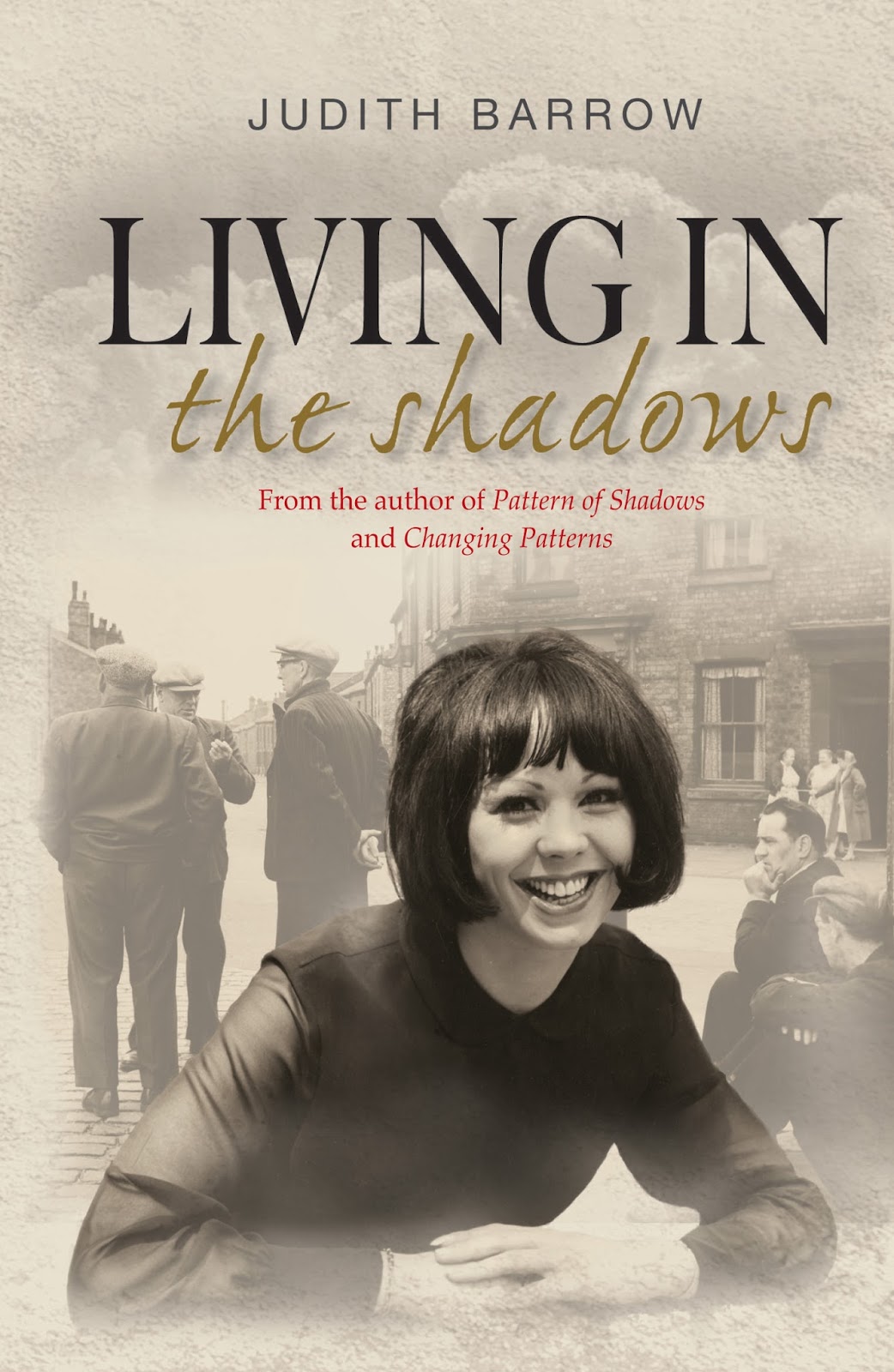
Judith Barrow's Living in the Shadows - Guest Post


Marital violence is as old as marriage itself. Wife beating was both widely tolerated and sanctioned by law in 18th-century England; husbands were legally entitled to strike their wives in order to ‘correct’ their conduct. So-called moderation was the watchword with one judge, Francis Buller, specifying that a husband could beat his wife with a stick so long as it was no thicker than his thumb.

Later, English law allowed women to separate from their husbands because of abuse, but did not let them get
divorced. Husbands were still allowed to abuse their spouses as long as it could not be seen. This meant abuse on the back, where clothing would cover wounds caused by abuse.

It was not until the late 1800s that men were not permitted to chastise or abuse their spouses under any circumstances, according to law.

According to law– yet it still continued

In the early to mid-twentieth century domestic violence was still viewed by some men as their right and by some women with resigned acceptance.

The following short passage is from the first book of my trilogy, Pattern of Shadows. This conversation between the protagonist, Mary Howarth, and her mother, Winifred, portrays, I think, the attitude that prevailed in the 1940s.

‘Just another domestic.’

QUOTE:
 “’What is it, Mam, aren’t you feeling well?’
Her mother didn’t answer. She pushed the small pile of dust and bits of vegetable peelings onto a piece of newspaper on the floor and crushed it up, tossing it into a bucket under the sink. Straightening she moaned softly under her breath, holding her side.
Mary put an arm around her. Seeing the ugly swelling on her mother's cheek and the red-rimmed eyes she scowled. ‘Aw, Mam, not again, what was it this time?’
Winifred pushed her daughter away and turned on the tap to rinse her hands. ‘There was only me here and he had one of his moods on him. It’s Patrick really, as if we haven’t enough to worry about. He’ll have the police at the door, with all this trouble: picketing, striking, fighting the government. Your father says there’s a right way and a wrong way to tackle the bosses and your brother’s going about it all wrong.’ She wiped her hands on a piece of towelling. ‘He’s furious because it’s unofficial. You know what he’s like.’
Like a bully and a bastard. Mary gritted her teeth, holding back the words. ‘Why were you holding your side?’
‘I banged into the table when …’
‘When he hit you.’
Winifred glowered defensively at Mary. ‘It’s not his fault.’
‘Of course it’s his bloody fault. You can’t keep putting up with it, Mam.’
‘What can I do? Tell the police? ’ Winifred gave a short ironic laugh. 'Sergeant Sykes is as bad. His wife often sports a black eye.'” END QUOTE

“It’s a private, family matter.”

From the middle of the 1900s there came more reforms for women. But it was still the era of the captive wife, when most women were housebound housewives kept by a man, completely under the thumb of their husbands, whatever their class.  And no one ever talked about domestic violence; it was as if it never happened.

After World War II, studies linked growing up in an abusive home with the likelihood of criminal behaviour later in life. Most domestic batterers showed a consistent pattern of violence and manipulation for the purpose of power and control. Domestic violence was acknowledged, but treated as a private family matter.

In the sequel to Pattern of Shadows, Changing Patterns, Mary Howarth tries to persuade her friend and sister-in-law, Jean, to leave her husband– Mary’s own brother, Patrick.

QUOTE:
“’Has Patrick actually hit you?’
Jean slid off the windowsill and stood motionless. ‘Mary ...’
‘Has he?’ She knew the answer, saw the humiliation in her friend’s eyes. She moved swiftly from the sofa and grabbed Jean’s arms. ‘You have to tell me.’
Jean lowered her head
‘Oh Jean.’ The distress merged with the rush of rage. ‘I am so sorry.’ She gathered her in her arms, frightened by the ferocity of her friend’s sobs. ‘It’ll be all right. We’ll sort something out. You can stay here as long as you want.’ Mary ignored the sudden vision of her own husband’s reaction; he’d understand when she explained. ‘As long as you want,’ she said again.
‘I can’t. I can’t leave Mother.’
‘Then move back in with her.’ The solution came with a sense of relief that shamed Mary. ‘You have to; you can’t stay with him.’
Jean shrugged her away and turned back to the window. ‘It’s not that easy. Jacqueline...’
‘Your daughter is frightened.’
‘I’ll make it right with her. Tell her she was mistaken in what she saw.’
Mary gave a cry of derision. ‘Mistaken?’
‘It was only the once. He was upset about Tom.’
‘He thumped you because of our brother? I don’t believe that. He hated Tom.’
‘He didn’t. You should have seen him, Mary, he was heartbroken.’
‘Huh!’
‘He was.’ Jean spun around to face her. ‘I should have left him alone.’ Her face crumpled. ‘I should have left him alone but I didn’t. I wanted to comfort him. I tried to hold him.’
‘So he hit you.’ Mary dragged out the words.
‘It was the first time.’
‘I don’t believe you.’
Jean flushed. ‘Then don’t, but it’s true.’ She looked out of the corner of her eye at Mary. ‘Please don’t tell your sister.’
‘Ellen already knows, I’ve told her.’ Mary folded her arms, angry her friend wanted to cover up what Patrick had done.
‘How could you? You know what she’s like about me.’
‘She has a right to know, he’s her brother too.’
‘She’ll tell all and sundry,’ Jean muttered, leaning on the windowsill.
‘She won’t ... and if she did, it’s not you who should be ashamed. It’s him.’
‘I pushed him into it. I should have left him alone,’ Jean said again.
‘Leave him, Jean. You have to.’
‘No!’
‘Then you’re a bloody fool.’” END QUOTE

Shelters for battered women were opened in the 1960s and men were actually prosecuted for their actions. The attitude to domestic violence over the last hundred years has, thankfully, changed drastically from resigned acceptance to complete condemnation of any bullying. In the following short passage from the last book of the trilogy, Living in the Shadows, Linda Booth, who has taken over from Mary as the protagonist, is talking to Karen Worth.

QUOTE:
“They spoke at the same time.
‘Does Richard know what he’s like…’ she couldn’t say his name. ‘Your father?’
‘I’m sorry about my stepfather.’ Karen flushed. ‘You know, the way he—’
  ‘Your stepfather? He’s not your dad then?’ Linda was shocked by the gladness she felt; she knew how much her cousin liked this girl. Her not being George Worth’s real daughter made it easier somehow.
‘No, I’m glad to say.’ This time she looked straight at Linda. ‘He’s horrible. A bully.’
‘Well I won’t disagree there.’ Linda was surprised how calm she felt. ‘How long have your mum and him been married?’
‘Dad died when I was ten.’ Karen said. ‘George worked for him. Then, before I knew it, he was always around the house. They married…’ she stopped to think, ‘about five years ago. I can’t believe how much Mum dotes on him.’
‘Or is afraid of him?’
‘Yes.’
‘Are you frightened of him?’ It was like prodding a tooth that ached.’ Linda couldn’t help it. She watched Karen closely.
‘Yes.’” END QUOTE

Spousal abuse is a perpetual issue that remains at the forefront of women's rights today.

Publicly, it is not acceptable.
Privately, it still goes on. 

ABOUT THE BOOK
Living in the Shadows
by Judith Barrow

Publication Date: July 16, 2015
Honno Press
eBook & Paperback; 320 Pages
Genre: Historical Fiction/Family Saga


It’s 1969 and Mary Schormann is living quietly in Wales with her ex-POW husband, Peter, and her teenage twins, Richard and Victoria. Her niece, Linda Booth, is a nurse – following in Mary’s footsteps – and works in the maternity ward of her local hospital in Lancashire.

At the end of a long night shift, a bullying new father visits the maternity ward and brings back Linda’s darkest nightmares, her terror of being locked in. Who is this man, and why does he scare her so?

There are secrets dating back to the war that still haunt the family, and finding out what lies at their root might be the only way Linda can escape their murderous consequences.

Sequel to the acclaimed Changing Patterns and Pattern of Shadows.


ABOUT THE AUTHOR
Judith Barrow has lived in Pembrokeshire for thirty years. She is the author of three novels, and has published poetry and short fiction, winning several poetry competitions, as well as writing three children’s books and a play performed at the Dylan Thomas Centre. Judith grew up in the Pennines, has degrees in literature and creative writing and makes regular appearances at literary festivals.


Tour Schedule: http://hfvirtualbooktours.com/livingintheshadowsblogtour/
Hashtags: @LivingintheShadowsBlogTour #HistoricalFiction
Twitter Tags: @hfvbt @barrow_judith @honno