February 25, 2013

Richard III: Portrait of a king, by Anne Easter Smith


Please welcome Anne Easter Smith as part of her virtual tour while promoting her newest novel, Royal Mistress

Publication Date: May 7, 2013 | Touchstone | 512p


From the author of A Rose for the Crown and Daughter of York comes another engrossing historical novel of the York family in the Wars of the Roses, telling the fascinating story of the rise and fall of the final and favorite mistress of Edward IV.


Jane Lambert, the quick-witted and alluring daughter of a silk merchant, is twenty-two and still unmarried. When Jane’s father finally finds her a match, she’s married off to the dull, older silk merchant William Shore—but her heart belongs to another. Marriage doesn’t stop Jane Shore from flirtation, however, and when the king’s chamberlain and friend, Will Hastings, comes to her husband’s shop, Will knows his King will find her irresistible.


Edward IV has everything: power, majestic bearing, superior military leadership, a sensual nature, and charisma. And with Jane as his mistress, he also finds true happiness. But when his hedonistic tendencies get in the way of being the strong leader England needs, his life, as well as that of Jane Shore and Will Hastings, hang in the balance. This dramatic tale has been an inspiration to poets and playwrights for 500 years, and told through the unique perspective of a woman plucked from obscurity and thrust into a life of notoriety, Royal Mistress is sure to enthrall today’s historical fiction lovers as well. 

  About the Author
Anne Easter Smith is an award-winning historical novelist whose research and writing concentrates on England in the 15th century. Meticulous historical research, rich period detail, and compelling female protagonists combine to provide the reader with a sweeping portrait of England in the time of the Wars of the Roses. Her critically acclaimed first book, A Rose for the Crown, debuted in 2006, and her third, The King’s Grace, was the recipient of a Romantic Times Review Best Biography award in 2009. A Queen by Right has been nominated by Romantic TImes Review for the Best Historical Fiction award, 2011.


Portrait of a king by Anne Easter Smith

Thanks for hosting me today!

So now we know! It was Richard III under the car park in Leicester, and the exciting announcement on February 4th made me cry. Now all of us who are Richard fans will have somewhere to go and pay our respects. It appears Leicester has won out in the re-interment battle between there and York Minster. A ceremony is being planned for early 2014, I understand.

Many of you may have seen pictures or videos already of the amazing and wonderful reconstruction of Richard’s face from his skull found in Leicester. I can’t tell you how powerful that was for me to see! You must agree with me, this is not the face of a murderous, evil tyrant. Sure, we have several portraits of him, but none of them is actually from his time. They are copies--estimated to have been done anytime during the 50 years following his death in 1485.

So if we have reproductions of actual paintings to look at, why was the facial reconstruction such a delightful surprise? Because we know the portraits were altered to fit the descriptions the Tudor historians had written about King Richard.
John Rous, who was writing during Richard’s time but quickly latched on to Henry VII’s coattails wrote that Richard had been in his mother’s womb for two years and emerged with a mouth full of teeth and a headful of long hair. Really! And they bought it? Well, if they bought that, then of course they would buy all the other nasty slanders slung at Richard. That he had a withered arm, that he murdered people and that he poisoned his wife in order to marry his niece. Jezum! What a load of codswallop (as we say in England).

There are several portraits of Richard that would have been done during his two-year reign when he was 30-32. If you go to this link you can hear an expert talk about how x-rays revealed the portrait in the Royal Collection was tampered with to create a haggard, older and bad-tempered face, added inches to the right shoulder, and turned the fingers into claws. Now the 16th century public had a portrait they could believe depicted the tyrant usurper Richard III!

However, if you look at the one belonging to the Societies of Antiquities in London, you will notice there is no discrepancy in the shoulder heights, his hands are elegant, and he looks more like a man of 30.

Of them all, I’ll take the reconstruction! Nicolas von Poppelau, a German visitor at Richard’s court in 1484, wrote in his journal that Richard was: “...three fingers taller than myself...also much more lean; he had delicate arms and legs, also a great heart...” No mention of a hunchback!

And Archibald Whitelaw, a Scottish Archdeacon, wrote: “Now I look for the first time upon your face, it is the contenance worthy of the highest power and kingliness, illuminated by moral and heroic virtue...never before has nature dared to encase in a smaller body such spirit and strength.”

The experts decided that even though Richard’s skeleton straightened measured 5 ft. 8 in., his scoliosis would have caused him to appear smaller. Scoliosis is quite common--in fact Usain Bolt has it--and Richard must have made up for his lack of inches with muscle and strength to have been able to wield those huge battle-axes and handle a destrier at the same time.


If a picture tells a thousand words--even if it’s computer-generated--then I’d say Richard was not evil-looking, but pretty handsome!

Check out the video of the facial reconstruction HERE.

Thank you to the author for this fabulous piece of history coming alive!
Twitter Hashtag: #RoyalMistressBlogTour
Please visit Anne Easter Smith's tour stops at Historical Fiction Virtual Book tours:


February 07, 2013

Shadow on the Crown by Patricia Bracewell

Happy Release Day!

Available for purchase today is the debut novel from Patricia Bracewell, set at the start of the High Middle Ages where no one was safe from Vikings or even their fellow nobles!
Find it at Amazon or Barnes & Noble
Read my review


Shadow on the Crown by Patricia Bracewell
(First in a trilogy)

Synopsis:
A rich tale of power and forbidden love revolving around a young medieval queen.
In 1002, fifteen­-year-old Emma of Normandy crosses the Narrow Sea to wed the much older King Athelred of England, whom she meets for the first time at the church door. Thrust into an unfamiliar and treacherous court, with a husband who mistrusts her, stepsons who resent her and a bewitching rival who covets her crown, Emma must defend herself against her enemies and secure her status as queen by bearing a son.

Determined to outmaneuver her adversaries, Emma forges alliances with influential men at court and wins the affection of the English people. But her growing love for a man who is not her husband and the imminent threat of a Viking invasion jeopardize both her crown and her life.

Based on real events recorded in the Anglo-Saxon Chronicle, Shadow on the Crown introduces readers to a fascinating, overlooked period of history and an unforgettable heroine whose quest to find her place in the world will resonate with modern readers.

(click for larger images:)


About the Author:
Patricia Bracewell is a native of California where she taught literature and composition before embarking upon her writing career. A lifelong fascination with British history and a chance, on-line reference to an unfamiliar English queen led to years of research, a summer history course at Downing College, Cambridge, and the penning of her debut novel SHADOW ON THE CROWN. Set in 11th century England, SHADOW is the first book of a trilogy about Emma of Normandy who was a queen in England and a power behind the throne for nearly four decades. Patricia is working on the two follow-up novels in the series, but takes time out for tennis, gardening and travel. She is the mother of two grown sons and lives with her husband in Northern California. Visit her website at http://www.patriciabracewell.com/ 

February 01, 2013

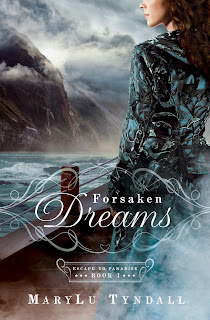
Coming soon... Forsaken Dreams by MaryLu Tyndall

First in a brand-new series from bestselling author MaryLu Tyndall, Forsaken Dreams launches readers on a romantic adventure as Colonel Blake Wallace leaves the war-torn South behind to build a utopian society in Brazil. But will unexpected dangers on the ship and the secret of one captivating lady keep him from beginning anew?
Forsaken Dreams, available March 1, 2013
Visit author MaryLu Tyndall's blog, Cross and Cutlass, to follow her tour for her new book Forsaken Dreams. This is her twelfth novel, and every Friday in February she will be hosting a giveaway for Forsaken Dreams, congrats to Amanda!!

They Left Everything Behind to Build a New Southern Utopia

Colonel Blake Wallace has seen enough death to last a lifetime. Weary and disillusioned, he slumps beneath the weight of defeat and loss. With his entire family murdered by the North and his name appearing on a list of officers wanted for war crimes, Blake organizes a shipload of southerners who, like him, long to escape the horrors of war and start a new life in a verdant land called Brazil.

Eliza Crawford can barely remember the days of her youth spent in opulence and comfort at her Georgian home. She can't help but wonder how different her life would be had she not met her late husband, Stanton Watts, a general in the Northern army. Now a war widow, Eliza is rejected by both North and South. Desperate to keep her marriage a secret and escape her past and pain, she longs to start over again in Brazil.

But once the voyage begins, troubles abound. Dangers at sea and enemies from within threaten to keep Blake and Eliza from the new life—and love—they long for.

Visit this post on MaryLu's blog to learn about her main protagonist, Eliza! We'll get a sneak peek at Captain Blake, too!

Visit MaryLu on Facebook, too!

January 22, 2013

Welcoming David Leroy, Author of The Siren of Paris


The Siren of Paris
by David Leroy


Synopsis of the Novel: Born in Paris and raised in the United States, 21-year-old Marc Tolbert enjoys the advantages of being born to a wealthy, well-connected family.. Reaching a turning point in his life, he decides to abandon his plans of going to medical school and study art in Paris. In 1939, he boards a ship and heads to France, blissfully unaware that Europe -- along with the rest of the world -- is on the brink of an especially devastating war.

When he arrives at l'École Nationale Supérieure des Beaux Arts, more ominous signs surface. There are windows covered with tape, sandbags shielding the fronts of important buildings, whispers of Parisian children leaving the city, and gas masks being distributed. Distracted by a blossoming love affair, Marc isn't too worried about his future, and he certainly doesn't expect a Nazi invasion of France.

Marc has a long journey ahead of him. He witnesses, first-hand, the fall of Paris and the departure of the French government. Employed by an ambassador, he visits heads of state, including the horribly obese gray-haired Mussolini and the charismatic Hitler. He witnesses the effects of the tightening vise of occupation, first-hand, as he tries to escape the country. He also participates in the French resistance, spends time in prison camps, and sees the liberation of the concentration camps. During his struggles, he is reunited with the woman he loves, Marie, who speaks passionately of working with the resistance. Is she working for freedom, or is she not to be trusted?


The Ghost Named Why

“Why did I have to go back?” Marc Tolbert, page 338.

Only half of the source of Marc Tolbert’s spiritual anguish is revealed in The Siren of Paris. Most readers would assume that his regret is limited to the betrayal he suffered from Marie, his fiancée. However, just as there is an entire backstory to his life, that provides his motivation to return to Paris, there is a story that follows Marc’s experiences during World War II. Since The Siren of Paris is allegorical, this story is left untold as I shift back to resolving Marc’s spiritual fate at the end of the book.

From the moment the French Resistance took form, the day approached when the fate of collaborators would be decided. During the war, estimates vary, between 9,673 to 6,675 French were executed for treason, by the resistance, for collaborating with the Nazis. It became a practice of the French resistance to hold de facto trials of those accused of collaboration. The underground papers published blacklists of traitors. Small coffins appeared, in the night, at the doors of the condemned.

After the war, the official trials began on March 15th, 1945 with Jean-Pierre Esteva, who received life imprisonment, and ended on July 1st, 1949, with the trial of Andre Parmentier, who received 5 years national degradation, later suspended. During that time, a second wave of terror raged across the 27 judicial districts of France called The Purge. Scholars are not in agreement on the number of people who were executed for treason. A low estimate is placed at 3,724 with 423 additional suspected murders motivated by war revenge. The high estimate is between 30,000 and 40,000. Men and women were caught up in the hysteria to “cleanse” the population of guilt associated with the war and the Holocaust.

My own impression, after sifting through the records, papers, and photographs, is that the number is far higher than the conservative version but not likely to be as high as 30,000. Any number is meaningless when it lacks a personal context.

Marc Tolbert chooses to remain in France to pursue his medical education after the war. As a French citizen, a survivor of the parlor torture parties at 180 Rue de la Pompe Ave and of the horrors of Buchenwald, he makes a choice that will place him in those very courtrooms. This is the second part of Marc’s shadow of regrets, which remains hidden behind his blind anguish.

This is my first novel, and I struggled emotionally with writing this story, as well as with how to bring it to life for the reader. I know that I am not prepared to attempt to bring to life the trials, lynching, and executions of thousands of traitors, many known personally to the characters appearing in the book. Perhaps with time, I will evolve into a better writer and then I will be able to reveal the second part of Marc’s story? This is a journey, which brings him to a courtroom where he will be forced by both the prosecution and the defense to testify against the woman he once loved enough to marry. Until then, the Red War of The Siren of Paris will stand alone as Marc’s emotional burden of survivor’s guilt. The Black War of The Purge that holds the second part of Marc’s anguish, full of the human rage for justice and revenge, will have to wait until I can find the ability to guide the reader through its darkness.


About the Author: A native of California, David received a BA in Philosophy and Religion at Point Loma Nazarene College in San Diego. After returning from a European arts study program, he became interested in the history behind the French Resistance during World War Two. Writing fiction has become his latest way to explore philosophical, moral and emotional issues of life. The Siren of Paris is his first novel. You can visit him at http://www.thesirenofparis.com/.

Additional Info:  You can purchase The Siren of Paris from Amazon -- http://www.amazon.com/The-Siren-Paris-David-LeRoy/dp/0983966710/ref=tmm_pap_title_0 -- for more information about this virtual book tour, please visit -- http://bookpromotionservices.com/2012/05/22/siren-of-paris-tour/

January 17, 2013

(Giveaway) Vedette: or Conversations with the Flamenco Shadows by Stephen Siciliano

Introducing Stephen Siciliano, author of Vedette: or Conversations with the Flamenco Shadows:
(Giveaway instructions at the end of the post!)

Born to a Gothic social order, branded a haunter of men's dreams, Vedette is traumatized when her small town in the magical wetlands of southern Spain's Guadalquivir River is overrun by hashish-smoking anarchists promising free love and a life without sadness to those who would follow them.
Entranced by their flamenco music, their philosophy of revenge, and the concrete ability to deliver political results, the young woman joins a movement destined to annihilation and becomes its sole survivor, burdened with the task of keeping its memory and project for a better world alive through conversations with their flamenco shadows.

Transcending political viewpoints, Mr. Siciliano opens a new chapter in the understanding of the Spanish Civil War, opting for a literary interpretation that looks beyond right and wrong to more universal lessons only the passage of decades and the healing effects of time can reveal.


Please welcome the author Stephen Siciliano with the following piece:

The Persistence of Memory
Today, Spain is a vanguard country in matters of Western culture.
Catalonia's famed chefs are trailblazers in the culinary arts. Iberian architects have shaped a next generation of infrastructure the world over. The national soccer team has reinvented the sport internationally with an artistic rethinking of tired and defensive stratagems.

But it was not always thus.


Beneath the ideological banners brandished during the Spanish Civil War was a cultural conflict between a kind of gothic Catholicism and a hyper-modernism represented by the likes of painter Salvador Dalí , filmmaker Luis Buñ uel, and poet Federico Garcia Lorca.


Augustí n de Foxha's novel "Madrid: From King's Court to Communist Cheka" details the Fascist experience under revolutionary reign in Spain's capital and describes the schism:


"Everything conspired against the old culture. Picasso broke the intangible lines of painting with an anarchy of volumes and colors. Negroes in smoking jackets crowded theater stages as intellectuals went for Josephine Baker's skirt of bananas and her war upon the sweetness of the Viennese waltz. All exotic art, be it Negro, Indian or Malaysian gained admittance with a promise to break the clean and Catholic lines of the old museum."


Clearly, beyond the battle lines, other "lines" were being contested in 1930s Spain.


As history would have it, de Foxha's side, the Fascist side, triumphed along with the "clean and Catholic lines of the old museum."


Picasso stayed away, Garcia Lorca was murdered, Buñ uel fled to avoid a similar fate and modern culture was swept under the rug for 37 years with Spain pinned beneath the thumb of dictator Francisco Franco.


When the Generalissimo finally died in 1975, Spain was a land locked in time, a fly in amber, and those who rushed to breathe the post-dictatorial atmosphere found a country of pious and agrarian ways peppered with subversive workers groups, a 19th Century backwater.


Many of the issues sorted through in the West during and following World War II, remained unresolved in Spain so that its intellectual landscape resembled that of its countryside, characterized by the burro, the woman veiled in black, the broken-backed farm laborer.
To visit Spain for many years after was to witness walls exploding with the blood paint of revolutionary communists, the foreboding red and black flag of the anarchists, the predatory eagle of the Fascist Falange.
The writing of "Vedette or Conversations with the Flamenco Shadows," a novel of the Spanish Civil War, benefited from this overlapping of the past upon the present.
Historical works are often beholden to book research coupled, perhaps, with a visit or stay in the location where the story unfolds.


The writer hopes to be moved by the atmosphere, to internalize the lighting and shadows,
the scent of the air, read the ancient visage of the populace for clues and thereby infuse an academic exercise with human breath.


The development of "Vedette" entailed an almost organic connection to the time and happenings it recalls. Current-day events and personal experiences in that whirlwind, post-dictatorial environment inform the work so much more than the books contained in its bibliography.


Add to this the fact "Vedette" unfolds in Seville, a city that revels in its past and repels the future, and what you have are events recounted as they went down in much later days, fitting naturally into a world sixty years removed, yet hardly disappeared.
The novel began to take shape when the world of old Andalusia was opened up to this author by a scion of the Counts of Peñ aflor. They were ancient landlords in the region and to experience southern Spain through their customs was necessarily an exercise in Old World culture.


The family matriarch, a lovely and beautiful woman formed in the chrysalis of Spanish aristocracy was always a personality that impressed.


Tall, lithe, blonde-haired and blue-eyed, soft-spoken, yet iron-willed, she became template for the novel's Countess of the Rivers, a major character representing all that was traditional in Spain.
The behavior of a barbarian bohemian from Southern California was often the subject of her gentle remonstrance and disapproval, if not bemusement. It depended.


For example, after having patiently engaged in a drunken phone conversation over ten thousand miles of telephone wire she politely commented, "Well, yes Stephen, that's fine, but it's three o'clock in the morning."


In "Vedette," the blasphemous anarchist Santi Ordoñ ez explains the Countess's summary detention with a long rant about the injustices visited by aristocrats on the laborers. Her tempered response is, "Well, yes Santi Santi Ordoñ ez , that's fine, but it's three o'clock in the morning."


It's an exchange that resolves a moment of high tension, of class-based confrontation, in a way that would be unique to Seville, an authentic expression of Andalusian temperament and irony.


Once, sitting around a fountain in Plaza Doñ a Elvira during siesta hour, a young anarchist questioned a man in uniform passing through the square. "You, in the uniform! What are you from?" The man in uniform announced that he was a sailor.


"Well then, I curse the Navy and say the Navy is ---." And so forth, joined by his fellows in verbally haranguing the sailor from the plaza. Moments later, the police stormed into the square, giving chase to the fleeing black clad rebels.


Escaping with a failed bullfighter named "Vinagre" (Vinegar), yielded a tour a Seville's lush park gardens as the impromptu guide pointed out all that was free in the regal city, all that was "his," yet everyone else's.


Reaching for an orange from a tree, he noted that they were bitter to some, but not to the blessed, before taking a satisfying bite.


It's hard to make such stuff up, it's the poetry of the people, and healthy amounts ended up in the novel, experienced not by the author, but by his anti-heroine, the flamenco singer and radical, Vedette.


At the time of its writing, Seville was cultivating a long-running crush on an aging bullfighter named Curro Romero who was known for being rarely, yet unforgettably brilliant, but more often terrible, even cowardly.


"Vedette" appropriates his legend for the character Espla de Paula, the protagonist's ill-fated lover. Press notices of Curro Romero's triumphs and tragedies are translated and lifted whole from the day's newspapers, dropped into the 1930s ferment, yet ringing with authentic Spanish bullfight prosody, conveying the popular passion for "los toros."


Political demonstrations, strikes, squatter actions, soccer matches, flamenco vigils were all woven into the fabric of a country passing through a unique stage of development, sorting out issues of the past in preparation for a giant leap forward, fueled by years of repressed sensuality, political thought, and cultural innovation.


Entire swathes of that fabric were sewn into "Vedette."


And clearly, there are advantages to writing recent history. The accent of the events over the years can still be strong, especially when some from the epoch are still alive giving voice to its politics, music, and attitudes.


By the end, the mission had shaped the book itself and "Vedette" became a novel that meditated much upon the purpose and point of memory.

In the annals of revolutionary Andalusia, the peasant commune at Lora del Rio stands as a moment fleeting triumph followed by benighted martyrdom. The rebels of the Andalusian village were eventually defeated by the superior Fascist force of a butcher by the name of General Queipo de Llano.


Along with many of their families and elected representatives of the duly elected Republican government, the insurrectionists were summarily executed and dumped into a mass grave.


Some sixty years later at party in Carmona, about 30 minutes away from Lora del Rio, I ran into a fellow who hailed from there. I was incandescent and proudly dove into my trove of knowledge about the saints of the commune.


He seemed nonplussed, but was polite enough, in the Sevillan fashion, to let me finish.
Than he said, "Your heroes killed my grandparents."


Though painfully obvious after the awkward exchange, it had never occurred to me the revolutionary workers would have had to wreak a little havoc in gaining control of Lora del Rio. Only the flavor of their martyrdom interested me for the story.


But this proximity to the pain and real facts of the Spanish Civil War led to a balanced and ironic view that rubbed partisans of both sides the wrong way after publication. Someone, it seems, must be wholly right.


From The Gypsy Chronicles by Alison Mackie
Researching novelists often learn a more complex story and that is theirs to relay. Experiences like these turned the intended novel from a kind of retro-workerist tract of that time, to something more nuanced and, hopefully, insightful.
In giving the novel a Hoffer Award, the committee noted, "Vedette is part Lolita and mostly survivor, and much to the author's credit her story is told in shaded points of view that only increase the mystery."


It's easy to think of the Spain from which "Vedette" drew so much vitality as mostly gone. It modernized, the anarchists and communists were slowly cooled out, the political class moderated itself, and corporate influence was imposed over large parcels of Spanish life.


It's a matter of how strong history really is, for the events a historical novelist focuses on are not static. They are the source of repercussions and these we live. Deciphering their roots is useful work.


Do progress, freeways, and universal pop culture finally and irrevocably erase the old ways of being and thinking, or does their "persistence in memory" remain a novelist's treasure to be discovered by taking the leap, living the life, and scraping away at the surface of modernity?
Each book and each writer may come up with a unique response to this question.


Stephen Siciliano's blog, highwayscribery: Politics, Poetry and Prose, can be found at http://highwayscribery.blogspot.com
  
Vedette is available on Amazon, click here to purchase.

If you would like to read Vedette, enter to win your own paperback copy of Vedette by commenting below. Please leave your email address so that I may contact you.