Showing posts with label 2013 Releases. Show all posts

June 08, 2015

Florence Ratwatte's The Doppelganger - Guest Post


When I first had this urge to write a novel, the only thing I was sure of was its location. While quite young and impressionable, I spent a long vacation on a mist-hung tea plantation, surrounded by mountain chains, nearly 2,000 m. above sea level, in Sri Lanka’s central highlands. It was an incredibly beautiful place of tropical sunshine and frosty nights and I knew I’d have to stretch all the creativity I had with the plot and characters, to match the setting. 

As I wanted to publish in Britain, I thought a novel with a tea plantation backdrop set in the British colonial period (mine is a late 1930s – mid 1940s time-warp ), would appeal in this nation of dedicated Ceylon tea drinkers. And of course, Ceylon tea which became the undisputed global quality brand very quickly, was purely and very creditably, a British achievement. (The tea industry still uses Sri Lanka’s colonial name, Ceylon, as its world-renowned brand name.)

I had of course to build my story on hard facts, because make no mistake, despite the stunning enchantment of its production location, tea production is hard commerce. It has been so, come 2017, for 150 years, its superlative quality achieved with sweat and toil and relentless commitment. Under the gift-wrapping of beautiful scenery and gracious life-style of the tea planters, is the hard, round-the year routine of tea production. Growing and harvesting the tea leaf, then processing and packing it, goes on round the year, often round the clock in Sri Lanka’s tea plantations, to achieve the impeccable quality of Ceylon tea. Manned by driven men the Ceylon tea industry rose within 50 years, on the ashes of its coffee plantations devastated by a plant pest, to become the main supplier of premium teas to the world’s leading tea market, London’s Mincing Lane. 

Writing a novel with a Ceylon tea background, I had therefore to supplement my early experience of tea plantation life, with first-hand research and reading. My free-lance writing assignments sometimes took me to the tea country, and while working at the Sri Lanka Tourist Board I also had opportunities to visit tea estates (as tea plantations are always called in Sri Lanka), to get insights into a unique British country life transplanted in a sub-tropical location. I am also indebted to D.M. Forrest’s excellent ‘A Hundred Years of Ceylon Tea – 1867 – 1967’ (Chatto & Windus, London), commissioned by the Ceylon Tea Propaganda Board, to mark the centenary of the first commercial planting of tea in Ceylon on Loolecandura Estate , Hewaheta, in 1867.

Writing The Doppelganger was thus not merely fulfilling but also enlightening and enjoyable and at every turn, new and delightful experiences rewarded my labour, which I hope I share with my readers.

About the book
On the borders of the misty High Forest tea plantation in Ceylon, Rachel Varuni, the daughter of a Scottish tea planter and a Ceylonese village girl, lives alone with her mother. Simple, frugal and hard, their life has a quality of unspoilt happiness, even if Rachel is sometimes haunted by her mixed parentage. She sees herself as a doppelgänger, belonging nowhere, and to no one.

Her dream of re-claiming her Scottish identity comes true when a letter from a lawyers' firm informs her of a bequest from an unnamed benefactor for Rachel to be educated at Ceylon's most exclusive boarding school.

Whilst the expensive education transforms Rachel unrecognisably, terror, the crushing hurdles of racism, spite and colonial injustice threaten to overwhelm her new life.

About the author
A sociology major of the University of Ceylon, Florence Ratwatte worked in the Sri Lanka Tourist Board until she took up free-lance writing. She lives deep in the beautiful ‘Ceylon tea' country, the backdrop of her first novel, The Doppelganger.

Publisher’s Website: www.austinmacauley.com  
Sales pages and book preview on Amazon: http://www.amazon.co.uk/dp/1849633584

May 06, 2015

Spotlight on Jeanne Moran's Risking Exposure with Excerpt


Publication Date: September 2013
CreateSpace
Formats: eBook, Paperback
186 Pages
Genre: Historical Fiction/Young Adult

Add to GR Button

Munich, 1938, Nazi Germany. War is on the horizon. A timid Hitler Youth member contracts polio. Photographs she takes of fellow polio patients are turned into propaganda, mocking people with disabilities. She is now an outsider, a target of Nazi scorn and possible persecution. Her only weapon is her camera.
This well-researched historical fiction novel unveils a seldom-seen side of the Nazi agenda. A sequel is in the works.

Praise for Risking Exposure
“…an engaging, well written, thought provoking book. It reminds us of the responsibility we have to one another.”

“The story is true to history and would be ideal for a classroom studying this time period.”

“…you find yourself think thinking of the young character, Sophie, long after the last page.”

“… lets us see a world in which we know what happened, but Sophie does not yet. Our knowledge makes us want to read to the very last word–and wish the story would continue.”

“This book felt like I was reading a biography, the characters and story were all very real. Risking Exposure was certainly geared towards young adults, but this story captivated me from the beginning til the end – so it most certainly can hold the attention of an adult audience.”

“Ms. Moran is opening the door to this thought: if more (maybe only a handful more) people stood up and did small things too, could some of the awful suffering of this era been averted or lessened? And more poignantly, how about today? The book ratifies the importance of small actions done with love, bravery, and purpose.”

“Sophie is still on my mind days after finishing this book.”

”…the book was a beautiful collection of thoughts, historically accurate bits of data, and a easy read in terms of the flowing writing style, but deals with a lot of heavy topics in a censored way. This is definitely a great book to study, for school students, as it’s written in a simplistic yet effective writing style, and provides a brilliant coming-of-age story for all types of audiences.”

“There is so much to talk about in Sophie’s story – – what we accept as normal, what society thinks of its less able-bodied citizens, whether one person can really make a difference… we read it for our own book club discussion next month — and we’re all well past our teen-age years, so that shows the power of this small gem.”

Excerpt

Chapter One
Snapshots 

Munich, Germany 
16 April 1938, Saturday

When Werner ordered me to grab my camera and follow him into the woods, I obeyed. He was the Scharführer, the Master Sergeant. What else could I do?

My best friend Rennie bolted to her feet alongside me. “You don’t need to go everywhere Sophie does, Renate,” Werner said to her in his usual high-pitched whine. But she ignored him and winked at me as we crashed through the underbrush. Rennie got away with a certain level of disobedience. Younger sisters can.

But I wasn’t Werner’s sister. I couldn’t risk it.

The three of us scared up rabbits and birds as we tromped along. We stopped at a small shed, and there in a hollow lay a large dog the color of a golden sunrise. Several clumps of fur wriggled against her belly.

“Puppies!” Rennie rushed over, dark curls bobbing, squatting so close that the mother lifted her head and growled. Rennie stood and stepped back, her smile undimmed.

Werner crossed his arms as if warding off disease. “The mother doesn’t have a tag. Probably a stray.”

I watched the tiny pups. Two were still, probably sleeping, one of them pale like its mother. Three others squirmed and nursed, their eyes still closed, their coats dappled in shades of brown and black. “How old do you think they are?” I asked.

Werner didn’t answer, just pointed at the ground a short distance from the mother’s muzzle. “Photograph that, Adler.”

A dark pup, its limp body camouflaged by dirt and decaying leaves. Rennie squatted beside it. “Poor little thing.”

I hurried my eyes away from the pitiful creature. “You want a photograph of a dead puppy?” I asked.

“It’s an example of nature’s way. The mother rejected that pup because he’s deformed,” he said, his tone matter-of-fact. “He’d do nothing but waste the milk meant for the able-bodied. A useless eater.”

A breathy objection came from Rennie. “That’s so cruel,” she whispered.

But I didn’t say anything. I just pulled out Papa’s camera and began to adjust my settings. I’d have to look at the poor thing through the camera lens. It might make me sick to my stomach.

Then Rennie’s voice brightened. “I think the pup’s alive,” she said. I lowered my camera.

She cooed at the creature as she made a small bed of leaves around it. Then she lifted and nestled the pup, leaves and all, at the mother’s teat, whispering soothing words the whole time. The tiny pup raised its wobbly head and searched until its mouth found nourishment. That’s when I saw the deformity – one of the pup’s hind legs was mangled, not bloody but sickeningly crooked. This puppy would never walk. I had to turn away.

Werner stepped back and stared at his sister, disgust clear in his squinted eyes and pursed lips. “You’re interfering with the natural order of things. Back to camp. And make sure you wash. Who knows what contamination…” He stalked off, shuddering.

As we followed, I stole a backward glance. The mother was using a forepaw to nudge the deformed pup away from her belly, away from her milk. I hurried to catch up with the others.

Rennie and I wove through clusters of boys working in their dirt-streaked uniforms, past rows of tents and campfires. One tent sat apart from the others. It was turned about-face so its back faced the campfires and its flaps faced the woods. Rennie gestured toward it with her thumb. “Werner’s,” she mouthed. I giggled.

Sure enough, a flap opened and he stepped out, straightened, and marched to the nearest fire. As usual, he was immaculate, his frame, short and wiry for an eighteen-year-old, neatly tucked into a crisp spotless uniform and gleaming shoes. I glanced down at my own scratched shins, the muddy streaks on my leather shoes and the burrs and twigs stuck to my blue uniform skirt. How did he freshen up so quickly? Did he have a clothesline full of pressed uniforms in that tent? I wanted to ask Rennie so we could share another giggle, but his march took him right past us.

He glanced down his long thin nose to his watch. “It’s twenty minutes before meal time,” he announced to no one in particular. “Are all the girls’ troops here?”

Anna, leader of our girl’s Jungmädel troop, rose and threw her shoulders back. In an identical announcement tone, she said, “The other troops and their leaders are late. My troop is the only one here on time.” She kept her gaze on Werner, no doubt waiting for a compliment about her efficiency. When a few heartbeats passed and the compliment didn’t come, she deflated onto a fireside rock.

Rennie whispered, “Anna should forget about nursing school and take up acting.”

“But not for an audience of children,” I added. In a few days, Anna was leaving her role as Jungmädel leader and none of us girls would be sad to see her go. With us, she’d always been quick with a harsh scolding and slow with a kind word. When adults commented how polite and disciplined we were, she’d smile and soften her voice and tell them how it was all because of her. She alone had sacrificed and slaved to mold us into the fine young girls we were. She alone had taught us to listen and be respectful and responsible. As if our parents hadn’t done that from the day we were born.

Rennie agreed. “She puts on a great show for adults.”

“Maybe her patients will appreciate her drama,” I said. But I doubted it.

Using a thick cake of brown soap, we washed at an old water pump near the campsite. Trudi, one of the youngest girls in our Jungmädel troop, ran up, out of breath. She worked the pump handle to splash the icy water into her filthy cupped hands, then slurped it eagerly.

“What are you doing?” I asked, a little disgusted.

She looked sheepish. “Getting a drink. Lost my canteen.”

I didn’t want to sound like Anna, so I spoke more gently. “You need to wash with soap and water before you drink from those hands.” I pulled my canteen from my rucksack and let her drink all she wanted, then refilled it from the pump. “We can share this,” I shook the full canteen, “until we get home.”

“You won’t tell Anna?”

“It will be our secret,” I told Trudi. No sense Trudi getting scolded for an honest mistake. In a few days time, neither of us would ever have to deal with Anna again.

The girls from my troop were scattered among a few different campfires. Trudi joined her little friends where they huddled together, giggling and pointing at the older boys. Rennie gestured toward an adjacent fire and we settled on a couple rocks. That’s when I noticed the person stirring the cook pot at our fire was Erich. Erich the Beautiful I called him, but he didn’t know that. I felt heat rise to my cheeks and groaned inwardly.

Erich looked up and swept his chocolate eyes between us, smiling. When he spoke, the small cleft in his chin danced. “Food’s almost ready.”

I was determined to act naturally, not to let on that my pulse was racing. “Smells good. Stew?”

He nodded. “Real campfire stew. Bits of potatoes and carrots, an onion or two, a little meat. Some wild mushrooms collected by that troop,” he poked his thumb toward a nearby cluster of boys.

My stepbrother Klaus folded his long frame onto a rock across from me. Rennie chattered to him, sharing details of the exhibit we’d seen earlier that day before we arrived for the cookout. When Rennie took a breath, Klaus turned to me. “You’re quiet today, little cat.”

Before I could answer, Erich spoke up. “I’ve always wondered, Klaus,” he said as he placidly stirred the stew, “why do you call Sophie ‘little cat’?”

One corner of Klaus’ mouth lifted and I turned my hot face to the ground. “Sophie used to have this little cat, Minka. When all was quiet, Minka roamed the house, catching mice downstairs in the bakery, sitting in sunbeams in plain sight. But the moment there was trouble, zoom!” he slid one palm forward over the other, “that cat ran and hid and couldn’t be found.” He smirked. “Sophie’s the same way.”

Erich stared at the pot, and thankfully the awkwardness ended when Marie and Uta greeted us and perched on nearby stumps. Marie was quite an athlete, keeping her dark hair cropped short in a no-fuss, always-ready-to-run style. If Uta weren’t my friend, I’d be jealous of her beauty and confidence. She filled out her white uniform blouse and blue skirt with womanly curves. She smiled flirtatiously as she chatted with the boys at our fire, tossing her nut brown hair and drawing their eyes to the places where its waterfall landed.

We were all fourteen, Uta and Marie and Rennie and me. The three of them had developed, blossomed as my mother would say. Not me. I still had a little girl’s contour, pencil straight from top to bottom. I lifted the stubby ends of my straw colored braids, flaring below their elastics like bristles of a paintbrush. I tossed them behind my shoulders.

“So, what will you boys compete in tonight?” Marie flashed her best smile at my stepbrother. She recently started talking about Klaus’ defined muscles, the wave of his sandy hair, and the sky blue of his eyes. She was getting as boy crazy as Uta. “Are you boxing, Klaus?”

He nodded and grinned. He’d won a dozen ribbons in Munich boxing competitions. “Boxing and throwing.”

“Throwing?”

Klaus peered at her. “We throw rocks for distance and accuracy. It’s training for the real thing.”

“The real thing,” Marie repeated, obviously not understanding.

“Grenades.” He grinned at Marie’s raised eyebrows. “Does that shock you?”

She nodded. It shocked me as well. I kept forgetting that in another year, Klaus would enter the Wehrmacht, the German Army.

Erich’s friendly tone broke the serious mood. “I’m in two races – a wheelbarrow race and a three-legged race.”

Klaus sniffed and steadied his gaze on Marie. “Who’s more prepared to restore Germany’s honor, someone who runs a three-legged race,” he glanced at Erich, “or someone who can throw a grenade to a target?”

Erich didn’t follow Klaus’ lead. “Half the fun of the three-legged race is messing up and falling,” he said smiling. “What happens if you mess up with explosives? Pshew!” He blew air past his teeth and threw his hands in the air. Rennie and I giggled, but Marie and Uta didn’t. Neither did Klaus.

Three more Jungmädel troops arrived at the campsite and Werner’s accusing whine echoed above the chaos. “You’re late.” He stood atop a rock, hands on hips, overseeing all. “Find a seat so we can eat.” The girls and their leaders hurried to obey.

As Scharführer, Werner was the leader of five troops of Hitlerjugend, Hitler Youth boys aged fourteen to eighteen. Even though each girl’s troop had its own female leader, he was also in charge of us somehow, all Youth from our Munich neighborhood, boys and girls ages ten to eighteen. That meant he’d still be in charge of us fourteen-year-old girls when we pledged to BDM, Bund Deutscher Mädel, the Hitler Youth branch for girls fourteen to eighteen, in a few days. Once I pledged, I’d be the official Youth photographer for all the troops in our region of Munich. I could hardly wait.

A few of the youngest girls from my troop wandered over looking for a place to eat, including Trudi. I gestured her to sit next to me, then slipped my canteen between us so we could share. She glanced around, looking for Anna no doubt. Once she saw that Anna’s attention was fixed on trying to catch Werner’s eye, she relaxed. She smiled at me a few times as she sipped from my canteen. We ate our stew in peace.

We were nearly done when the last group of girls finally showed up. Werner’s voice cut through the dinnertime chatter. “Falling behind may have cost you girls your dinner. When those who were here on time have finished, you latecomers can eat what’s left. If there is anything left.” He looked toward our campfire. “You, Lange!”

My stepbrother bolted to his feet, his mess kit clattering to the dirt. “Ja!”

“Oversee the clean-up of the meal. Activities begin in,” Werner glanced at his watch, “fifteen minutes.”

“Ja, mein Scharführer!” Klaus strode down the rows of tents, barking orders as mess kits, spoons, and pots clanked and banged.

“You, Adler.” Werner pointed at me. “Take photos of tonight’s activities for our newsletter.”

Quite an honor since I wouldn’t take my official position as Youth photographer until I pledged in a few days. I was thrilled, and Rennie squeezed my arm.

Werner’s voice whined again, and most of us turned to look at him. “I witnessed a lesson in nature today, a lesson our Fatherland has embraced.” He waited until clanking pots and background chatter halted before he continued. “A short time ago, off behind those trees, I found a mother dog and her pups.”

Several girls said “Aww.” When Werner scowled at them, they quieted and lowered their eyes.

“One of the pups was weak and deformed, a useless eater,” he continued. “Its own mother pushed it away so her good milk might be saved for pups which could grow up strong and capable.” He stared over his nose, turning slowly to face each cluster of Youth in turn. “Our Fatherland embraces this teaching from the natural world. Germany too is ridding itself of all who would pull strength,” he gestured around him, “from strong, capable young like you.”

Rennie mumbled something. Abruptly Werner said, “Did you have a something to add, Renate?”

She rose, face flushed. “I brought the deformed pup back to its mother. It was nursing when I left.”

I didn’t have the heart to tell her what I’d seen.

Werner waved a hand dismissively. “Nature will take its course. By now, the mother has probably rid herself of that burden once and for all.”

Rennie drew a breath and Erich’s brow knit, but they stayed silent. When I rinsed my mess kit a short time later, Erich ducked into the trees.

The activities began on time of course, starting with a parade. We girls sat on the ground and watched as two rows of HJ marched onto the field. I handed Trudi my canteen and faced the oncoming columns of boys with my camera.

Action shots. I wasn’t very good at action shots. Adjust settings. Click.

As the Scharführer barked commands, the boys went through maneuvers turning this way and that, performing push-ups and calisthenics, counting their repetitions in unison. I hoped the photos would show activity, not just blurry movement. Adjust settings again. Click.

The boys broke formation and sat with their troops. The competition started with the wheelbarrow race followed by the three-legged race. Click. Click.

Those of us watching cheered and hollered, urging the pairs on, and behind the camera I cheered wildly for Erich. He and his teammate finished second in both races, laughing and clapping each other on the back. Most of the boys in their troop congratulated them, but I noticed Klaus was silent, his lips pressed shut, as if concentrating on something only he could see. A still shot. My favorite. Click.

The next event, the throwing contest, involved one boy from each troop throwing a potato-sized rock. Click. Klaus won by landing his within a meter of the target. I should have been proud but as each rock thudded to earth, I pressed my eyes closed, my mind’s lens picturing an explosion.

After some great fun in a baton relay and a piggy back race, two boys from each troop readied for boxing matches. Klaus faced a boy his size, their expressions serious and intimidating. Rennie tugged at my sleeve. “He looks like a regular Max Schmeling.”

I grinned at her. “He’d be glad to hear that.” Judging by the framed magazine cover on his bedroom wall, Schmeling, a former heavyweight world champion, was Klaus’ favorite.

When Werner blew the whistle, all started normally, pairs of boys circling each other, fists at the ready. But within a minute, the five fair contests had turned into brawls with boys shoving each other, staggering, throwing punches as well as kicks. Blood and spittle smeared faces, filth covered uniforms. I watched from my safe place behind the lens, sickened but somehow unable to turn away.

I focused on Klaus. His opponent kicked him square in the shins. Klaus pounced, knocking him onto his back. They grappled and rolled in the dirt, first one of them on top, then the other. In less than a minute, Klaus’ opponent was face down and he had sprawled on top, twisting the boy’s arm behind him. The boy struggled to free himself, to push up or roll away, but Klaus overpowered him. He yanked the boy’s hair, lifting his head to reveal a bloody nose.

Beside me, Rennie made little choking sounds. I knew her thoughts were the same as mine. This wasn’t boxing; it wasn’t sport. This was a fight.

I used my camera as a spyglass to view the reactions of the other spectators. Most continued to clap and holler their approval, including Marie and Uta and Anna. Little Trudi and her friends sat near the front of the pack, faces hidden behind their hands. Erich watched in stone-faced silence, fists clenched in front of his knees.

Werner stayed focused on the fights, grinning. Finally he blew the whistle and Klaus jumped to his feet and punched his fist in the air. The winner.

It was only then that I realized – I’d watched the whole match hidden behind my camera but hadn’t taken any pictures. I might be in trouble for that.

“Last event of the day,” Werner announced as the filthy, bloodied fighters staggered and swaggered to rejoin their troops. “The only event in which our guests, the Jungmädel troops, will participate. The human pyramid.” He turned to Anna. “Your troop was the first to arrive, so the honored place at the top of the pyramid is yours. To whom does it go?”

Anna rose and straightened. “Renate Müller, mein Scharführer.”

I grabbed Rennie’s arm as she drew in a breath. Werner’s eyebrows shot up. “My sister? Indeed.” Then back to business, he gestured to the boys. “One from each troop.”

The boys pushed their representative into the open. The three largest boys hunkered on all fours, and two others scrambled on their backs to create the second level.

Werner hooked his finger at Rennie. “Come, Renate.”

She rose and slid from my grasp. Everyone bolted to their feet. Voices cheered her on, clamoring for her to hurry up the boys’ posed frames to her perch at the top.

She stepped deftly onto one boy’s back while reaching to the second row. As she lifted herself and groped for a hand hold, she teetered, off-balance. I held my breath. Several seconds passed and the boys readjusted, steadying the shifting pyramid. One of Rennie’s knees reached the back of a boy on the second row. Then she gained purchase and pulled up the other knee to settle on all fours. Once there, she grinned in triumph. A huge cheer rose and I whooshed out my breath.

From the growing shadows behind the pyramid, two pairs of figures appeared, each duo lugging a cook pot. In the blink of an eye, two pots of icy water splashed onto the backsides of those in the pyramid, dousing them, shocking them. The pyramid toppled in a tangle of screams and limbs.

I ran into the wet slippery chaos. “Rennie!” I called. “Rennie, are you all right?”

Relief coursed through me when I found her lying on her back, laughing. She brushed a clump of muddy hair back from her face. “I wondered how I’d get down.” 

Buy the Book
iTunes
IndieBound
Kobo
Smashwords


About the Author
Jeanne Moran reads and writes stories in which unlikely heroes make a difference in their corner of the world. In her everyday life, she strives to be one of them.

For more information visit Jeanne Moran’s website. You can also find her on Facebook, Pinterest, and Goodreads.


Hashtags: #RiskingExposureBlogTour #HistoricalFiction #YA 
Twitter Tags: @hfvbt

February 19, 2015

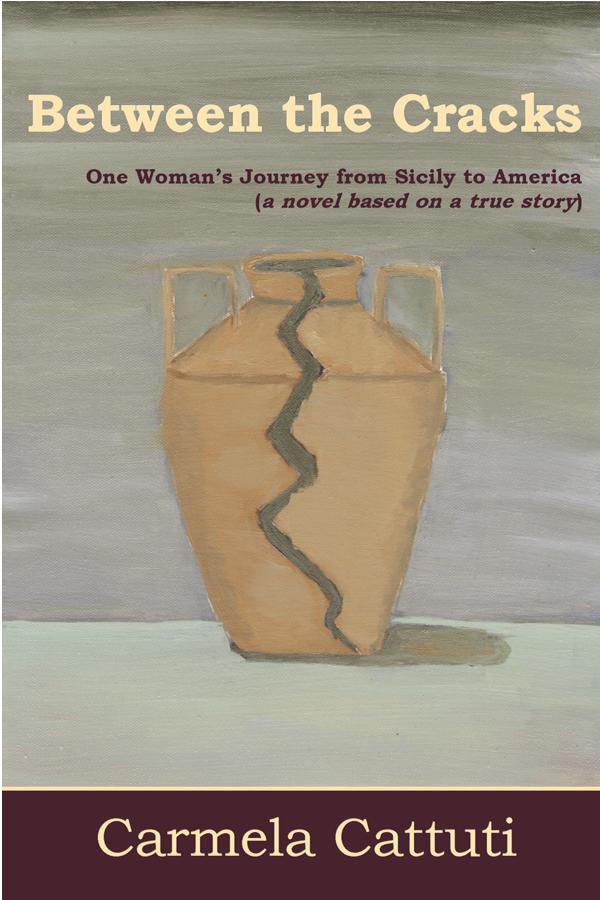
Spotlight on Carmela Cattuti's Between the Cracks

02_Between the Cracks_CoverPlease join Carmela Cattuti as she tours the blogosphere for Between the Cracks: One Woman's Journey from Sicily to America, from February 9-27, and enter to win a Kindle Touch eReader, loaded with an eBook of Between the Cracks!

Publication Date: August 15, 2013
Three Towers Press
Formats: eBook, Paperback
Pages: 324
Genre: Historical Fiction

Add to GR Button


READ AN EXCERPT.  

Join Angela Lanza as she experiences the tumultuous world of early 20th century Sicily and New York. Orphaned by the earthquake and powerful eruption of Mt. Etna in 1908, Angela is raised in the strict confines of an Italian convent.

Through various twists of fate, she is married to a young Italian man whom she barely knows, then together with her spouse, immigrates to the U.S. This novel is an invitation to accompany the young Angela as she confronts the ephemeral nature of life on this planet and navigates the wide cultural gaps between pre-World War II Italy and the booming prosperity of dynamic young America. Author, artist, and teacher Carmela Cattuti created Between the Cracks as an homage to her great-aunt, who survived the earthquake and eruption of Mt. Etna and bravely left Sicily to start a new life in America.


Buy the Book

Amazon US
Amazon UK
Barnes & Noble
Book Depository

03_Carmela Cattuti_AuthorAbout the Author

Carmela Cattuti started her writing career as a journalist for the Somerville News in Boston, MA. After she finished her graduate work in English Literature from Boston College she began to write creatively and taught a journal writing course at the Cambridge Center for Adult Education As fate would have it, she felt compelled to write her great aunt's story. "Between the Cracks" has gone through several incarnations and will now become a trilogy. This is the first installment. To connect with Carmela email her cattutic@gmail.com or leave a comment at betweenthecracksnovel.blogspot.com.

Between the Cracks Blog Tour Schedule

Monday, February 9
Guest Post at Book Babe

Tuesday, February 10
Spotlight at What Is That Book About

Thursday, February 12
Guest Post at Boom Baby Reviews

Monday, February 16
Review at Back Porchervations
Spotlight at Bookish

Wednesday, February 18
Review at Book Nerd

Thursday, February 19
Spotlight at Historical Fiction Connection

Friday, February 20
Spotlight at My Book Addiction and More

Tuesday, February 24
Guest Post at Let Them Read Books

Wednesday, February 25
Guest Post at A Literary Vacation
Spotlight at Layered Pages

Thursday, February 26
Review at Svetlana's Reads and Views

Friday, February 27
Spotlight at Passages to the Past

Giveaway

To enter to win a Kindle Touch eReader (valued at $59) & eBook of Between the Cracks, sponsored by author Carmela Cattuti, please complete the giveaway form below.

Giveaway ends at 11:59pm on February 27th. You must be 18 or older to enter. Only one entry per household. All giveaway entrants agree to be honest and not cheat the systems; any suspect of fraud is decided upon by blog/site owner and the sponsor, and entrants may be disqualified at our discretion. Winner will be chosen via GLEAM on February 28th and notified via email. Winner have 48 hours to claim prize or new winner is chosen. Please email Amy @ hfvirtualbooktours@gmail.com with any questions.


 photo 2fb04189-29aa-4a83-9944-d50f9c3a42af.png

December 12, 2014

Spotlight on Sherryl Caulfield's Seldom Come {Giveaway}


Publication Date: December 10, 2013
Cedar Pocket Publishing
Formats: eBook, Paperback
Pages: 490
Series: Iceberg Trilogy
Genre: Historical Fiction

Two years after the sinking of the Titanic, fifteen year-old Rebecca Crowe’s fascination with icebergs leads her to save a shipwrecked survivor, Samuel Dalton, the nineteen-year old son of a Toronto medical family.
Love sparks in the crystal cave of an iceberg but is thwarted by an unreasonable father and the Great War that drags Samuel and his brother, Matthew, to the Western Front as medical officers. Knowing Rebecca is home and safe in Newfoundland brings Samuel great comfort. But as the war moves towards its final harrowing days, they both discover that tragedy and terror can strike anywhere, setting their love on an unforeseen path.

Only when Samuel and Rebecca can fully come to terms with such devastating loss and their impossible choices can their love soar. With an emotional intensity reminiscent of The Bronze Horseman, Seldom Come By, named after an actual place in Newfoundland, is an unforgettable journey across waves and time and the full spectrum of human emotions.

Praise for Seldom Come By
“Seldom Come By is a haunting love story set against the windswept coast of Newfoundland. The story draws you in from the opening lines and takes you on a compelling journey across time and continents, through love, loss, heartache and healing. It is a beautiful and memorable story — a great accomplishment and a wonderful read.” – Julie Fison, Australia

“A wholly engaging read that wraps you up in another world. The story of how Samuel and Rebecca met and fell in love will always stay with me — and leaves me feeling as if I have already visited Newfoundland.” – Carolyn Wood, New Zealand

“If you love deep, epic, romantic stories this is one for you.” – Jeannie Zelos, United Kingdom

“Historical fiction is by far my favorite genre and this book captures the elements perfectly. An engaging, strong heroine, a dashing, honorable stranger, a brutal daily life existence in Newfoundland set during WWI. The story and characters are made more rich by the superb writing. I look forward to reading more from this author.” – Diane Tyson, USA

“This book was a real treat to read. By 30% in I was completely invested in the characters. The strength, passion and adversity that the couple have to endure are reminiscent of The Bronze Horseman, but beyond that, Rebecca and Samuel find their own way of handling things. I have already found myself recommending this book to others that have loved The Bronze Horseman. I do believe that if you enjoy an epic love story, this will make a fine reading suggestion.” – Karen Scott, Canada

Buy the Book
eBook
Amazon
iTunes
Kobo
Nook
Smashwords


About the Author
Australian-born Sherryl Caulfield is a marketer, writer and traveller. After twenty years working for some of the world’s leading technology brands and a stint with Outward Bound, she longed to write about the human experience and the redemptive qualities of nature.

In 2006, haunted by an encounter with a woman she met in Canada, Sherryl started what has now become known as The Iceberg Trilogy. From her home in the Marlborough Sounds, New Zealand, she distilled the lives of three generations of women – Rebecca, Evangeline and Lindsay – over the course of a century. In the telling of their stories she crafted a series rich in landscapes – of sea, land and the human soul.

For more information please visit Sherryl Caulfield’s website. You can also find her on Facebook, Twitter, and Goodreads.


Visit other blogs on the tour--Tour Schedule
Twitter Hashtag: #SeldomComeByBlogTour #HistoricalRomance
Twitter Tags: @hfvbt @ShezCaulfield

Giveaway
To enter to win an Autographed copy of Seldom Come By, please complete the Rafflecopter giveaway form below.

Rules– Giveaway ends at 11:59pm on December 13th. You must be 18 or older to enter.
– Giveaway is open internationally.
– Only one entry per household.
– All giveaway entrants agree to be honest and not cheat the systems; any suspect of fraud is decided upon by blog/site owner and the sponsor, and entrants may be disqualified at our discretion.
– Winner have 48 hours to claim prize or new winner is chosen.


a Rafflecopter giveaway

December 11, 2014

Book Blast: Rebecca Hazell's The Tiger and the Dove Trilogy {Giveaway}


Please join Rebecca Hazell as she tours the blogosphere for the Tiger and the Dove trilogy Book Blast, from December 1 - 14, and be entered to win all three books in the trilogy!


The Grip of God (Book One)
The Grip of God is the first novel in an epic historical trilogy, The Tiger and the Dove. Set in the thirteenth century, its heroine, Sofia, is a young princess of Kievan Rus. She begins her story by recounting her capture in battle and life of slavery to a young army captain in the Mongol armies that are flooding Europe. Not only is her life shattered, it is threatened by the bitter rivalries in her new master's powerful family, and shadowed by the leader of the Mongol invasion, Batu Khan, Genghis Khan's grandson. How will she learn to survive in a world of total war, much less rediscover the love she once took for granted? Always seeking to escape and menaced by outer enemies and inner turmoil, where can she find safe haven even if she can break free? Clear eyed and intelligent, Sofia could be a character from The Game of Thrones, but she refuses to believe that life is solely about the strong dominating the weak or about taking endless revenge. Her story is based on actual historical events, which haunt her destiny. Like an intelligent Forrest Gump, she reflects her times. But as she matures, she learns to reflect on them as well, and to transcend their fetters. In doing so, she recreates a lost era for us, her readers.


Solomon's Bride (Book Two)
Solomon's Bride is the dramatic sequel to The Grip of God. Sofia, the heroine, a former princess from Kievan Rus' was enslaved by a Mongol nobleman and then taken as a concubine by the leader of the Mongol invasions, Batu Khan, grandson of Genghis Khan. Now, having fled the Mongols with a price on her head, Sofia escapes into Persia and what she believes will be safety, only to fall into the clutches of the Assassins, who seek to disrupt the Mongol empire. In a world at war, both outer and inner, the second phase of her adventures unfolds. Can she ever find safe haven, much less the lost love and family that was almost destroyed by the Mongols?


Consolamentum (Book Three)
In the finale of Sofia's memoir, Consolamentum, both dramatic and poignant, her dreams of home are shattered when her own family betrays her. Raising her child on her own, mourning the loss of her beloved knight, and building a trading empire, she seeks safe haven for her child and herself. Her quest takes her from Antioch to Constantinople to Venice. A surprise reunion in Venice leads her to France where she runs afoul of the newly established Holy Inquisition, possibly the greatest challenge she has yet faced. Can a woman so marked by oppression, betrayal, and danger ever find her safe haven, much less genuine happiness?

Buy Links
Amazon US
Amazon UK
Barnes & Noble
Book Depository


About the Author
Rebecca Hazell is a an award winning artist, author and educator. She has written, illustrated and published four non-fiction children’s books, created best selling educational filmstrips, designed educational craft kits for children and even created award winning needlepoint canvases. She is a senior teacher in the Shambhala Buddhist lineage, and she holds an honours BA from the University of California at Santa Cruz in Russian and Chinese history.

Rebecca lived for many years in the San Francisco Bay Area. In 1988 she and her family moved to Halifax, Nova Scotia, and in 2006 she and her husband moved to Vancouver Island. They live near their two adult children in the beautiful Cowichan Valley.

Visit Rebecca:
Website | Goodreads | Facebook

Book Blast Schedule

Monday, December 1
History from a Woman’s Perspective

Tuesday, December 2
A Book Geek

Wednesday, December 3
The Never-Ending Book

Thursday, December 4
Oh, For the Hook of a Book

Friday, December 5
Must Read Faster

Saturday, December 6
What is that Book About

Sunday, December 7
The True Book Addict

Tuesday, December 9
She is Too Fond of Books & Movies

Wednesday, December 10
To Read, Or Not to Read

Thursday, December 11
Historical Fiction Connection

Friday, December 12
Book Drunkard

Saturday, December 13
Brooke Blogs

Giveaway
To win all three books in Rebecca Hazell’s The Tiger and the Dove trilogy (eBook and print, two winners), please complete the Rafflecopter giveaway form below. Ebook giveaway is open internationally. Print book giveaway is open to U.S./Canada.

Giveaway ends at 11:59pm on December 14th. You must be 18 or older to enter.
Winners will be chosen via Rafflecopter on December 17th and notified via email.
Winners have 48 hours to claim prize or new winner is chosen.

December 09, 2014

S.R. Mallery's Sewing Can Be Dangerous and Other Small Threads - Guest Post and {Giveaway}


SEWING CAN BE DANGEROUS AND OTHER SMALL THREADS

First off, I love history. I love reading about it, watching documentaries about it, imagining it, and transporting myself back into those various time periods. I also love action, mystery, crime, and romance. So perhaps, being a quilt designer/instructor when I started writing these short stories, I knew somehow I was going to include it all. Hence the ‘thread’ link through each story.

The following includes just a tiny tidbit of research for each story, with excerpts from the FIRST THREE stories only. I have also included links to ‘images’ for these different subjects because if you’re like me, seeing photographs/pictures makes everything more authentic.

1) “Sewing Can Be Dangerous”
In 1912 desperate immigrant families were pouring in to Ellis Island at an alarming rate. Non-English speaking, frightened, they grabbed any available job American business magnates offered, no questions asked. In the ambitious Age of Industrialization, horrendous factory conditions around the country were being ignored while people survived on minimal pay and long hours with no breaks. It was an era, ripe for accidents.

After so many girls died in the infamous New York Triangle Shirtwaist Factory fire of March 25, 2012, the owners, Harris and Frank went on trial. But the few female witnesses testifying against them, were not only unable to fully understand the sophisticated verbal courtroom language, they were too intimidated to speak out, so in the end there were no convictions, simply the devastation of the girls’ families and indeed, all of New York City.

Yet, from out of the ashes came new, progressive legislation that would forever change American industry: sprinklers, exit doors mandated to push outward, not inward, more fire escapes, no parts of the building being sealed off, etc.


Excerpt:
“...but Sasha’s heart sank. She found out soon enough what working conditions were really like: sixteen hour days, six days-a-week, hunched over cumbersome black iron industrial sewing machines in dense, almost airtight conditions that had her breaking out in streams of sweat on hot summer days, and teeth chattering shivers in the dead of winter.... microscopic fibers clogged mechanisms and filled nostrils with a dust so fine, after two hours it became difficult to breathe...

Oil soaked rags, used for greasing the mechanisms, radiated their own heat that could be slightly comforting in winter for those workers near the large bins where they were dumped, but toxic in spring and summer for everyone else...”

2) “A Drunkard’s Path”Funnily enough, I had read years before how certain old quilt patterns had ‘curses’ attached to them. That fascinated me. But in what story/context could this fact be included? One night, watching a documentary about the Salem Witchcraft trial, I got my answer.

In the past there had been ‘ergot’ poisoning theories about what happened back then, but more recent evidence indicated that these teenage girls, the accusers who wreaked such havoc in the town of Salem, were much like the hysterical women that Dr. Sigmund Freud treated. One by one, these girls fed on each other’s psyche, twisting the truth and adding more fervor to the already rigid, naïve, cult-like behavior of the townspeople and the oppressive judges.


Excerpt 
“At the front of the room facing the magistrates, sat all the accusers, the “afflicted” girls: Abigail Williams, her cousin Betty Parris, Ann Putnam, Sarah Bibber, Sarah Churchill, Elizabeth Booth, Mercy Lewis, Susanna Sheldon, Jemima Rea, Mary Warren, Mary Walcott and Elizabeth Hubbard. With downcast eyes and folded hands, they appeared demure; inwardly they were experiencing emotions quite different from anything they had ever known. Childhoods stocked with adult repression and fear now served as a springboard to the frenzy of accusations they had created, because on this day, along with their catharsis and even exhilaration, came the most important emotion of all: a sense of empowerment. At last, they were getting adults to listen to them, and it was intoxicating.”

3) “Lettie’s Tale” In doing my research on the Antebellum south, I was fascinated by how many times the slaves out-maneuvered their owners. “Puttin’ on the Massah” was repeated time and again, and indeed, their rich tradition of using mostly drawings in the dirt in Africa served them well in America. I also was taken with the Canadian who came up with codes numbers to help them escape on the Underground Railroad. Coupled with their use of ‘pattern codes’ in patchwork quilts, they were far more powerful and intelligent than their white master could ever imagine.


Excerpt:
“...At first, the idea of slavery wasn’t even a conscious thought for Lettie. She had been well-treated up at the Big House and even here, in the lowlands, surrounded by her cousins, with whom she romped through the tall-bladed grass each sunset, just before snuggling up together, heads to wriggly toes on one large, straw mat. But as they all matured, she could see how arduous their tasks had become. How being a half-quarter hand was infinitely more grueling than being a quarter hand. With the other boys becoming full field hands, Lettie watched them return from long, backbreaking days; exhausted, bitter, transformed from the carefree boys she had gotten to know.

Her narrow world was shifting and with it, an awareness of little things that now called out to her; secrets whispered between the adults behind doorways, conversations stopped mid-sentence as she approached. It also occurred to her that more and more, slaves were disappearing. Where did they go? She wondered. Was that the secret? For the first time in her life, a tight knot was growing inside her chest, keeping her on high alert...”

4) “The Comforter”We have all heard about the various Christians who helped Jews in Nazi Germany; putting a good Samaritan couple in my story was a given. But the origins of Kristallnacht pointed to a young Jewish man who, having had enough of being treated so shamefully by the Nazis, shot and killed a minor officer. That gave Goebbels the excuse and impetus he needed and soon, Kristallnacht was in full gear and my ‘quilt-protagonist,’ a major player.


5) “A Plague On Both Your Houses” Visiting Wall Street in the late 1980’s I was privy to the madness involved. High-tufted wall-to-wall carpeting allowed for peace and quiet, while downstairs on ‘the floor,’ it was heart-attack city. Papers were strewn everywhere, computers were flashing, brokers––jacketless, their ties loosened and skewed––were screaming one minute and looking thoroughly depressed and/or intense the next. Having always loved a good Romeo and Juliet story, I decided to include a Wall Street powerhouse with an artsy fiber artist.


6) “Border Windfalls” In researching this story, I had reason to interview a doctor from a Doctors Without Borders type of group. We talked about the problems of dealing with hare-lipped children living in foreign countries; how superstitious their families can be, how they can be seen as being ‘from the devil’. I also talked to people from Guatemala who claimed in some of the smaller villages, people would do anything to survive---so helping drug dealers became a way of life.


7) “Emma at Night”People during the Middle Ages had, according to several articles, different circadian rhythms than we do nowadays. With no TV to keep them up they would fall asleep early, then wake up around 2 a.m. and start to ‘roam’. In some cases, there would be dozens of people at a time, wandering the countryside while the people living in manors were more contained. I also saw plans for entire seamstresses wings in the manor, with their own duty being to do their best ‘embroiderie’. Other research uncovered how Richard the Lionhearted wasn’t always so gentle; there was unrest in England as their army went away on all the countless Crusades.


8) “Murder She Sewed”
I taught machine sewing/quilting for years and years. In my classes, I always made it a point to talk about safety, particularly when it came to rotary cutters. What are those? People would ask and I would hold up something that was akin to a pizza cutter and in front of them, start to make sharp, even cuts to produce fabric strips. There were also quilt workshops galore on those big ship cruises back in the ‘80s. So I put a quilt teacher bunking in with a burned out NYPD detective. Voila! Murder Most Foul....


9) “Precious Gifts”The production and sale of the Singer sewing machine was nothing short of a miracle. Some women claimed it almost ranked up there with the ‘wheel’. When I was at an exhibition of the Sewing Machine, I noticed a tiny note nestled behind glass at a counter display. It read something to the effect of, “I’m going to hide my Singer in the cornfield tomorrow in case of Indian attack. Washington Territory 1870”. Wow. More important than her house....and her family? Further research showed how the Chinook Indians of that area were fat and happy from all the salmon running upstream. I created an unlikely friendship from a white woman and a young Chinook Indian out on his spiritual quest.


10) “Lyla’s Summers of Love”
That was my era––I wasn’t a hippy per se, but I sure was part of the culture; hence, the inclusion of a macramé necklace and San Francisco. But I also learned that in the late 60’s early 70’s while students protested, a few professors had been hired by the government to keep their ‘eyes and ears’ open regarding campus unrest. At that same time The Zodiac Killer was filling the news.


11) “Nightmare At Four Corners”
A bored middle-aged housewife with a journalistic background hooks up with her Hopi Native American housekeeper to solve a cold case murder. In the process, she learns Katchina dolls and the beliefs behind them have tremendous power. In her Southwest travel to the Four Corners area of the United States she also learns about the power of prejudice.


Katchina Dolls and the Power behind them:
http://americanindianoriginals.com/kachina-dolls.html

About the book
Publication Date: December 16, 2013
Mockingbird Lane Press
Formats: eBook, Paperback, Audio Book
Pages: 276
Genre: Historical Fiction/Short Stories


The eleven long short stories in “Sewing Can Be Dangerous and Other Small Threads" combine history, mystery, action and/or romance, and range from drug trafficking using Guatemalan hand-woven wallets, to an Antebellum U.S. slave using codes in her quilts as a message system to freedom; from an ex-journalist and her Hopi Indian maid solving a cold case together involving Katchina spirits, to a couple hiding Christian passports in a comforter in Nazi Germany; from a wedding quilt curse dating back to the Salem Witchcraft Trials, to a mystery involving a young seamstress in the infamous Triangle Shirtwaist Factory fire; from a 1980’s Romeo and Juliet romance between a rising Wall Street financial ‘star’ and an eclectic fiber artist, to a Haight-Asbury love affair between a professor and a beautiful macramé artist gone horribly askew, just to name a few.

Watch the Book Trailer


Buy the BookAmazon
Barnes & Noble

Buy the Audio Book
Sewing Can Be Dangerous and Other Small Threads is now in AUDIO!!! Listen to narrator, Suzie Althens, breathe life and depth into these stories!


About the Author
S.R. Mallery has worn various hats in her life.

First, a classical/pop singer/composer, she moved on to the professional world of production art and calligraphy. Next came a long career as an award winning quilt artist/teacher and an ESL/Reading instructor. Her short stories have been published in descant 2008, Snowy Egret, Transcendent Visions, The Storyteller, and Down In the Dirt.

“Unexpected Gifts”, her debut novel, is currently available on Amazon. “Sewing Can Be Dangerous and Other Small Threads”, her collection of short stories, Jan. 2014, both books by Mockingbird Lane Press.
For more information please visit S.R. Mallery’s website. You can also find her on Facebook, Twitter and Goodreads.


Visit other blogs on the tour--Tour Schedule

Follow the instructions on the Rafflecopter form below to enter for a chance to win one eBook copy of Sewing Can Be Dangerous, open internationally.

a Rafflecopter giveaway

July 01, 2014

Vincent B. “Chip” LoCoco's Tempesta's Dream - Guest Post


A REFLECTION ON OPERA AND SOME WAYS IT HAS CHANGED

My novel, Tempesta’s Dream – A Story of Love, Friendship and Opera, is the inspirational story of a young man who grows up in Milan and aspires to become an opera tenor.

The story is a tribute to the majesty and miracle of opera. For those new to opera, the novel perhaps opens a door that heretofore has not been opened for them. And for those readers who love opera, I would imagine the novel is like visiting with an old friend.

Opera has been around since the 1700s when it was born in Florence. Soon it flourished all over the globe.

In this guest post, I will endeavor to discuss and highlight a few key ways in which opera has changed over the years and the effect those changes have had on the singers, the audience, and on opera itself. There is no particular order given, just some random thoughts on how it has changed.

To start, let’s see how the life of a singer has changed. To do so, let’s look at the career of Enrico Caruso, perhaps the greatest tenor who ever lived.

Caruso, who lived near Florence, would sail to New York in the fall and he would be stationed at the Metropolitan for the entire Met season. He would sing at some other cities while here, but most of his stay was in New York. At the end of the season, he would sail back to Italy where he would rest for the summer, with perhaps a few stops to sing along the way. He was the face of the Metropolitan Opera. That is how it was for singers. For example, Beniamino Gigli, Maria Callas and Giuseppe di Stefano were the faces of La Scala.

A singer today is not tied to one house during an entire season. And that is because of the ease of travel by air. Now a singer jets all across the world, singing with almost no downtime. Does this affect the voice? You bet. So, while air travel has allowed singers opportunities to be heard at many locales, it has also resulted in opera houses not having a singer around all season.

Some further thoughts on air travel. It has brought a singer’s career in direct contact with jet lag, the bane of all singers. As George Shirley, a wonderful tenor at the Met in the 60s and 70s, told me, jet lag is always in the mind of a singer and trying to find ways to cope and perform with it. Is never ending; not to mention the atmospheric changes and pressure changes that affect a singer’s voice while travelling by plane. After all, a stuffy nose for an opera singer can be terrifying.

Another way opera has changed is the impact of social media. A young singer takes the stage at a small theater of 1500 patrons and, in the early part of the career, uses these early opportunities to learn and perfect the art. Are mistakes made? Of course, but they are learning. And if a singer gives a bad performance, only 1500 people saw it. Not today. With YouTube, Twitter, Facebook, that bad performance can be broadcasted all across the globe. This makes it very tough for a singer in his/her galley years, as they are at the infancy of their careers. Of course, the reverse is true as well. Social media also
opens the door for world wide fame and recognition very quickly for a singer.

One big change for opera has been the introduction of supertitles. These are translated words of the opera projected usually above the stage. (At the Met they are on the seat in front of you.) This has made opera very much understandable to many operagoers. Now, an audience member can read along during the opera and understand every word of an opera being sung in a language they may no nothing about. That is a good thing. Yet, supertitles have many critics. Some say it takes the audience members attention away from the stage as they look to read. Singers say it makes it difficult as they will sing a funny phrase, but the laugh only comes after the words are read by the audience. It’s a debate that will always happen. I did see an article last week that in Japan a company is introducing glasses you can wear to the opera and the words scroll across the glasses, so you don’t need to look away from the stage. A very interesting concept and I am curious to see how they are received.

Thanks for the opportunity to reflect on some changes in opera over the years. Opera may change over the years, articles will be written on the demise of opera, but as long as there is love, passion, sadness, and a desire for melody in the world, there will always be a place for opera.

Vincent B. “Chip” LoCoco
Author of Tempesta’s Dream – A Story of Love, Friendship and Opera

About the book
Publication Date: September 26, 2013
Cefalutana Press
Formats: eBook, Paperback

Add to GR Button

Tempesta’s Dream is the story of an aspiring opera singer coming of age in Milan; a tender and moving love story; a testament to the bonds of friendship; and, at its core, a tribute to the beauty, majesty and miracle of opera.

Giovanni Tempesta always dreamed of becoming an opera tenor and one day singing from the stage of the La Scala Opera House in his hometown of Milan, Italy. But with no real training, his dream has little chance for fulfillment . . . One day, he meets and immediately falls in love with Isabella Monterone, a dark-haired beauty, whose father, a very rich and powerful Milanese Judge, refuses to allow his daughter to date a penniless musician . . . At the lowest part of his life, Giovanni comes upon the Casa di Riposo, a rest home for musicians established by the great opera composer, Giuseppe Verdi . . . It is at the Casa Verdi that Giovanni meets Alfredo del Monte, a blind, retired opera singer with a secretive past who gradually becomes his mentor . . . Could Alfredo be the one person who could assist Giovanni in finding the break he needs? Or is Giovanni destined to be on the cusp of reaching his life long dream, only to find failure? . . . Tempesta’s Dream, at its core, is an Italian opera love story. The author tells the story simply and swiftly with an ending that is both an emotional and poignant moment of both “amicizia e amore” (friendship and love.)

Praise for Tempesta’s Dream
“The novel has enormous heart and a few times my eyes filled with tears. I was vividly involved with this young tenor, his dreams, and the wonderful old man who taught him. It is not an easy thing to convey the passion for song. However, the way the author did it, I could physically feel the young tenor singing and hear his voice.” -Stephanie Cowell, Author of Marrying Mozart

“The story holds charm and appeal. There is beauty in the depiction of the relationship between Giovanni and Isabella, as well as in the bond between Alfredo and the young tenor. Giovanni, Isabella and Alfredo will remain in ‘memoria mia’ for years to come.” -George Shirley, Tenor, University of Michigan Emeritus Professor of Music (Voice)

“Within a very moving story of romance and friendship, the author has created a realistic portrait of a young singer’s pursuit of an operatic career. This lovely tale allows one to acquire an understanding of and an affection for opera.” -Audrey Schuh Redmann, Soprano

“This novel is a thorough pleasure.” -Christina Vella, Author of Intimate Enemies, The Two Worlds of Baroness de Pontalba

“The story surprised me and involved me. The development of the book was very intriguing and moving.” -Cecilia Gobbi, founder of the Associazione Musicale Tito Gobbi, an organization devoted to preserving and celebrating the record of her famous baritone father’s contribution to opera

“What a story! Quite possibly, the best novel about opera I have ever read. The passion of opera pulsates throughout the entire novel. Highly recommended.” -John Gehl, Opera historian and the only American collaborator on The Oxford Concise Encyclopedia of Opera

“The author’s contagious love of opera and his faith in human decency sing through this loveable page-turner of a story.” -Susan Nicassio, Author of Tosca’s Rome

“An intelligent and entertaining lyrical journey . . . A rare, beautiful story with passion and opera pulsating through each page. LoCoco has woven a unique novel with exceptionally developed characters, realistic dialogue and a well-balanced narrative.” -Penn Book Review

“A Powerful novel . . . Tempesta’s Dream is all about the music, it’s all about the passion; and it’s all about pursuing one’s dream . . .a moving, engrossing story.” – D. Donovan, Ebook Reviewer, MidWest Book Review

Watch the Book Trailer


Buy the Book
Amazon US (Kindle)
Amazon US (Paperback)
Barnes & Noble (Nook)
Barnes & Noble (Paperback)
Book Depository
CreateSpace
Smashwords


About the Author
Chip LoCoco was born and raised in New Orleans. He is an attorney, with an emphasis on estate planning. A lifelong lover of music, Chip’s passion for opera dates back many years now. He has seen operas all over the world at some of the greatest opera houses. Chip has been asked to give talks on opera as well as the Sicilian-American culture of New Orleans.

Chip’s second novel, Bellafortuna, has been named a Short List Finalist in the William Faulkner Writing Competition. A date for publication has not been set yet for his second novel.

Chip is married to his wife of 15 years, Wendy. They have two children, Matthew and Ellie and a beagle, named Scout. They reside in their beloved city of New Orleans, where if you try to find them on a Sunday in the Fall, they will be somewhere rooting on their Saints.

For more information please visit Chip LoCoco’s website. You can also connect with him on Facebook and follow him on Twitter.


Visit other blogs on the tour--Tour Schedule
Twitter Hashtag: #TempestasDreamBlogTour