Showing posts with label 20th century. Show all posts

September 28, 2015

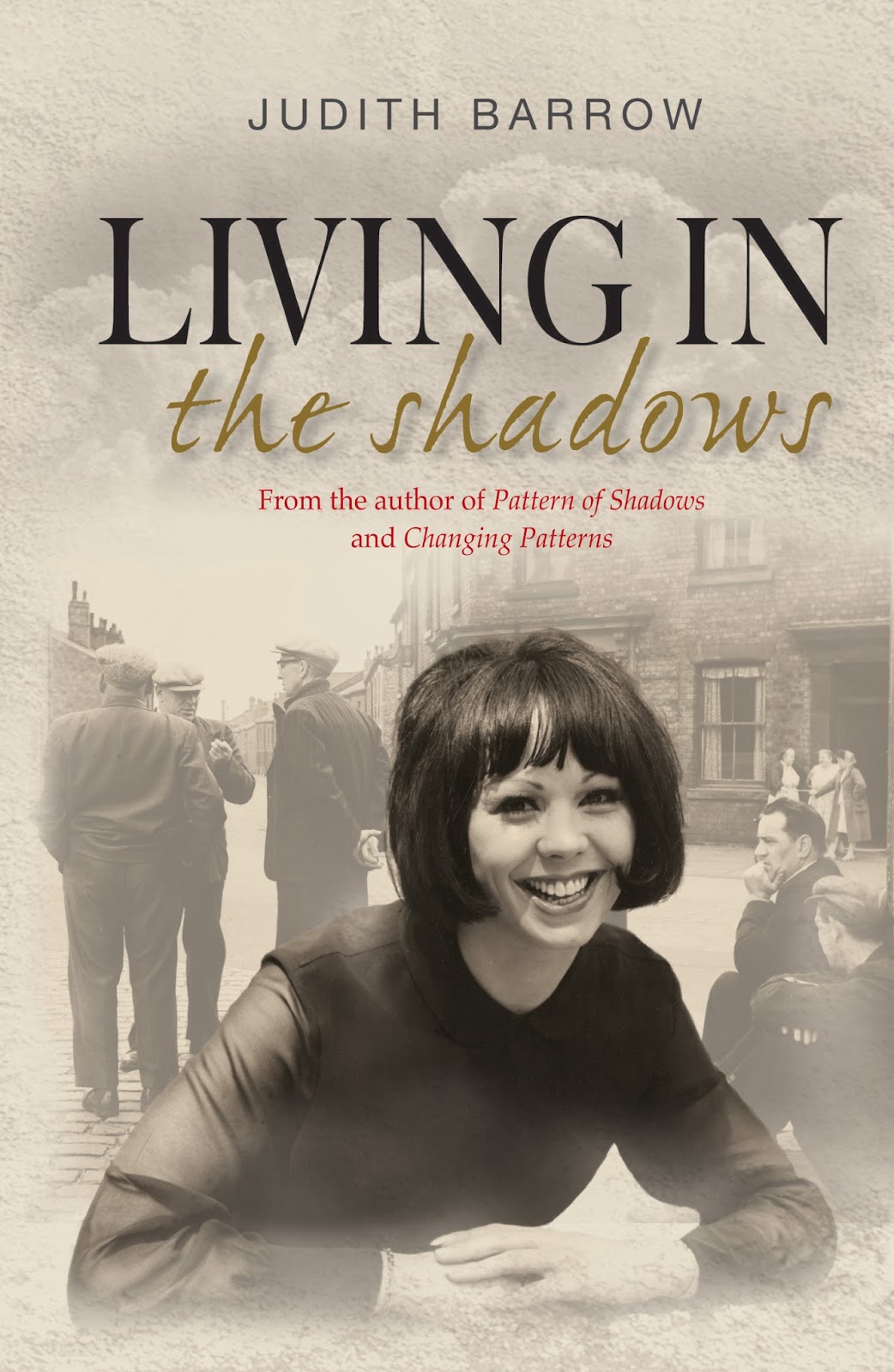
Judith Barrow's Living in the Shadows - Guest Post


Marital violence is as old as marriage itself. Wife beating was both widely tolerated and sanctioned by law in 18th-century England; husbands were legally entitled to strike their wives in order to ‘correct’ their conduct. So-called moderation was the watchword with one judge, Francis Buller, specifying that a husband could beat his wife with a stick so long as it was no thicker than his thumb.

Later, English law allowed women to separate from their husbands because of abuse, but did not let them get
divorced. Husbands were still allowed to abuse their spouses as long as it could not be seen. This meant abuse on the back, where clothing would cover wounds caused by abuse.

It was not until the late 1800s that men were not permitted to chastise or abuse their spouses under any circumstances, according to law.

According to law– yet it still continued

In the early to mid-twentieth century domestic violence was still viewed by some men as their right and by some women with resigned acceptance.

The following short passage is from the first book of my trilogy, Pattern of Shadows. This conversation between the protagonist, Mary Howarth, and her mother, Winifred, portrays, I think, the attitude that prevailed in the 1940s.

‘Just another domestic.’

QUOTE:
 “’What is it, Mam, aren’t you feeling well?’
Her mother didn’t answer. She pushed the small pile of dust and bits of vegetable peelings onto a piece of newspaper on the floor and crushed it up, tossing it into a bucket under the sink. Straightening she moaned softly under her breath, holding her side.
Mary put an arm around her. Seeing the ugly swelling on her mother's cheek and the red-rimmed eyes she scowled. ‘Aw, Mam, not again, what was it this time?’
Winifred pushed her daughter away and turned on the tap to rinse her hands. ‘There was only me here and he had one of his moods on him. It’s Patrick really, as if we haven’t enough to worry about. He’ll have the police at the door, with all this trouble: picketing, striking, fighting the government. Your father says there’s a right way and a wrong way to tackle the bosses and your brother’s going about it all wrong.’ She wiped her hands on a piece of towelling. ‘He’s furious because it’s unofficial. You know what he’s like.’
Like a bully and a bastard. Mary gritted her teeth, holding back the words. ‘Why were you holding your side?’
‘I banged into the table when …’
‘When he hit you.’
Winifred glowered defensively at Mary. ‘It’s not his fault.’
‘Of course it’s his bloody fault. You can’t keep putting up with it, Mam.’
‘What can I do? Tell the police? ’ Winifred gave a short ironic laugh. 'Sergeant Sykes is as bad. His wife often sports a black eye.'” END QUOTE

“It’s a private, family matter.”

From the middle of the 1900s there came more reforms for women. But it was still the era of the captive wife, when most women were housebound housewives kept by a man, completely under the thumb of their husbands, whatever their class.  And no one ever talked about domestic violence; it was as if it never happened.

After World War II, studies linked growing up in an abusive home with the likelihood of criminal behaviour later in life. Most domestic batterers showed a consistent pattern of violence and manipulation for the purpose of power and control. Domestic violence was acknowledged, but treated as a private family matter.

In the sequel to Pattern of Shadows, Changing Patterns, Mary Howarth tries to persuade her friend and sister-in-law, Jean, to leave her husband– Mary’s own brother, Patrick.

QUOTE:
“’Has Patrick actually hit you?’
Jean slid off the windowsill and stood motionless. ‘Mary ...’
‘Has he?’ She knew the answer, saw the humiliation in her friend’s eyes. She moved swiftly from the sofa and grabbed Jean’s arms. ‘You have to tell me.’
Jean lowered her head
‘Oh Jean.’ The distress merged with the rush of rage. ‘I am so sorry.’ She gathered her in her arms, frightened by the ferocity of her friend’s sobs. ‘It’ll be all right. We’ll sort something out. You can stay here as long as you want.’ Mary ignored the sudden vision of her own husband’s reaction; he’d understand when she explained. ‘As long as you want,’ she said again.
‘I can’t. I can’t leave Mother.’
‘Then move back in with her.’ The solution came with a sense of relief that shamed Mary. ‘You have to; you can’t stay with him.’
Jean shrugged her away and turned back to the window. ‘It’s not that easy. Jacqueline...’
‘Your daughter is frightened.’
‘I’ll make it right with her. Tell her she was mistaken in what she saw.’
Mary gave a cry of derision. ‘Mistaken?’
‘It was only the once. He was upset about Tom.’
‘He thumped you because of our brother? I don’t believe that. He hated Tom.’
‘He didn’t. You should have seen him, Mary, he was heartbroken.’
‘Huh!’
‘He was.’ Jean spun around to face her. ‘I should have left him alone.’ Her face crumpled. ‘I should have left him alone but I didn’t. I wanted to comfort him. I tried to hold him.’
‘So he hit you.’ Mary dragged out the words.
‘It was the first time.’
‘I don’t believe you.’
Jean flushed. ‘Then don’t, but it’s true.’ She looked out of the corner of her eye at Mary. ‘Please don’t tell your sister.’
‘Ellen already knows, I’ve told her.’ Mary folded her arms, angry her friend wanted to cover up what Patrick had done.
‘How could you? You know what she’s like about me.’
‘She has a right to know, he’s her brother too.’
‘She’ll tell all and sundry,’ Jean muttered, leaning on the windowsill.
‘She won’t ... and if she did, it’s not you who should be ashamed. It’s him.’
‘I pushed him into it. I should have left him alone,’ Jean said again.
‘Leave him, Jean. You have to.’
‘No!’
‘Then you’re a bloody fool.’” END QUOTE

Shelters for battered women were opened in the 1960s and men were actually prosecuted for their actions. The attitude to domestic violence over the last hundred years has, thankfully, changed drastically from resigned acceptance to complete condemnation of any bullying. In the following short passage from the last book of the trilogy, Living in the Shadows, Linda Booth, who has taken over from Mary as the protagonist, is talking to Karen Worth.

QUOTE:
“They spoke at the same time.
‘Does Richard know what he’s like…’ she couldn’t say his name. ‘Your father?’
‘I’m sorry about my stepfather.’ Karen flushed. ‘You know, the way he—’
  ‘Your stepfather? He’s not your dad then?’ Linda was shocked by the gladness she felt; she knew how much her cousin liked this girl. Her not being George Worth’s real daughter made it easier somehow.
‘No, I’m glad to say.’ This time she looked straight at Linda. ‘He’s horrible. A bully.’
‘Well I won’t disagree there.’ Linda was surprised how calm she felt. ‘How long have your mum and him been married?’
‘Dad died when I was ten.’ Karen said. ‘George worked for him. Then, before I knew it, he was always around the house. They married…’ she stopped to think, ‘about five years ago. I can’t believe how much Mum dotes on him.’
‘Or is afraid of him?’
‘Yes.’
‘Are you frightened of him?’ It was like prodding a tooth that ached.’ Linda couldn’t help it. She watched Karen closely.
‘Yes.’” END QUOTE

Spousal abuse is a perpetual issue that remains at the forefront of women's rights today.

Publicly, it is not acceptable.
Privately, it still goes on. 

ABOUT THE BOOK
Living in the Shadows
by Judith Barrow

Publication Date: July 16, 2015
Honno Press
eBook & Paperback; 320 Pages
Genre: Historical Fiction/Family Saga


It’s 1969 and Mary Schormann is living quietly in Wales with her ex-POW husband, Peter, and her teenage twins, Richard and Victoria. Her niece, Linda Booth, is a nurse – following in Mary’s footsteps – and works in the maternity ward of her local hospital in Lancashire.

At the end of a long night shift, a bullying new father visits the maternity ward and brings back Linda’s darkest nightmares, her terror of being locked in. Who is this man, and why does he scare her so?

There are secrets dating back to the war that still haunt the family, and finding out what lies at their root might be the only way Linda can escape their murderous consequences.

Sequel to the acclaimed Changing Patterns and Pattern of Shadows.


ABOUT THE AUTHOR
Judith Barrow has lived in Pembrokeshire for thirty years. She is the author of three novels, and has published poetry and short fiction, winning several poetry competitions, as well as writing three children’s books and a play performed at the Dylan Thomas Centre. Judith grew up in the Pennines, has degrees in literature and creative writing and makes regular appearances at literary festivals.


Tour Schedule: http://hfvirtualbooktours.com/livingintheshadowsblogtour/
Hashtags: @LivingintheShadowsBlogTour #HistoricalFiction
Twitter Tags: @hfvbt @barrow_judith @honno

September 14, 2015

Spotlight on Andy Kutler's The Other Side of Life


The Other Side of Life
by Andy Kutler

Publication Date: August 11, 2015
Neverland Publishing Company LLC
Formats: Trade Paperback and Kindle
Pages: 360
Genre: Historical Fiction

December 1941, Pearl Harbor. A peaceful Sunday morning turns into a devastating attack on American soil. Naval officer Malcolm “Mac” Kelsey is severely wounded while defending his ship. A flawed man abandoned long ago by his alcoholic wife, Kelsey has been mired in despair and hopelessness following the accidental death of Lucy, the young daughter he considers the only redemptive aspect of his life. Near the point of death, Kelsey is brought to what he believes to be an afterlife where he is offered an opportunity to shed his past memories and embark upon an alternate path in another place and time. Eager to escape his torment and begin a more tranquil existence, Kelsey accepts, only to feel quickly betrayed as he soon finds himself back in the midst of battle, this time as a Union soldier at the dawn of the Civil War.

Through Antietam, Gettysburg and four years of relentless fighting, Kelsey attempts to cast aside his painful past while trying to survive the horrors of combat. He crosses paths with compelling figures on both sides of the conflict determined to persevere and return to those they left behind. Idealistic Ethan Royston, promoted from the enlisted ranks, believes in preserving the Union but is plagued by insecurity and self-doubt. His closest friend, West Point-trained Cal Garrity, remains loyal to his home state of Virginia despite his misgivings about the virtue of the Southern cause. The war will divide these friends, just as it will divide Garrity from his adoring wife, Emily, the charismatic and headstrong daughter of a prominent Norfolk shipbuilder, forced to face the onset of war alone.

Each will endure unimaginable hardship and brutality that will forever reshape their core beliefs and values. Each will find their strength and resolve tested as they search for self-purpose, humanity, and reconciliation. Most of all, Mac Kelsey will discover the very essence of life and death, and whether the new beginning he has long coveted will bring him the inner peace he has so desperately sought.

PRAISE
“Employing some new twists on the novelist’s technique of time travel, Andy Kutler sends a naval officer bombed at Pearl Harbor back to the Civil War. Among his comrades in a Union cavalry regiment he absorbs the enduring values of trust, loyalty, love, and selflessness during the chaos and tragedy of a war that took place a half century before he was born. Readers will find themselves immersed in this story and captivated by its principal characters.” — James M. McPherson, Pulitzer Prize-winner author of Battle Cry of Freedom and The War That Forged a Nation

“Profound, smart, and entertaining – the path through The Other Side of Life is an amazing journey through history.” — Joe Weisberg, Creator and Executive Producer of FX’s The Americans and author of An Ordinary Spy

“Andy Kutler’s war scenes are gripping, his characters vulnerable and honest, and his story ultimately triumphant — an exciting journey back into two levels of the past.” — David Hardin, author of Emblems of Woe: How the South Reacted to Lincoln’s Murder

“The Other Side of Life imaginatively mingles brutal scenes of Civil War battlefields with thought-provoking moral issues. It describes the conflicted loyalties and sufferings of that tragic era and the spiritual growth of the book’s hero—a naval officer wounded in the Pearl Harbor attack—and those he becomes close to when he is transported to the past. The swiftmoving, compelling narrative grips the reader from first page to last.” — Bernard Weisberger, historian and author of America Afire: Adams, Jefferson, and the Revolutionary Election of 1800

“Andy Kutler has written a thoughtfully imaginative adventure across time, approaching the Civil War from a fresh perspective while creating memorable, compelling characters. The story flows beautifully and is consistently challenging.” — Ivan R. Dee, Publisher, Now and Then Reader (nowandthenreader.com)


ABOUT THE AUTHOR
Andy Kutler is a writer living in Arlington, Virginia. A native of Madison, Wisconsin and a graduate of Michigan State University (B.A.) and Georgetown University (M.A.), he has previously worked on the senior legislative staff of two United States Senators before serving as a senior policy officer with the U.S. Secret Service. He is working today as a consultant to the national security community.

While Andy’s writings have appeared in The Huffington Post and the Milwaukee Journal Sentinel, The Other Side of Life is his first novel. Andy’s interests include travel, military history, his Wisconsin sports teams, and most importantly, spending time with his wife and two children.

For more information and news please visit Andy Kutler’s Facebook page.


Tour Schedule: http://hfvirtualbooktours.com/theothersideoflifeblogtour/
Hashtags: #TheOtherSideofLifeBlogTour #HistoricalFiction 
Twitter Tags: @hfvbt

September 11, 2015

Amy Stewart's Girl Waits With Gun - Spotlight and {Giveaway}

WINNER - DIANA


Girl Waits With Gun by Amy Stewart

Publication Date: September 1, 2015
Publisher: Houghton Mifflin Harcourt
Formats: Ebook, Hardcover
Genre: Historical Fiction/Mystery


From the New York Times best-selling author of The Drunken Botanist comes an enthralling debut novel based on the forgotten true story of one of the nation’s first female deputy sheriffs.

Constance Kopp doesn’t quite fit the mold. She towers over most men, has no interest in marriage or domestic affairs, and has been isolated from the world since a family secret sent her and her sisters into hiding fifteen years ago. One day a belligerent and powerful silk factory owner runs down their buggy, and a dispute over damages turns into a war of bricks, bullets, and threats as he unleashes his gang on their family farm. When the sheriff enlists her help in convicting the men, Constance is forced to confront her past and defend her family — and she does it in a way that few women of 1914 would have dared.

PRAISE
“A sheer delight to read and based on actual events, this debut historical mystery packs the unexpected, the unconventional, and a serendipitous humor into every chapter. Details from the historical record are accurately portrayed by villains and good guys alike, and readers will cross their fingers for the further adventures of Constance and Sheriff Heath. For fans of the Phryne Fisher series by Kerry Greenwood, and the Mary Russell and Sherlock Holmes mysteries by Laurie R. King.”—Booklist, starred

“Stewart crafts a solid, absorbing novel based on real-life events—though they’re unusual enough to seem invented. Stewart deftly tangles and then unwinds a complicated plot with nice period detail…More adventures involving gutsy Constance, quietly determined Sheriff Heath, and a lively cast of supporting characters would be most welcome.”—Kirkus, starred

“In her engaging first novel, Stewart (The Drunken Botanist) draws from the true story of the Kopp sisters (Constance became one of the country’s first female deputy sheriffs) and creates a welcome addition to the genre of the unconventional female sleuth. Colorful, well-drawn characters come to life on the page, and historical details are woven tightly into the narrative. The satisfying conclusion sets up an opening for future Constance Kopp novels. VERDICT: Historical fiction fans and followers of Rhys Bowen’s ‘Molly Murphy’ mysteries and Victoria Thompson’s ‘Gaslight Mystery’ series will delight in the eccentric and feisty Kopp women.”—Library Journal, starred

“A smart, romping adventure, featuring some of the most memorable and powerful female characters I’ve seen in print for a long time. I loved every page as I followed the Kopp sisters through a too-good-to-be-true (but mostly true!) tale of violence, courage, stubbornness, and resourcefulness.”—Elizabeth Gilbert, author of Eat, Pray, Love

“How could you not fall in love with a book about one of the first female deputy sheriffs and her sisters–especially when it’s written by the enthralling Amy Stewart? Full of long-held secrets, kicked-up dust, simmering danger, and oh yes, that gun—this gritty romp illuminates one of history’s strongest women with a hold-your-breath panache.”—Caroline Leavitt, New York Times bestselling author of Is This Tomorrow and Pictures of You

“Girl Waits With Gun makes excellent use of history to put a fresh spin on classic cop-and-crook types. Amy Stewart’s true-life protagonist is a ‘rough and tumble’ version of the early 20th century’s New Woman. She is witty, sharply-drawn, and suffers no fools!”—Suzanne Rindell, author of The Other Typist

“Yowza! Amy Stewart’s debut boasts pomaded gangsters, pistol-packin’ dames, kidnappings, shots in the dark, and everything from Girls Gone Wrong to carrier pigeons finding their way home. You might want to stay up all night reading, you might want to lie down on your fainting couch with a cool cloth on your forehead. Either way, you’ll have the time of your life.” —Robert Goolrick, New York Times bestselling author of A Reliable Wife

“Girl Waits with Gun is fresh, funny and utterly compelling– and Constance Kopp and her sisters are not just great investigators, but completely original women. It was a blast from start to finish and I can’t wait to see what Deputy Kopp gets up to next.”— Lisa Lutz, author of The Spellman Files, How to Start a Fire, and others

“Amy Stewart has crafted the best kind of historical novel; she uncovers an intriguing, all-but-forgotten historical nugget and spins it into a wildly entertaining tale with an engaging, tough-minded heroine. Girl Waits With Gun hits the bulls-eye.”—Daniel Stashower, author of The Hour of Peril: The Secret Plot to Murder Lincoln Before the Civil War

“Amy Stewart’s debut novel Girl Waits With Gun is an irresistible and thoroughly enjoyable book, a suspenseful historical mystery spiced with marvelous characters, wit, and humor. Is it too soon to beg for a sequel?” —Jennifer Chiaverini, author of Mrs. Grant and Madame Jule

“Engaging, lively, and substantive, Girl Waits with Gun is a perfect mystery, and the Kopp sisters are my new best friends. Amy Stewart writes about crime as well as she writes about plants and poisons. I loved this book, and will be first in line for the next installment.”—Sara Gran, author of Claire DeWitt and the Bohemian Highway

ABOUT THE AUTHOR
Amy Stewart is the author of seven books. Her latest, Girl Waits With Gun, is a novel based on a true story. She has also written six nonfiction books on the perils and pleasures of the natural world, including four New York Times bestsellers: The Drunken Botanist, Wicked Bugs, Wicked Plants, and Flower Confidential. She lives in Eureka, California, with her husband Scott Brown, who is a rare book dealer. They own a bookstore called Eureka Books. The store is housed in a classic nineteenth-century Victorian building that Amy very much hopes is haunted.

Stewart has written for the New York Times, the Washington Post, and many other newspapers and magazines, and has appeared frequently on National Public Radio, CBS Sunday Morning, and–just once–on TLC’s Cake Boss. She is the recipient of a National Endowment for the Arts fellowship, the American Horticulture Society’s Book Award, and an International Association of Culinary Professionals Food Writing Award.

For more information visit Amy Stewart’s website. You can also find her onFacebook, Twitter, Goodreads, and Pinterest.


Tour Schedule: http://hfvirtualbooktours.com/girlwaitswithgunblogtour/
Hashtags: #GirlWaitsWithGunBlogTour #HistoricalFiction #Mystery
Twitter Tags: @hfvbt @HMHBooks @Amy_Stewart

GIVEAWAY: One paperback copy. Open to US residents only. To enter, leave a comment telling us what intrigues you about this book. Last day to enter - September 25, 2015.
Rules

– Must be 18 or older to enter.
– Only one entry per household.
– All giveaway entrants agree to be honest and not cheat the systems; any suspect of fraud is decided upon by blog/site owner and the sponsor, and entrants may be disqualified at our discretion.

June 08, 2015

Florence Ratwatte's The Doppelganger - Guest Post


When I first had this urge to write a novel, the only thing I was sure of was its location. While quite young and impressionable, I spent a long vacation on a mist-hung tea plantation, surrounded by mountain chains, nearly 2,000 m. above sea level, in Sri Lanka’s central highlands. It was an incredibly beautiful place of tropical sunshine and frosty nights and I knew I’d have to stretch all the creativity I had with the plot and characters, to match the setting. 

As I wanted to publish in Britain, I thought a novel with a tea plantation backdrop set in the British colonial period (mine is a late 1930s – mid 1940s time-warp ), would appeal in this nation of dedicated Ceylon tea drinkers. And of course, Ceylon tea which became the undisputed global quality brand very quickly, was purely and very creditably, a British achievement. (The tea industry still uses Sri Lanka’s colonial name, Ceylon, as its world-renowned brand name.)

I had of course to build my story on hard facts, because make no mistake, despite the stunning enchantment of its production location, tea production is hard commerce. It has been so, come 2017, for 150 years, its superlative quality achieved with sweat and toil and relentless commitment. Under the gift-wrapping of beautiful scenery and gracious life-style of the tea planters, is the hard, round-the year routine of tea production. Growing and harvesting the tea leaf, then processing and packing it, goes on round the year, often round the clock in Sri Lanka’s tea plantations, to achieve the impeccable quality of Ceylon tea. Manned by driven men the Ceylon tea industry rose within 50 years, on the ashes of its coffee plantations devastated by a plant pest, to become the main supplier of premium teas to the world’s leading tea market, London’s Mincing Lane. 

Writing a novel with a Ceylon tea background, I had therefore to supplement my early experience of tea plantation life, with first-hand research and reading. My free-lance writing assignments sometimes took me to the tea country, and while working at the Sri Lanka Tourist Board I also had opportunities to visit tea estates (as tea plantations are always called in Sri Lanka), to get insights into a unique British country life transplanted in a sub-tropical location. I am also indebted to D.M. Forrest’s excellent ‘A Hundred Years of Ceylon Tea – 1867 – 1967’ (Chatto & Windus, London), commissioned by the Ceylon Tea Propaganda Board, to mark the centenary of the first commercial planting of tea in Ceylon on Loolecandura Estate , Hewaheta, in 1867.

Writing The Doppelganger was thus not merely fulfilling but also enlightening and enjoyable and at every turn, new and delightful experiences rewarded my labour, which I hope I share with my readers.

About the book
On the borders of the misty High Forest tea plantation in Ceylon, Rachel Varuni, the daughter of a Scottish tea planter and a Ceylonese village girl, lives alone with her mother. Simple, frugal and hard, their life has a quality of unspoilt happiness, even if Rachel is sometimes haunted by her mixed parentage. She sees herself as a doppelgänger, belonging nowhere, and to no one.

Her dream of re-claiming her Scottish identity comes true when a letter from a lawyers' firm informs her of a bequest from an unnamed benefactor for Rachel to be educated at Ceylon's most exclusive boarding school.

Whilst the expensive education transforms Rachel unrecognisably, terror, the crushing hurdles of racism, spite and colonial injustice threaten to overwhelm her new life.

About the author
A sociology major of the University of Ceylon, Florence Ratwatte worked in the Sri Lanka Tourist Board until she took up free-lance writing. She lives deep in the beautiful ‘Ceylon tea' country, the backdrop of her first novel, The Doppelganger.

Publisher’s Website: www.austinmacauley.com  
Sales pages and book preview on Amazon: http://www.amazon.co.uk/dp/1849633584

June 01, 2015

Sheila Myers' Imaginary Brightness - Guest Post


One of the challenges of writing historical fiction, I have come to realize, is the fear that what I write may construed as the truth. 

I am trying my best to stick to generally known facts about the family of Dr. Thomas C. Durant. Dr. Durant was one of the masterminds behind the transcontinental railroad and there is currently an AMC t.v. series about him and the railroad days called Hell on Wheels. 

But while he was busy building the railroad across the U.S., his family was sequestered abroad living it up on all the money he stole from taxpayers. My novel focuses on the time period after the railroad was constructed and his next venture developing the Adirondack wilderness where he owned ½ million acres. 

And it focuses especially his son, William West Durant. When it comes to writing this novel William has been an enigma to me. There are some things I just can't make up - like the date of his birth, or when he lived where. The fact that he divorced, was under financial duress, was sued by his sister - these are facts. 

What we may never really know however is what was going on in his mind while he was living his life. What was he thinking when he built that $200,000 yacht while sending his sister a paltry $200/month allowance to live on in England? There is the court testimony from his sister's lawsuit (Heloise Durant Rose vs. William West Durant, 1903) that sheds some light on the actual scandal. But it doesn't answer the question: where was William's chivalry?

And why did he divorce his wife after ten years of marriage and three children? The divorce case papers are sealed - I only have a few news articles written in 1898 to go by - will we ever really know what went on between William and Janet behind bedroom doors? I have to let my imagination wander.

William West Durant is famous because of the great camps he built in the Adirondacks, forging a unique style of rustic architecture. But what was he thinking when he built the Great Camp Uncas or Sagamore in the Adirondacks? What was he trying to prove? What was his motivation? Surely it could not be all for show and tell, yet he lost money on each venture. 

I know once I present my own fictional version of what might have motivated the man there will be those that will disagree with my interpretation. Let them. 

I am not writing this story to try to break new ground on the historian's account of his life. I am writing it to elucidate for the general public, a story of a man that embodies a lot of the human frailties and greatness that we all have within us. 

Along the way though I have discovered a few errors in William's biography. What to do with them while I write is another story in itself. To learn more about my research journey visit my blog at Tracking William West Durant

Watch the book trailer

https://vimeo.com/122172532

Available May 31th, 2015 in print and eBook:

To order the ebook in the U.S. link here http://www.amazon.com/dp/B00UPFBCWU

For U.K. visitors link here: http://www.amazon.co.uk/dp/B00UPFBCWU


About the author 
This is the second novel for Sheila Myers, a professor at a regional community college in Upstate New York where she lives with her husband and three children. Her first foray into writing, Ephemeral Summer, was a novel that explored her own passion for the environment in the beloved Finger Lakes region. With this new novel, Imaginary Brightness: a Durant family Saga, Myers tackles the complicated history of the development of the Adirondack Wilderness and the pioneers that pursued their vision of what some called ‘A Central Park for the World.’ “ She has kept a blog about her research journey as well as fastidious notes on her sources for historic characters portrayed in her novel. “Blogging about where I have gone, what libraries and museum archives I have visited, as well as the people that I have been researching has been the most interesting part about writing this novel on the Durant family and their connections.” She can be reached at lifeofwwd@gmail.com.

May 29, 2015

Caddy Rowland - Making History, Bohemian Style (Part 15)

Please welcome back historical fiction author and artist, Caddy Rowland, our (now) quarterly contributor here at Historical Fiction Connection.

Cabaret de l'Enfer

Entrance to Cabaret de l'Enfer

I posted last time about a cabaret in Montmartre where death was the theme. Well, this cabaret took it a step further. It was named Cabaret de l’Enfer (The Cabaret of the Inferno) and was satanically themed. Cabaret de l’Enfer was in the red light district of Montmartre (Pigalle), not far from Moulin Rouge. From the late nineteenth century to the mid-twentieth, patrons could come and drink in hell. This cabaret is very hard to gather much information about, unfortunately. I will tell you what I know. It seemed to have operated for over fifty years, and was located on the Boulevard de Clichy.

The entrance was a large, horrible, fanged open mouth in a gigantic face with eyes blazing crimson. “Enter and be damned. The Evil One awaits you!” was the warning people heard as they entered the hellish nightclub. The chorus of rough voices was enough to make even the bravest man reconsider.

Once inside there were crevices in the walls with molten silver and gold, flames would shoot out of rock clefts, and thick smoke came from smoldering fires in various caverns, smelling of sulfur. Thunder rumbled throughout.

One cauldron over a “fire” had musicians playing various instruments, and if they didn’t play correctly they were prodded by imps holding “red hot” irons. In fact, all servers were red imps. Many carried boiling and smoking beverages to the thirsty, damned patrons.

Most patrons sat at red tables which glowed, then dimmed, only to glow again and again. All orders were screamed out, changing them to frightening ingredients and side-effects. More imps sat on fires or turned somersaults across the floor.


One could even witness a snake transforming into a devil. Of course, Satan was there, heckling all who dared to stay once they had entered. He walked the club in a scarlet robe, adorned with glowing jewels. His sword blazed with fire. He had a black mustache that curled up into sharp points and a sneering grin. His shrieking laugh bounced off the walls, making the place even more leery. He’d accuse women of sending men to hell with their “ways” and condemn others to eternal damnation.


Next door was another cabaret with the theme of Heaven, complete with angels, harps, and clouds. It wasn’t nearly as popular as hell. I wish I had more information to share with you about these two places, as they sound like fun places to visit. Even though the information is sparse, I hope you enjoyed what I was able to share. 

If anyone has more information about either of these two places, I would love to hear from you at caddyauthor@gmail.com.

Historical Fiction by Caddy Rowland: 


Contact and Social Media Info. For Caddy Rowland:

Author Email: caddyauthor@gmail.com
Twitter: @caddyorpims

May 26, 2015

Spotlight on Emma Maxwell McCone's The Wishing Boy


Dublin, 1930s - political unrest between Republicans and the De Valera Government. An art exhibition takes place and contains an unusual painting entitled "The Wishing Boy". Catrin Kilpatrick, the daughter of a well-known business man, admires the unique painting and wants to buy it, but Devlin O'Farell the artist refuses to sell it. Determined to have her way, she travels to Galway where he lives, and plans to make the purchase. Little does she know, Devlin worked for Flan Maguire, the most powerful man in Galway, and Commander of the Galway IRA Brigade. She has walked into the Lion's Den, and will find herself in great danger.

“The Wishing Boy” ISBN 9781784550653 by Emma Maxwell McCone was released on 3/31/2015 and is is available to buy from Amazon and all good booksellers.

Publisher’s Website:


About the author
Ken Scott, who writes under his mother’s name, was born Glasgow, Scotland in 1929.

He married in 1954 to Rhona after decades of service to the Woollen Industry, and they have raised one son and two daughters who have long since flown the nest. For the past 22 years they have resided in Swansea where they enjoy an active life covering sporting and musical activities. Ken started his first published work at the age of 14, supplying the local newspaper with reports on soccer activities, and during his adult career in textiles had over 50 articles published in textile magazines with international circulation.

May 25, 2015

Spotlight on John A. Connell's Ruins of War


Title: “Ruins of War”
Author: John A. Connell
Release date: May 5, 2015
Publisher: Berkley/Penguin Books
ISBN: 978-0425278956

Winter 1945. Seven months after the Nazi defeat, Munich is in ruins. Mason Collins—a former Chicago homicide detective, U.S. soldier, and prisoner of war—is now a U.S. Army criminal investigator in the American Zone of Occupation. It’s his job to enforce the law in a place where order has been obliterated. And his job just became much more dangerous.

A killer is stalking the devastated city—one who has knowledge of human anatomy, enacts mysterious rituals with his prey, and seems to pick victims at random. Relying on his wits and instincts, Mason must venture places where his own life is put at risk: from interrogation rooms with unrepentant Nazi war criminals to penetrating the U.S. Army’s own black market.

What Mason doesn’t know is that the killer he’s chasing is stalking him, too.

Praise for the book
“Compelling debut.”
—Publishers Weekly

“A thrilling hunt...gripping and gruesome.”
—James Becker, bestselling author of The Lost Testament

“John Connell's RUINS OF WAR is the best historical crime novel I've read all year. As vivid a sense of time and place as anything by Alan Furst, a killer as horrifying as any in Thomas Harris, and a central character I'm sure we'll be reading about for years to come.”
—Scott Phillips, author of The Ice Harvest and Hop Alley

“RUINS OF WAR is a well-crafted, classic police tale set in postwar 1945 Munich, a city that could double as the living room of hell. Mason Collins, a military cop, actually asked to be transferred there, and immediately has to find a killer who is preying on the citizens, adding terror to abject misery. Mason's pursuit of the madman takes him though a ruined landscape, filled with inhabitants as shattered as the city they live in."
—Larry Bond, author of Red Phoenix and Shattered Trident

Buy the book


About the author
John was born in Atlanta, Ga., then spent his childhood in the suburbs of Columbus, Ohio, NYC, and D.C. before moving back to Atlanta at the age of 13. While at Georgia State University his fascination with human thought drove him to study Psychology, and when that didn’t satisfy his curiosity about the human spirit, he turned to Anthropology, graduating with a bachelor’s degree in Anthropology and a minor in Psychology. During that time and after graduation he was a keyboardist and singer in rock and jazz bands, while simultaneously dabbling in writing short stories. To work his way through college and beyond, he stumbled upon some rather unique jobs: stock boy in a brassiere factory, courier for the Georgia State Health Department delivering gonorrhea and syphilis cultures from OB-GYN offices, a repairer of newspaper vending machines, a stint as an apprentice machinist, and a printing press operator.

John’s love of storytelling is what compelled him to switch to a career in film, even though he knew nothing about film and no one in the business. He “logically” chose camera work (not knowing anything about film cameras either) as a way into the business. He started in the film business in Atlanta and then moved to Los Angeles and worked his way up the ranks in the camera department to become a camera operator for both movies and TV. He also worked as an assistant aerial cinematographer using helicopters that took him all over the world. He kept at the writing, frequently expressing his deep desire to fulfill that dream. And then someone finally said, “shut-up, sit down and write.” And so he did. Between film projects or during lighting setups, he studied the craft of writing and produced mostly action/adventure screenplays. He then toyed with the idea of making two of his screenplays into YA novels. That’s when he discovered the rich potential for storytelling that novels provide, and with it his true passion.

During this time he met and married a French woman in Los Angeles. While he was working on a hit TV show as a camera operator, his wife was offered an excellent opportunity in Paris, France. They jumped at the chance, though they’d just bought their dream house two months earlier, and John had the French language proficiency of a two-year-old! He’d always wanted to live in Europe, particularly Paris, and it provided him the opportunity to devote full time to writing. He still takes occasional film jobs in the US. He now speaks French moderately well, though hardly a day goes by when his wife doesn’t roll on the floor with laughter at his attempts.

Currently, his wife and he live in Versailles, France, trying suburban living for a while, but they miss the energy of Paris and plan to move back there next year.

Visit the author

May 20, 2015

Spotlight on Jennifer Bort Yacovissi's Up the Hill to Home {Giveaway}

Giveaway winner - Deanne


Genre & Subject:                                                     Historical Fiction                                                                       
Demographic:                                                          Adults, Women, Catholics
Release Date:                                                           April 28, 2015
Publisher:                                                                  Apprentice House Press / Loyola University Maryland
Publisher Phone:                                                      410-617-5265                                                                                 
Distributor:                                                                Ingram                                                                                        
Hardcover ISBN:                                                    9781627200394
Paperback ISBN:                                                    9781627200561
Ebook ISBN:                                                            9781627200400

Prices:                                                                        $35.99 (h), $19.99 (p), $5.99 (e)

Author URL:                                                            www.jbyacovissi.com

Publicist:                                                                    Stephanie Barko, Literary Publicist - stephanie@stephaniebarko.com
                                                                                   
Pages:                                                                        477

Images:                                                                     None

Index:                                                                        No

Bibliography:                                                           No

Bindery:                                                                    Hardcover, Paperback, Ebook

Family. Home. Memories. Lillie Voith holds these values most dear.

When the cherished daughter, wife, and mother of nine is bedridden after a fall, her memories tug at threads woven through a century, as the fabric of her family frays around her.

“A living portrait of a loving family”, Up The Hill sketches four generations of the Miller/Beck/Voith clan from pre-Civil War to Depression era Washington DC.


Buy the book


About the author
Jenny Yacovissi grew up in Bethesda, Maryland, just a bit farther up the hill from Washington, D.C. Her debut novel, Up the Hill to Home, is a fictionalized account of her mother's family in the same region. 

In addition to writing historical and contemporary literary fiction, Jenny is a reviewer for Washington Independent Review of Books and Historical Novel Society. She owns a small project management and engineering consulting firm, and enjoys gardening and being on the water. Jenny lives with her husband Jim in Crownsville, Maryland. 

To learn more about the families in Up the Hill to Home and see photos and artifacts from their lives, visit 

GIVEAWAY
Please leave a comment below with your email address to enter to win an eBook copy of this book -- open internationally! Giveaway ends on Wednesday, May 27 at 11:59pm CST.

May 18, 2015

Stephen Clegg's The Fire of Mars - Guest Post


My name is Stephen F Clegg, I am retired, and I have never been busier!

I have always had an active and fertile imagination, and I have told my children and grandchildren stories all of their lives; indeed, to this day I have never been allowed to read anything to them, I’ve always had to make up stories on the spot. And it was this situation that prompted me to leave adult tales for them to read when I am no longer here, allied to a hope that they will recall those endless, happy days with my loving wife Jay, and me.

My first published novel was named Maria’s Papers, and it was based upon true events that happened to my great great Aunt Maria Clegg in the 1800’s.

She had been a diminutive, single, lady with limited means, tasked by her father to reclaim what they believed was a family-owned estate at the end of a long tenure, from a wealthy and ruthless family who insisted that they’d purchased it, and not leased it. But her tiny stature utterly belied her grit and steely determination. She fought a battle of attrition with them for seventeen years, until in 1870; she was incarcerated in a lunatic asylum for having ‘Delusions of Exaltation’.

I have never seen anything as ambiguous and open for translation as that outrageous charge, and after obtaining her pitiful and scandalous medical records in 2010, I, like others in my family, believe that somebody had paid to have her locked-up.

In recording these events in a fictional tale, I had to have an authentic feel of the 1800’s. It was necessary to carry out abundant amounts of historical research, and I grew to love it. It was fascinating, instructive, and I soon realised that it was rich in all sorts of story-telling possibilities.

My enjoyment in penning the first, led me to writing subsequent novels, all containing the same central protagonists in a series of stand-alone thrillers. My second outing was named The Matthew Chance Legacy; that was followed by The Emergence of Malaterre, and then my latest, The Fire of Mars. It was released in January 2015, and is a split-storyline historical fiction set in Charleston, South Carolina. It is centred on the real-life events of the SS Georgiana which sank off The Bay of Palms near Charleston Harbour, containing confederate gold, during the American Civil War.

I have been lucky enough to have three prize nominations for my work, and I’m proud to say that I was a finalist in The People’s Book Prize 2014.

I am now at the editing and proof-reading stage of my fifth novel, The Hallenbeck Echo, and I’m sixty-thousand words into writing my sixth, The Monkshead Conspiracy. They are all split-storylines, and all involving historical fact, and/or, fiction.

It is a genre I find irresistible. Not only does it afford me the opportunity to let my mind run riot with events of the past, it also gives me a real insight into how life was back then, and it makes me realise how lucky and privileged I am to be living in these times.

If you’d like to learn more about me or my novels, or if I can, in any small way, help anybody else interested in historical fiction, please feel free to contact me via my website www.stephenfclegg.com and I’ll do whatever I can.

Thank you for reading my post. 

About the book
At the latter end of 2006, a well-respected, married, church Deacon discovers the possible hiding place of a huge and valuable ruby named ‘The Fire of Mars'. He becomes obsessed by it, and dreams about finding it to be able to fund a new and exciting life with his secret lover. But when he becomes involved in a hit and run scam, everything changes - he needs it to escape his dilemma. Thereafter his life and his actions begin to spiral down to depths he never thought possible.

In November of the same year, historic researcher Naomi Wilkes and her husband Carlton, arrive at St Andrew's church in Charleston, South Carolina, in pursuit of the same stone. And none of them have any idea of the scale of horrors they will unearth...

“The Fire of Mars” ISBN 9781784551889 by Stephen F. Clegg is available to buy from Amazon and all good booksellers from 30/01/2015.


About the author
Stephen Clegg was born in Stockport in 1947. He is retired and happily living on the south coast of England with his wife, children and grandchildren. In 2012 his first novel ‘Maria's Papers' was released. His second, ‘The Matthew Chance Legacy' became a finalist in ‘The People's Book Prize 2013/14', and his third ‘The Emergence of Malaterre' was released in April 2014. This is his fourth outing, with more to follow.