Showing posts with label Medieval Europe. Show all posts

September 25, 2015

Spotlight on Donald Michael Platt's Bodo, The Apostate


Bodo, the Apostate
by Donald Michael Platt

Publication Date: September 29, 2014
Raven’s Wing Books
Formats: eBook, Paperback
Genre: Historical Fiction


“… in the meantime, a credible report caused all ecclesiastics of the Catholic Church to lament and weep.” Prudentius of Troyes, Annales Bertiniani, anno 839

On Ascension Day May 22, 838, Bishop Bodo, chaplain, confessor, and favorite of both his kin, Emperor Louis the Pious, son of Charlemagne, and Empress Judith, caused the greatest scandal of the Carolingian Empire and the 9th century Roman Church.

Bodo, the novel, dramatizes the causes, motivations, and aftermath of Bodo’s astonishing cause célèbre that took place during an age of superstitions, a confused Roman Church, heterodoxies, lingering paganism, broken oaths, rebellions, and dissolution of the Carolingian Empire.


PRAISE
“In a masterfully controlled narrative, Platt builds up to this amazing moment, taking readers first through Bodo’s childhood, upbringing, and rise to power at the heart of the 9th century Carolingian Empire, whose kings, princes, prelates and ordinary people Platt captures with a pitch-perfect blend of research and dramatization. By the time the story winds its way to Bodo’s momentous decision, I, too, felt like everything in the world was on the line. A fantastic, thought-provoking novel; very enthusiastically recommended.” – Historical Novel Society (Editor’s Choice Pick)


ABOUT THE AUTHOR
Author of four other novels, ROCAMORA, HOUSE OF ROCAMORA, A GATHERING OF VULTURES, and CLOSE TO THE SUN, Donald Michael Platt was born and raised in San Francisco. Donald graduated from Lowell High School and received his B.A. in History from the University of California at Berkeley. After two years in the Army, Donald attended graduate school at San Jose State where he won a batch of literary awards in the annual SENATOR PHELAN LITERARY CONTEST.

Donald moved to southern California to begin his professional writing career. He sold to the TV series, MR. NOVAK, ghosted for health food guru, Dan Dale Alexander, and wrote for and with diverse producers, among them as Harry Joe Brown, Sig Schlager, Albert J. Cohen, Al Ruddy plus Paul Stader Sr, Hollywood stuntman and stunt/2nd unit director. While in Hollywood, Donald taught Creative Writing and Advanced Placement European History at Fairfax High School where he was Social Studies Department Chairman.

After living in Florianópolis, Brazil, setting of his horror novel A GATHERING OF VULTURES, pub. 2007 & 2011, he moved to Florida where he wrote as a with: VITAMIN ENRICHED, pub.1999, for Carl DeSantis, founder of Rexall Sundown Vitamins; and THE COUPLE’S DISEASE, Finding a Cure for Your Lost “Love” Life, pub. 2002, for Lawrence S. Hakim, MD, FACS, Head of Sexual Dysfunction Unit at the Cleveland Clinic.

Currently, Donald resides in Winter Haven, Florida where he is polishing a dark novel and preparing to write a sequel to CLOSE TO THE SUN.

For more information please visit Donald Michael Platt’s website. You can also connect with him on Facebook and Twitter.


Tour Schedule: http://hfvirtualbooktours.com/bodotheapostateblogtour2/
Hashtags: #BodotheApostateBlogTour #HistoricalFiction
Twitter Tags: @hfvbt @donroc

September 09, 2015

Hilary Rhodes' The Outlander King - Excerpt


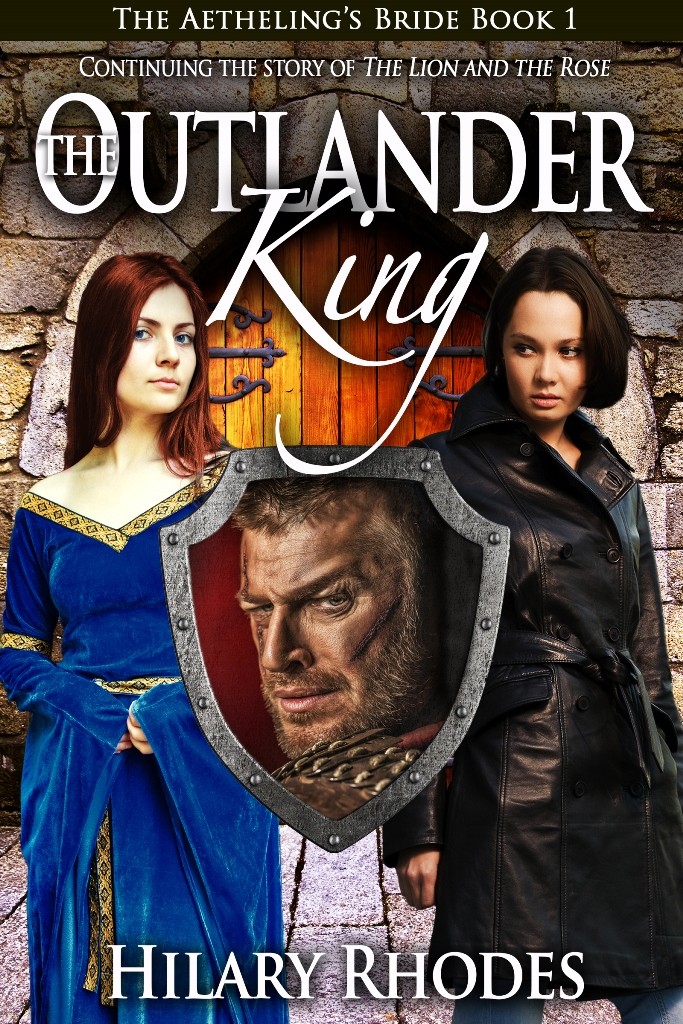
The Outlander King (The Aetheling’s Bride, Book 1)
by Hilary Rhodes

EXCERPT
The riders had now drawn even closer. They trotted alongside the stream, vanished briefly, and emerged alarmingly near on the other side. At this, curiosity at last sharpened into fear. I scrambled along the mossy ledge and hid myself in the boulders that formed the steep northern face of the tor.

This was done not a moment too soon. I dared a look, and saw that they were filing under the ledge, directly beneath me. Perhaps fifty, fighting men all, and a further ten or so horse behind them, laden with packs and supplies. The men were clad in dirty hauberks and helmets, longbows, swords, and kiteshaped shields strapped to their saddles. Their banners materialised through the fog like blooms of blood: rust-red, two golden lions rampant, tails lashing and claws raised.

I did not move. I knew what men might do to a maid, if they came upon her a sudden with battle still fresh in their minds. They had drawn to a halt, and horse whinnied almost in my ear, startling me badly. I bit my tongue, then bit it again when, in a sudden, clear voice, the leader spoke. His words were in a language I did not understand, although his tone was fiery. But I did understand the result. They laughed, and a roar went up.

The leader stood in his saddle to look down the valley: the huddled crofts, the bare terraces, and the rocks lining the muddy cart track. He surveyed it with a vicious, acquisitive pride, as if seeing it the first time. He must have been. The alien tongue had been my indication, but even without it, I would have known he was no Saxon. His shoulders were broad, his bearing majestic, and he wore a scaled-leather cuirass over his mail hauberk. His hair was rich gold, crowned by a dirty silver circlet. His nose was long, his cheekbones high. I could not tell what colour his eyes were.

I was still cautious, but curious. Abandoning my protected position, I inched forward. I was certain I did not make a sound, or move too quickly, but he saw me nonetheless. He lifted his head sharply, and gazed straight into my face.

His eyes were grey. The grey of beaten silver, living water. There was something wild in them – neither cruel nor merciful – and I knew then that this was it. He was going to call to me, bid me answer what a lone woman was doing out so far. And if I could not, he would set on me. But he merely considered me a moment more, then shook his head, and our gaze was broken. I lingered as if frozen, then jerked back behind the boulders.

He gathered the reins, and gave a light click to his horse. Immediately, the host behind him gave spur to their mounts as well, and they rumbled off toward the mill bridge. It was only when they had gone, and as I watched the dust settle, did it strike me who that man was. I had just looked into the eyes of the new King of England.

ABOUT THE BOOK
Publication Date: June 1, 2015
Amazon/Smashwords
eBook; 476 Pages
ASIN: B00XM9QJ1K
Genre: Historical Fiction

Add to GR Button

The story of The Lion and the Rose and the Norman Conquest continues in this spellbinding new historical fiction series from author Hilary Rhodes, pulling back the curtain on the lives of two remarkable women connected across centuries: Aislinn, a seventeen-year-old English girl caught up in the advancing army of the “outlander king,” the man who will become known to history as William the Conqueror. Thrust into the center of the new Norman court and a dizzying web of political intrigue and plotting princes, she must choose her alliances carefully in a game of thrones where the stakes are unimaginably high. Embroiled in rebellions and betrayals, Aislinn learns the price of loyalty, struggles to find her home, and save those she loves – and, perhaps, her own soul as well.

Almost nine hundred years later in 1987, Selma Murray, an American graduate student at Oxford University, is researching the mysterious “Aethelinga” manuscript, as Aislinn’s chronicle has come to be known. Trying to work out the riddles of someone else’s past is a way for Selma to dodge her own troubling ghosts – yet the two are becoming inextricably intertwined. She must face her own demons, answer Aislinn’s questions, and find forgiveness – for herself and others – in this epically scaled but intimately examined, extensively researched look at the creation of history, the universality of humanity, and the many faces it has worn no matter the century: loss, grief, guilt, redemption, and love.


ABOUT THE AUTHOR
Hilary Rhodes is a scholar, author, blogger, and all-around geek who fell in love with medieval England while spending a year abroad at Oxford University. She holds a B.A. and M.A. in history, and is currently preparing for doctoral studies at the University of Leeds, fulfilling a years-long dream to return to the UK. In what little spare time she has, she enjoys reading, blogging about her favorite TV shows, movies, and books, music, and traveling.

For more information please visit Hilary Rhodes’ blog.


Tour Schedule: http://hfvirtualbooktours.com/theoutlanderkingblogtour/
Hashtags: #TheOutlanderKingBlogTour #HistoricalFiction 
Twitter Tags: @hfvbt

July 30, 2015

Book Blast - Hilary Rhodes' The Lion and the Rose & The Outlander King

03_Book One_William Rising

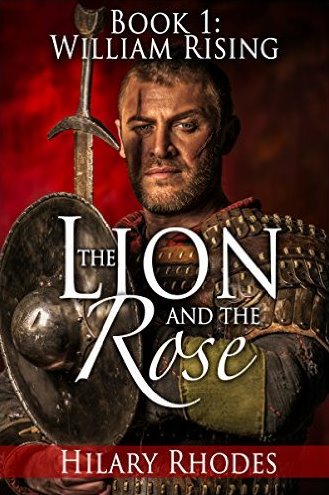
The Lion and the Rose (Book One: William Rising)

Publication Date: June 18, 2014
eBook; 338 Pages | ASIN: B00L4K5GKE
 Genre: Historical Fiction

  Add to GR Button  

The Lion and the Rose, Part One: William Rising is the first book in an epic historical saga from debut author Hilary Rhodes. Extensively researched and compellingly told, it introduces us to the passionate drama and violent upheaval of eleventh-century Europe. The world as we know it, and the English language, would have been vastly different were it not for the driving ambition of one man: William the Conqueror. But conquerors are made, not born, and William was made in fire and blood. How does a boy become a man, surviving a tumultuous and terrifying childhood? And how does that man become a legend? William Rising plunges us into this world of danger and betrayal, of choosing sides and dying for absolutes. It follows the creation of a conqueror, as he grows up abandoned, learns to fight at an early age for anything he hopes to keep, and is sculpted into a remorseless, far-sighted, ruthlessly efficient soldier and statesman. From his origins as an orphaned, penniless bastard boy, to his personal and political trials by fire, to the climactic battle with his rebellious barons where he finally comes of age, the young duke increasingly establishes himself as a force to be reckoned with. But as the shadowy intrigues of English politics, and the all-consuming question of an heir for a childless king, begin to draw him into their web, it may just be that William of Normandy has a destiny far greater than even he has ever dreamed.

AMAZON | BARNES & NOBLE | ITUNES | KOBO

03_Book Two_The Gathering Storm

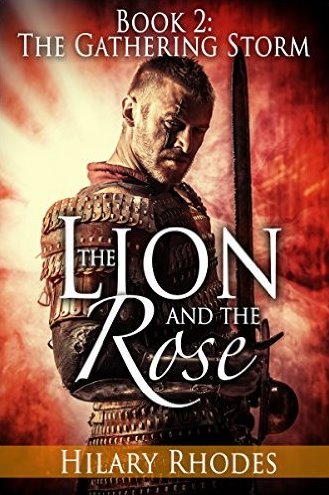
The Lion and the Rose (Book Two: The Gathering Storm)

Publication Date: September 29, 2014
eBook; 294 Pages | ASIN: B00O2E30GG
Genre: Historical Fiction

  Add to GR Button  

The Lion and the Rose: William Rising introduced us to the young William, Duke of Normandy, and his treacherous and terrible childhood, beset by battles, betrayals, and heartbreak, as he fought his own barons to survive and claim his birthright. The Gathering Storm plunges us even deeper into the violent upheaval and passionate drama of his unfolding story. Now twenty-two, William has won his most pivotal battle and taken control of his inheritance, but impossible struggles loom as he fights to put Normandy back together -- and very few of his enemies are actually defeated. Furthermore, across the Channel, the question of an heir for a childless king begins to loom large, and the ruthless and scheming Godwin, Earl of Wessex, will stop at nothing to claim it for his family. Written with the same meticulous historical research and flair by debut author Hilary Rhodes, The Gathering Storm raises the stakes to the utmost level, and a crown and a kingdom hang in the balance. In these pages, lords rise and fall, England and Normandy are drawn into a perilous collision course, bishops, barons, dukes, queens, and earls play a dangerous game of power and glory, and those who are not strong enough are trampled underfoot. The crows circle and the banners are raised, and the last Saxon king and the greatest Norman duke are destined to face each other in a battle that will change the course of history.

AMAZON | BARNES & NOBLE | ITUNES | KOBO

04_The Outlander King

The Outlander King (The Aetheling's Bride, Book One)

Publication Date: June 1, 2015
eBook; 476 Pages | ASIN: B00XM9QJ1K
 Genre: Historical Fiction

  Add to GR Button  

The story of The Lion and the Rose and the Norman Conquest continues in this spellbinding new historical fiction series from author Hilary Rhodes, pulling back the curtain on the lives of two remarkable women connected across centuries: Aislinn, a seventeen-year-old English girl caught up in the advancing army of the “outlander king,” the man who will become known to history as William the Conqueror. Thrust into the center of the new Norman court and a dizzying web of political intrigue and plotting princes, she must choose her alliances carefully in a game of thrones where the stakes are unimaginably high. Embroiled in rebellions and betrayals, Aislinn learns the price of loyalty, struggles to find her home, and save those she loves – and, perhaps, her own soul as well. Almost nine hundred years later in 1987, Selma Murray, an American graduate student at Oxford University, is researching the mysterious “Aethelinga” manuscript, as Aislinn’s chronicle has come to be known. Trying to work out the riddles of someone else’s past is a way for Selma to dodge her own troubling ghosts – yet the two are becoming inextricably intertwined. She must face her own demons, answer Aislinn’s questions, and find forgiveness – for herself and others – in this epically scaled but intimately examined, extensively researched look at the creation of history, the universality of humanity, and the many faces it has worn no matter the century: loss, grief, guilt, redemption, and love.

AMAZON | BARNES & NOBLE | ITUNES | KOBO

02_Author Hilary Rhodes

ABOUT THE AUTHOR

Hilary Rhodes is a scholar, author, blogger, and all-around geek who fell in love with medieval England while spending a year abroad at Oxford University. She holds a B.A. and M.A. in history, and is currently preparing for doctoral studies at the University of Leeds, fulfilling a years-long dream to return to the UK. In what little spare time she has, she enjoys reading, blogging about her favorite TV shows, movies, and books, music, and traveling. For more information please visit Hilary Rhodes' blog.

BOOK BLAST SCHEDULE

Monday, July 27
Kinx's Book Nook
Tuesday, July 28
Book Nerd
What Is That Book About
Wednesday, July 29
The Never-Ending Book
To Read, Or Not to Read
Thursday, July 30
Books and Benches
Historical Fiction Connection
Friday, July 31
The Lit Bitch
Queen of All She Reads
Sunday, August 2
Genre Queen
Monday, August 3
The Maiden's Court
Tuesday, August 4
Room With Books
Passages to the Past
Wednesday, August 5
100 Pages a Day
The True Book Addict
Thursday, August 6
A Book Geek
Boom Baby Reviews
Friday, August 7
CelticLady's Reviews
Let Them Read Books

05_HR_Book Blast Banner_FINAL

May 05, 2015

Charles Gibson's Taking the Cross - Guest Post


The Roots of the Inquisition

When Pope Innocent III called for the Crusade against heresy in March, 1208, he could not have known the full force of what he was unleashing. Known as the Albigensian Crusade, this endeavor, proclaimed because of the death of a papal legate in the Languedoc region of France, led to the deaths of tens of thousands over the next twenty years, devastating one of the most wealthy and free regions of Europe in the early 13th century. 

It also led to the Inquisition. Contrary to what you might think, the Inquisition started in France in the 13th century, not centuries later in Spain.

My historical novel, Taking the Cross, is set during the opening summer of the Albigensian Crusade, in 1209. The main male character, Andreas, is lead knight to Raimon Roger Trencavel, the Viscount of Carcassonne, Albi, and Beziers. The Viscount, a historical figure, was the main target of the Crusade. Thus Andreas ends up fighting against a Crusade.

Charles Gibson in front of the Tower of the Heretics in Carcassonne, France.
Heretics were hanged inside from the crossbeams of the tower in the 13th century.

Yet the efforts of the Catholic Church to purge the Languedoc of heresy were not warlike at their inception. In the year 1203, Dominic of Osma appeared before Pope Innocent III asking to make pilgrimage to the Holy Land in order to proselytize Muslims. Innocent, more vexed over the spread of heresies throughout Christendom, and in the Languedoc in particular, had a different idea. His charge to the idealistic canon from Spain was that Dominic make journey to Southern France and preach to the Albigensian sect, known also as the Cathars.

The word Cathar comes from the Greek root word katharsos, which means “pure”. It is also the root of the English word catharsis, which means purification or cleansing. The Cathars believed in purifying themselves from this evil world. They took that quite literally and believed that all matter had been created by the devil and was therefore evil, including the wafers and wine of the Eucharist (or communion), and even one’s own body. They believed that Christ came in spirit form only and thus was neither born of a virgin nor executed upon a cross.

Such decidedly unorthodox views put them at odds with the Roman Catholic Church. Since it was believed in Medieval times that the survival of society depended on that society being likeminded, dissent could not be tolerated. This was true not only in religious belief but also in the practice of one’s beliefs.

This is seen very clearly in the case of the other group targeted by the Albigensian Crusade, the Waldensians. The followers of Peter Waldo from the city of Lyon, France, were targeted primarily because they wanted to practice their faith in a way deemed unacceptable by Rome. They wished to preach in public in the common tongue and also to translate the Bible into the common tongue so that all could have access to the Scriptures. What little preaching there was at this time was in Latin and nearly all Bibles were in Latin as well. The message from Rome was clear: You must not only believe as we do, but act as we do.

At first the beliefs of the Waldensians were little different than those of other Catholics, but over time they came to reject the use of relics, of infant baptism, of purgatory, and the supremacy of the pope. After repeated persecutions they eventually came to refer to the pope as “the whore of Babylon”.

Dominic was a countercultural figure in that he took a vow of poverty in contrast to the Catholic hierarchy of the day, who paraded around in opulence. Dominic traveled around the Languedoc barefoot and in the coarse tunic of a mendicant, humbly seeking alms wherever he went. In so doing he had more success than others, but that success was still limited. After five years journeying back and forth across the Languedoc, he had gleaned at most a few dozen converts.

Rome grew impatient with the lack of progress. The murder of papal legate Pierre de Castelnau in January, 1208, provided the perfect pretense to launch the Crusade that began in 1209. Dominic died in 1221, but the Crusade lasted until 1229. Dominic’s humble, peaceful means of proselytizing in the Languedoc died with him.

In 1231 the Inquisition began and was administered, ironically, by those in the Dominican order, the followers of the peaceful man who became known as St. Dominic. The tactics of the Inquisition became a basis for the modern police state. For example, those who concealed or gave aid to heretics in any way were forced to wear a yellow cross sewn into their garments. It gives reminder of the yellow Star of David that Jews were forced by the Nazis to wear during World War II.

Yet the Albigensian Crusade and the Inquisition that followed became a motivating force for religious freedom that eventually led to the Reformation. The Waldensians persisted through decades and centuries of terrible persecution and voted to join the Reformation in the year 1532.

But in July, 1209, as Taking the Cross opens and Viscount Raimon Roger Trencavel rides to meet the leaders of the Crusade to seek peace, all of that is an unknown.

About the book
In the Middle Ages not all Crusades were fought in the Holy Land.

A two-pronged threat to the Catholic Church was growing within Christendom itself and Pope Innocent III called for the Crusade against heresy to eliminate both the Albigenses and Valdenses, two movements that did not adhere to Church orthodoxy.

Andreas, a knight who longs to go on Crusade to the Holy Land, finds himself fighting against one in his French homeland. While Andreas wages war for the lives and religious freedom of his people, a battle rages within his soul.

Eva, a young woman of a new religious order, the Beguines, discovers a secret message within a letter about the death of her father in the Holy Land. As she learns more of her father, she is forced to confront the profound and perilous spiritual inheritance he has bequeathed to her. A legacy for which she must fight.

Hearing of the feats of Andreas, Eva senses her inheritance may lead her to him.

They both face an evil that threatens to consume them.

Filled with battles of the flesh and the spirit, Taking the Cross reveals a passionate aspect of Medieval times where some fought ardently for the freedom of others.

Buy the book

Visit the author

December 11, 2014

Book Blast: Rebecca Hazell's The Tiger and the Dove Trilogy {Giveaway}


Please join Rebecca Hazell as she tours the blogosphere for the Tiger and the Dove trilogy Book Blast, from December 1 - 14, and be entered to win all three books in the trilogy!


The Grip of God (Book One)
The Grip of God is the first novel in an epic historical trilogy, The Tiger and the Dove. Set in the thirteenth century, its heroine, Sofia, is a young princess of Kievan Rus. She begins her story by recounting her capture in battle and life of slavery to a young army captain in the Mongol armies that are flooding Europe. Not only is her life shattered, it is threatened by the bitter rivalries in her new master's powerful family, and shadowed by the leader of the Mongol invasion, Batu Khan, Genghis Khan's grandson. How will she learn to survive in a world of total war, much less rediscover the love she once took for granted? Always seeking to escape and menaced by outer enemies and inner turmoil, where can she find safe haven even if she can break free? Clear eyed and intelligent, Sofia could be a character from The Game of Thrones, but she refuses to believe that life is solely about the strong dominating the weak or about taking endless revenge. Her story is based on actual historical events, which haunt her destiny. Like an intelligent Forrest Gump, she reflects her times. But as she matures, she learns to reflect on them as well, and to transcend their fetters. In doing so, she recreates a lost era for us, her readers.


Solomon's Bride (Book Two)
Solomon's Bride is the dramatic sequel to The Grip of God. Sofia, the heroine, a former princess from Kievan Rus' was enslaved by a Mongol nobleman and then taken as a concubine by the leader of the Mongol invasions, Batu Khan, grandson of Genghis Khan. Now, having fled the Mongols with a price on her head, Sofia escapes into Persia and what she believes will be safety, only to fall into the clutches of the Assassins, who seek to disrupt the Mongol empire. In a world at war, both outer and inner, the second phase of her adventures unfolds. Can she ever find safe haven, much less the lost love and family that was almost destroyed by the Mongols?


Consolamentum (Book Three)
In the finale of Sofia's memoir, Consolamentum, both dramatic and poignant, her dreams of home are shattered when her own family betrays her. Raising her child on her own, mourning the loss of her beloved knight, and building a trading empire, she seeks safe haven for her child and herself. Her quest takes her from Antioch to Constantinople to Venice. A surprise reunion in Venice leads her to France where she runs afoul of the newly established Holy Inquisition, possibly the greatest challenge she has yet faced. Can a woman so marked by oppression, betrayal, and danger ever find her safe haven, much less genuine happiness?

Buy Links
Amazon US
Amazon UK
Barnes & Noble
Book Depository


About the Author
Rebecca Hazell is a an award winning artist, author and educator. She has written, illustrated and published four non-fiction children’s books, created best selling educational filmstrips, designed educational craft kits for children and even created award winning needlepoint canvases. She is a senior teacher in the Shambhala Buddhist lineage, and she holds an honours BA from the University of California at Santa Cruz in Russian and Chinese history.

Rebecca lived for many years in the San Francisco Bay Area. In 1988 she and her family moved to Halifax, Nova Scotia, and in 2006 she and her husband moved to Vancouver Island. They live near their two adult children in the beautiful Cowichan Valley.

Visit Rebecca:
Website | Goodreads | Facebook

Book Blast Schedule

Monday, December 1
History from a Woman’s Perspective

Tuesday, December 2
A Book Geek

Wednesday, December 3
The Never-Ending Book

Thursday, December 4
Oh, For the Hook of a Book

Friday, December 5
Must Read Faster

Saturday, December 6
What is that Book About

Sunday, December 7
The True Book Addict

Tuesday, December 9
She is Too Fond of Books & Movies

Wednesday, December 10
To Read, Or Not to Read

Thursday, December 11
Historical Fiction Connection

Friday, December 12
Book Drunkard

Saturday, December 13
Brooke Blogs

Giveaway
To win all three books in Rebecca Hazell’s The Tiger and the Dove trilogy (eBook and print, two winners), please complete the Rafflecopter giveaway form below. Ebook giveaway is open internationally. Print book giveaway is open to U.S./Canada.

Giveaway ends at 11:59pm on December 14th. You must be 18 or older to enter.
Winners will be chosen via Rafflecopter on December 17th and notified via email.
Winners have 48 hours to claim prize or new winner is chosen.

November 26, 2014

Sherry Jones' The Sharp Hook of Love - Guest Post


Heloise and Abelard and the Happily-Ever-After Ending

Woe to those critics of my new book THE SHARP HOOK OF LOVE who, hooked by the cover, hoped for a sweetness-and-light romance with an HEA (Happily-Ever-After) ending. But then, it’s unkind of me to send them woe, since that’s what these readers are trying to escape from.

No one understands misery better than I. I grew up in an abusive household with two dysfunctional parents and no other family nearby — hence, no support system. It’s no wonder I fell, for a time, for the ultimate HEA ending: the promise of an eternally sweet hereafter in a heavenly city with gold-paved streets and unremitting bliss.

The longing for a life without suffering is as old as we are. Anthropologists think organized religion began around the same time humans began growing our food instead of hunting and gathering. Hoping not to starve, we began praying to the sun for shine and to the clouds for rain — fruitless efforts, no doubt, except that they helped us feel better, as though we had some control over our lives.

Is Paradise overrated?

 And yet, I wonder about the HEA mindset. What would it be like, a life without struggles, challenges, obstacles, frustrations, conflicts, heartaches, setbacks, sorrows, or discomfort of any kind? Odysseus had it with Calypso on her idyllic island, Ogygia, but seven years of pleasure took its toll and boredom set in. He couldn’t wait to get away from all that great food and sex, perfect weather, and instant gratification.


One wonders, too, about Abelard and Heloise, the famous 12th-century Parisian intellectuals whose passionate, erotic, scandal-ridden tale has survived these 900 years precisely because of the tragic way their love affair ended — with a brutal stroke of revenge that tore them apart for the rest of their lives. Would they have been happier with an HEA ending, riding off into the sunset hand and hand, you and me and baby makes three?

Heloise suspected not, and it’s one reason she initially said “no” to Abelard’s proposal of marriage, as Abelard wrote in his autobiography:

Consider, she said, the true conditions for a dignified way of life. What harmony can there be between pupils and nursemaids, desks and cradles, books or tablets and distaffs, pen or stylus and spindles? Who can concentrate on thoughts of Scripture or philosophy and be able to endure babies crying, nurses soothing them with lullabyes, and all the comings and goings of men and women about the house?

These were prescient questions, especially for their time, when marriage and children were not only de rigueur for women, but absolutely required for those of Heloise’s exalted socio-economic class. But then, theirs would have been a marriage made for love, not to create heirs. Perhaps Heloise could see the fallacy inherent in that arrangement.

Nipped in the bud — a good thing?

The love affair of Heloise and Abelard, by scholars’ accounts, lasted no more than a couple of years. Take into account the weeks, if not months, they spent resisting their sinful desires before finally succumbing to temptation, and it seems they barely had time for the pheromones to subside before the Church and Heloise’s uncle ripped them apart. What if they’d openly married, instead, forsaking their scholarly — Church-controlled — careers and devoting themselves to domestic life?


Would they have lived Happily Ever After?

By the time their love affair ended, Abelard was starting to feel a bit bored with the relationship, it seems. His visits with Heloise became “few and furtive,” necessary to avoid being discovered, he wrote — this from the man who had loved with such reckless abandon that he’d sung Heloise’s praises to his students in class when he was supposed to be teaching philosophy.

Had they remained together, what would their lives had been like?

Without the prebends and benefices of a canon, Abelard would have been forced to reclaim his inheritance, and become lord of the family castle in Le Pallet, a tiny rural outpost in the hinterland of Brittany — the very life he’d rejected, withdrawing, he wrote, “from the court of Mars in order to be educated in the lap of Minerva.”

There they would have lived, secluded from the stimulating life of the mind both enjoyed so much in Paris. Would discontent have ensued, and bickering? Would Abelard had turned to drink, or the servant girls? Would Heloise have become another Xanthippe, the supposedly quarrelsome wife of Socrates whom she’d held up as an example of why she and Abelard should not marry?

Fantasy vs. reality

Parted from each other at the height of their passion — or just when it was beginning to wane — the lovers were free, then, to remember the good times and even to invent their own fairy-tale endings by drawing from the realm of the might-have-been.

And when Abelard became deathly ill, 25 years after saying good-bye to Heloise, he asked the Church to let him live his final months in the convent where she was abbess. Denied the request, he asked that his body be entombed at her Oratory of the Paraclete so she might pray over him daily. He did not want to be forgotten by her — and he was not. She did as he asked, for 20 years. Before she died, she asked to be buried in the same coffin with him.


“When her dead body was carried to the opened tomb,” an anonymous witness wrote, “her husband, who had died long before her, raised his arms to receive her, and so clasped her closely in his embrace.”

Now, that’s my kind of HEA.


To read the first two chapters of “The Sharp Hook of Love” and to see a video about the lovers, sign up for Sherry’s newsletter at www.authorsherryjones.com/swag.   

Publication Date: October 7, 2014
Gallery Books
Formats: eBook, Paperback
Pages: 352
Genre: Historical Fiction/Romance

Add to GR Button

The first retelling of the passionate, twelfth-century love story since the discovery of 113 lost love letters between Heloise d’Argenteuil and Pierre Abelard—the original Romeo and Juliet.

“While I sleep you never leave me, and after I wake I see you, as soon as I open my eyes, even before the light of day itself.” —Abelard to Heloise

Among the young women of twelfth-century Paris, Heloise d’Argenteuil stands apart. Extraordinarily educated and quick-witted, she is being groomed by her uncle to become an abbess in the service of God.

But with one encounter, her destiny changes forever. Pierre Abelard, headmaster at the Notre-Dame Cloister School, is acclaimed as one of the greatest philosophers in France. His controversial reputation only adds to his allure, yet despite the legions of women swooning over his poetry and dashing looks, he is captivated by the brilliant Heloise alone. As their relationship blossoms from a meeting of the minds to a forbidden love affair, both Heloise and Abelard must choose between love, duty, and ambition.

Sherry Jones weaves the lovers’ own words into an evocative account of desire and sacrifice. As intimate as it is erotic, as devastating as it is beautiful, The Sharp Hook of Love is a poignant, tender tribute to one of history’s greatest romances, and to love’s power to transform and endure.

Praise for The Sharp Hook of Love
“Heloise is the sort of heroine you cannot help rooting for: brilliant and naïve, vulnerable and tough. The Sharp Hook of Love will have you up all night holding your breath as you turn each page.” (Rebecca Kanner author of Sinners and the Sea)

“Jones weaves history and passion in a tale full of emotional heft that questions what it means to truly love someone…” (Kirkus Reviews)

“A sensual journey into twelfth century Paris. With a sharp eye for historical detail, Jones weaves an unforgettable, compelling tale about enduring love.” (Lynn Cullen nationally bestselling author of Mrs. Poe)
“Passion and treachery mingle in Sherry Jones’s explosive novel The Sharp Hook of Love. Wrenching and erotic, this is a grand romance in every sense of the word.” (Mary Sharratt author of Illuminations: A Novel of Hildegard von Bingen)

Buy the Book


About the Author
Sherry Jones is the author of five biographical fiction books: The Sharp Hook of Love, about the famed 12th-century lovers Abelard and Heloise; The Jewel of Medina and The Sword of Medina, international — and controversial — best sellers about the life of A’isha, who married the Muslim prophet Muhammad at age nine and went on to become the most famous and influential woman in Islam; Four Sisters, All Queens, a tale of four sisters in 13th century Provence who became queens of France, England, Germany, and Italy, and White Heart, an e-novella about the famous French “White Queen” Blanche de Castille.

For more information please visit Sherry Jones’s website. You can also find her on Facebook, Twitter,YouTube, and Goodreads.


Visit other blogs on the tour--Tour Schedule
Twitter Hashtag: #TheSharpHookofLoveBlogTour #TheSharpHookofLove
Twitter Tags: @hfvbt @sherryjones @GalleryBooks

October 07, 2014

Rebecca Hazell's Consolamentum Brings Us to the End of Sofia's Story - Author Guest Post and {Giveaway}


A LOVE WORTH WAITING FOR?

One of the central themes of my historical trilogy, set in the turbulent 13th century, is love. Those who have read the first two in the series, The Grip of God and Solomon’s Bride, know that in the first volume, its heroine, Sofia, was captured and enslaved by a Mongol lord. While he fell in love with her, she was too angry and wounded by her fall into slavery to even notice how he felt.

Yet as she came to see and appreciate him as he was, she also began to learn what love might mean beyond her childish dreams of a handsome prince who would cherish and protect her. Ironically, her master fit that description and all she wanted to do was escape!

And, in Solomon’s Bride, having fallen into a new form of captivity in Iran (isolation in a harem and then in Alamut, capital of the Assassins), Sofia discovered that love and marriage weren’t necessarily going to be part of her destiny. She married twice, out of necessity, but didn’t find love. Only after she traveled west and met a knight who reminded her of her father (shades of Freud) did she fall in love. But he proved to be both mysterious and elusive until, with a crusade looming, it was almost too late for love; and then both politics and duty came between them. The reader is left wondering whether she can ever find the right man to love.

This question is answered in the third novel, Consolamentum, by which time Sofia has matured and become a woman of the world. She’s no longer naïve about marriage, but she still wants love—as well as independence—more than a wedding ring. So, though she has several suitors, she maintains her solitary life, willing to be content with other sources of love like an orphanage and her love child from a brief affair with her knight.

But this third novel also asks further questions about love: where does loyalty fit in where the king comes first and the wife comes second, how much power can a medieval woman realistically retain when she marries, is it worth giving up your independence for love, and can love survive threats to survival? And ultimately, knowing that lovers will always remain a mystery to each other, how can they find the intimacy of mind and heart that we all yearn for? For Sofia, there are compromises to be made, but in the end, she boldly answers her own question: yes, there is a love worth waiting for!

About the book
In the finale of Sofia's memoir, Consolamentum, both dramatic and poignant, her dreams of home are shattered when her own family betrays her. Raising her child on her own, mourning the loss of her beloved knight, and building a trading empire, she seeks safe haven for her child and herself. Her quest takes her from Antioch to Constantinople to Venice. A surprise reunion in Venice leads her to France where she runs afoul of the newly established Holy Inquisition, possibly the greatest challenge she has yet faced. Can a woman so marked by oppression, betrayal, and danger ever find her safe haven, much less genuine happiness?

The novel is available both in paperback and Kindle versions and through your local bookstore by special order.


About the author
Rebecca Hazell is a an award winning artist, author and educator. She has written, illustrated and published four non-fiction children’s books, created best selling educational filmstrips, designed educational craft kits for children and even created award winning needlepoint canvases. She is a senior teacher in the Shambhala Buddhist lineage, and she holds an honours BA from the University of California at Santa Cruz in Russian and Chinese history.

Rebecca lived for many years in the San Francisco Bay Area. In 1988 she and her family moved to Halifax, Nova Scotia, and in 2006 she and her husband moved to Vancouver Island. They live near their two adult children in the beautiful Cowichan Valley.

Visit Rebecca:


Giveaway:
Follow the instructions on the Rafflecopter to enter to win the entire trilogy, The Grip of God, Solomon's Bride and Consolamentum, Kindle editions - open internationally! Good luck!

a Rafflecopter giveaway

October 03, 2014

Mirella Schirillo Patzer's The Novice - Spotlight and {Giveaway}


Publication Date: September 15, 2014
H&W Press
Formats: eBook, Paperback; 380p
Genre: Historical Fiction/Historical Romance

A young woman on the verge of taking her vows to become a nun.
A desperate flight from a murderous massacre.
One honorable man comes to her rescue.
Another becomes her nemesis and captor.
And a life and death search to reunite with her one true love.

In 10th century Naples, Saracens run rampant, annihilating villages, murdering women and children. Death and despair is everywhere. Alone in the world, Sara is a young novice plagued with doubts about taking her final vows to become a nun. When her convent is attacked, she flees for her life straight into the arms of a group of Saracens who leave her to die alone in the woods. An honorable cavaliere named Nicolo comes to her rescue and offers to take her to the safety of Naples. As they journey together, they are irresistibly drawn to each other. Believing Sara to be a nun, the honorable Nicolo is torn between love and duty to respect her vows. Heartbroken, he does what honor demands and sets her free before she can tell him the truth that she is not a nun. In her search to reunite with Nicolo, she encounters Umberto, a dark and dangerous man who will stop at nothing in his obsession to possess her. With her sharp intellect, and her heart, Sara must rely on her own courage and strength to escape her abuser and find the only man she will ever love. A story that burns with intensity, intrigue, and passion from the author of the highly successful novel, Orphan of the Olive Tree.

Excerpt
Chapter One
Village of Gaeta
North of Naples

THE MASSACRE CAUGHT the villagers of Gaeta by surprise. In the convent of Santa Maria delle Vergine, the first shrieks of the Saracen raiders as they raced down the hills and then into the outskirts
of the village had forced the small group of nuns from their beds. Some rushed to the chapel to face the enemy. The others fled terrorized into the summer night. They were the lucky ones; that desperate flight
would save their lives.

Protected by the hood of her mantle, Sara, a novice, the convent’s only inhabitant who had not yet taken her vows, stood among the sisters clustering together on the crest of a hill next to a grove of trees. She shivered against the fading night’s breeze. A full moon and the first rays of dawn combined to shed a scarce light over the valley below. She gazed down at the village of Gaeta, a sprawling mass of land surrounded on three sides the sea, that consisted of a handful of buildings and homes, a church, and their convent. An eerie mist hung above it.

The desolate tolling of the church bell suddenly rose up on the wind.

Sara watched in horror as Muslim warriors galloped through the village bellowing their war cries. A knot of terror jammed in her chest when she saw them enter the convent. She held up a hand, a plea for the women to listen. The church bell suddenly ceased ringing. Screams, shrieks, and moans leapt out of the silence like sparks from a fire. Stunned, Sara could not tear her gaze away from the Saracen marauders who attacked homes, broke down doors and windows, and dragged villagers and nuns outside to meet their demise. The world was truly desolate, without redemption. The villagers were people she knew, whom she had toiled with, and served. There had been no time to warn or save anyone. To each his own. The Saracens were bent at slaughter.

A group of villagers had barricaded themselves inside the church. The attackers set fire to the building and waited for them to flee the smoke and flames. Then the bloodthirsty murderers, wielding axes and swords, struck them down. For years, these Muslim enemies had burned towns, hamlets, churches, orchards, pastures, and vineyards. The hatred the Saracens bore for the people of the Italian peninsula had resulted in battles that had raged for decades. The reason for the hatred, however, had long faded from everyone’s minds.

Sara had never experienced anything like this before – the massacre of an entire village. Cold stark horror gripped her.

Gaeta's rude houses were scattered over a wide area. Even if most of the villagers had not been surprised in their beds, they had little chance to help one another. The Saracens slew without mercy, torching structures at random. Known for their merciless brutality, Sara had heard stories of captives being impaled, of fingernails pulled out and limbs hacked off, even decapitations or being roasted alive at the stake.

All she and the nuns could do was watch in horror. The women were unable to tear their gazes from the death striking those who had not been fortunate enough to escape. Some of the sisters fell to their knees to pray and weep. One fainted and lay huddled against a tree trunk.


About the Author
A true blue Taurean in every way, Mirella Sichirollo Patzer grew up in Calgary, Alberta, Canada, a city famous for the Calgary Stampede, oil companies, and the wild west. Historical fiction books are one of her obsessions, especially those that pertain to medieval eras and with Italy as a backdrop. Her fascination for women of history and Italy is often reflected in her work, her various blogs, and website. She lives in Cochrane, Alberta, Canada with her husband and family. Her house is brimming with books and toys. For her, life couldn’t get any better.

For more information please visit Mirella’s website. Mirella also blogs at History and Women & Historical Novel Review. Connect with Mirella on Facebook, Twitter, Goodreads and Pinterest.


Visit other blogs on the tour--Tour Schedule
Twitter Hashtag: #TheNoviceBlogTour #HistFic
Twitter Tags: @hfvbt @MirellaPatzer

Follow the instructions on the Rafflecopter form below to enter for a chance to win an eBook copy of The Novice (Open internationally)!

a Rafflecopter giveaway

February 24, 2014

Spotlight: Pilgrim Footprints on the Sands of Time by Sylvia Nilsen {Giveaway}


Publication Date: December 2, 2013
LightEye Editions
Paperback; 396p
ISBN-10: 2917183349

A few months after Richard FitzUrse and his fellow knights murder Thomas Becket in Canterbury Cathedral, Lord Robert and Lady FitzUrse are instructed by King Henry to make a penitential pilgrimage to the tomb of Saint James the Greater in Spain in order to earn redemption for his disgraced family.

William Beaumont has made a promise to his dead mother and younger sister to go on a pilgrimage to save their souls. William is secretly in love with Alicia Bearham, niece of Lord Robert. He is overjoyed when he is asked to accompany the family and their servants on their three-month pilgrimage.

They face many adversities, dangers, and an attempted murder on the long and hazardous journey across England, France and Spain. Who is trying to kill Sir Robert and Alicia? What does the gypsy woman they meet in Paris mean when she predicts that Alicia and William are destined to be soul mates, but only when the eleventh flaming star returns to the skies and the water carrier rises over the horizon? One fateful night, a shocking event changes their lives forever.

Buy the Book
Amazon UK
Amazon US (eBook)
Amazon US (Paperback)
Book Depository
Fishpond
Waterstones


About the Author
Sylvia Nilsen, well known in the Camino world for her ‘amaWalker blog’ is a South African freelance writer who has been published in numerous local and international publications.

She has worked as a research agent and editor for a UK-based travel guide publisher and produced several African city and country guides.

Sylvia has walked over 5,000 km of pilgrimage trails in Europe including Paris to Spain, the Camino Frances from St Jean Pied de Port and Roncesvalles to Santiago, from Lourdes to Pamplona, el Ferrol to Santiago, Santiago to Finisterre and from Switzerland to Rome on the Via Francigena. She also walked from Durban to Cape Town as part of the ‘Breaking Free’ team in aid of abused women and children. Sylvia has served as a volunteer hospitalero in Spain and is a Spanish accredited hospitalero trainer having trained over 40 people to serve as volunteers in Spain. She was the Regional Co-ordinator for the Confraternity of St James in South Africa from 2003 to 2010.

In 2009 she started amaWalkers Camino (Pty) Ltd and takes small groups of pilgrims on three weeks walks of the Camino Frances in Spain.

For more information on Sylvia Nilsen please visit her website. You can also find her on Facebook.


Visit the other tours for more guest posts, reviews and giveaways - HFVBT TOUR SCHEDULE
Follow the tour on Twitter - #PilgrimFootprintsVirtualTour


Follow the instructions on the Rafflecopter form below to enter for a chance to win a print copy of Pilgrim Footprints on the Sands of Time by Sylvia Nilsen...open to entrants in US/Canada only!

a Rafflecopter giveaway

February 04, 2014

Guest Post - George Steger's Sebastian's Way: The Pathfinder


Thanks for inviting me to scribble some thoughts to you about the writing of Sebastian’s Way. It’s an honor to share your website. In return, I offer a small essay on something I struggled with through the whole book: the problem of introducing some interesting women into the story.

The Trouble with the Women


Writers are always warned not to project onto the past the rationality, attitudes, and customs of the present. Writers who do so are disingenuous and at risk of exposure. Nevertheless, observing that rule can be a severe handicap. So it was for me.

You see, over my lifetime, I was lucky to have been close to some very strong women who wielded a great deal of influence and made a significant difference in my life, and I wanted to use my experience of them in the book. The problem, however, was the same that it has been throughout most of history up to the modern era: women do not show up so well or as often in history as men do. And the farther back in history one goes, the worse it gets. That seemed especially true when I began to write about the eighth-century world of Charlemagne.

A popular philosophical view of women in that era was that they were innately weak and soft, unable to learn complexities, reason well, or control their sexual urges. Therefore they were subordinate to men. What is commonly known is that prostitution and concubinage were common and the double standard prevailed in the household. Unions of limited duration were recognized, and a man could divorce his wife for bad conduct (the particulars of such accusation being provided by the husband.) As for education for women, there wasn’t much available outside of convents, and that life was largely for widows, women wanting to escape a dreaded marriage, or those who were being discarded by their husbands. At the convent, it was possible for a woman to learn, but the fruit of her learning rarely had impact outside the cloister.

Not much of that fit what I wanted the women of Sebastian’s Way to be.

In the story, there are four female characters who play a significant part. The first is Ermengard, Sebastian’s mother, who from his earliest years demands that her son be more than a well-trained dog in the king’s military kennel. She had always yearned to read but was given no opportunity. She therefore insists that her son will find not only the opportunity but the time it takes to learn. This has much to do with the man that Sebastian becomes.

The second female character is Adela, Sebastian’s inamorata. She, too, is frustrated in her ambition to think on her own and be allowed to choose her own destiny. But she is incredibly uncompromising and capable of great sacrifice in defense of her convictions. Her fervor is one of the leading causes for the struggle the pair must face.

The third woman is also strong but in a much different way. This is Adelaide, the daughter of a count, who refuses to be shunted into a sedentary role of breeding and domestication. She much prefers fornication. Sebastian is flummoxed by her and has a hard time resisting her charms and overwhelming personality.

The fourth female is Gersvind, a lovely peasant girl with no significant place in the community. What power she has is simply the courage to love a man who is above her station with all her heart. By doing so, she manages to insert herself into Sebastian’s life for a time.

My problem was how to justify the strength of these women while still remaining within the boundaries of the historical era.

Finding the solution turned up some surprising results. There was not much I could do about peasant women; they were as much engaged as ever before in the grim business of survival, and they worked from dawn to dusk alongside their husbands with little time to think about changing their role or status in life. That takes nothing away from the eternal role of such women in maintaining and shaping the family and its children. Unfortunately, few specifics from their lives are recorded.

Aristocratic women, however, are much more visible in surviving sources, and they represented significant change in the Carolingian age. One of the books I read in researchingthe women of the era was Valerie Garver’s fascinating scholarly work entitled Women and Aristocratic Culture in the Carolingian World (Cornell University Press, 2009.) She maintains that such women significantly contributed to “the transformation . . . and development of European culture through their participation in the Carolingian renaissance.” Charlemagne was the architect of this window of light, the first breath of cultural and societal improvement since the fall of the Roman Empire almost three centuries earlier. In this flowering of learning and art, Frankish women from the landed class were often his partners, self-appointed agents in promoting Christian virtue and education. There was a limit, however, to how much they could do since church leaders insisted that women needed to focus on the domestic life.

What they could and did do was develop lasting social norms of hospitality, household and estate management, and proper behavior. They championed, for example, the establishment of the institution of marriage as a sacrament at a time when lingering pagan practices threatened lasting monogamous unions.

They did all this by creating standards—of both beauty and virtue. A woman of the Carolingian elite served her husband best if she made herself as beautiful as possible, dressed well, and behaved in a manner above reproach. She brought honor to her husband’s house and enhanced his reputation. Of course, such standards served the woman as well, enhancing her security and giving her no little power behind the scenes. It is this more subtle strength that I strove to establish in the characters of the women of Sebastian’s Way. The reader must be the judge of whether I succeeded. 

About Sebastian's Way
Publication Date: October 3, 2013
iUniverse
Paperback; 370p
ISBN-10: 1491708964

In a dark age of unending war and violence, one young warrior opposes a mighty king to forge a new path to peace…

During the savage Frankish-Saxon wars, the moving force of his age, Karl der Grosse, King Charlemagne, fights and rules like the pagan enemies he seeks to conquer. But in the long shadow of war and genocide, a spark of enlightenment grows, and the king turns to learned men to help him lead his empire to prosperity.

One of these men is the unlikely young warrior Sebastian. Raised in an isolated fortress on the wild Saxon border, Sebastian balances his time in the training yard with hours teaching himself to read, seeking answers to the great mysteries of life during an age when such pastimes were scorned by fighting men. Sebastian’s unique combination of skills endears him to Charlemagne and to the ladies of the king's court, though the only woman to hold his heart is forbidden to him. As the king determines to surround himself with men who can both fight and think beyond the fighting, Sebastian becomes one of the privileged few to hold the king’s ear.

But the favor of the king does not come without a cost. As Charlemagne's vassals grapple for power, there are some who will do anything to see Sebastian fall from grace, including his ruthless cousin Konrad, whose hatred and jealousy threaten to destroy everything Sebastian holds dear. And as Sebastian increasingly finds himself at odds with the king’s brutal methods of domination and vengeance, his ingrained sense of honor and integrity lead him to the edge of treason, perilously pitting himself against the most powerful man of his age.

This fast-paced adventure story brings Charlemagne's realm to life as the vicious Christian-pagan wars of the eighth century decide the fate of Europe. Filled with action, intrigue, and romance, Sebastian's Way is a riveting and colorful recreation of the world of Europe’s greatest medieval monarch.


About the Author
A native of Louisiana, the author followed a long tradition of young men from the Deep South by seeking to improve his prospects in the military. From a green second lieutenant in the famed 101st Airborne Division to battalion command in Vietnam, Colonel Steger spent most of the rest of his military career in four European tours as an intelligence officer and Russian foreign area specialist, working on both sides of the Iron Curtain during the Cold War. He traded sword for plowshare in a second career in academia and is now Professor Emeritus of history and international affairs at the University of Saint Mary in Leavenworth, Kansas. The motivation to write Sebastian’s Way came from his experiences in both war and peace, from fourteen years in Germany and Eastern Europe, and from his love of teaching medieval and other European history courses.

Steger is an avid hiker and trail biker, and much of the story of Sebastian came out of time spent in the woods and fields of eastern Kansas. In memory of Mary Jo, his wife of many years, he and filmmaker son Ben spent a recent summer trekking across Spain on The Camino de Santiago, one of Europe’s oldest pilgrimage trails. He lives and writes in rural Kansas and has four other grown and gifted children.

For more information please visit George Steger’s website. You can also find him on Facebook.


Visit the other tours for more guest posts, reviews and giveaways - HFVBT TOUR SCHEDULE
Follow the tour on Twitter - #SebastiansWayTour