Showing posts with label Tudor. Show all posts

November 19, 2014

Mary F. Burns' The Spoils of Avalon - Guest Post and {Giveaway}


Doing Research OnSite – Wondrous Things Happen 

I spent three weeks in September visiting the main locations that are featured in my first Sargent-Paget mystery, The Spoils of Avalon: Lanercost Priory and Brampton Town in the north of England (Cumbria), and the village of Glastonbury with the ruins of the Abbey in Somerset in the south. I had anticipated having a good time, and learning some interesting facts, but I soon found myself overwhelmed by the deep sensory and spiritual experience of being alive in the places I had just spent a year writing about. I carried around with me an advance copy of my book and wrote in it constantly, making changes and adding scenes as the spirit moved me—and it often did!

In my book, I alternate between two time periods: 1877, with John Singer Sargent and Violet Paget, best friends from the age of 10, embarking on an adventure that takes them north to Cumbria, and which starts with murder and ends with magic; and 1539, in Glastonbury, with a young novice monk named Arthur Joseph, who witnesses the tragedy of the Dissolution of the Monasteries under King Henry VIII and Thomas Cromwell.

LANERCOST PRIORY


Built in 1169 by the Dacre family, the Priory was the home of Augustinian canons who, unlike monks in a monastery, did not live a cloistered life, but rather went out to the people in the surrounding areas, preaching and teaching and serving the poor.


When I first arrived at the site, which is now managed by the English Heritage Society, I was struck with the beauty and color of the old stonework. The ruins are unbelievably magnificent, and many of the stones used to built are said to be taken from the relatively nearby (1/4 mile up the hill) remains of Hadrian’s Wall, which was plundered of its dressed stone for many a century after the Roman soldiers left in the 300’s.


The Priory is set in the midst of rolling hills alive with numerous flocks of sheep and small herds of cattle that move from meadow to meadow throughout the day. Surrounded with the chirping of birds, roosters crowing, and jackdaws swooping and calling, the Priory begins to feel rather homey and domestic. After a very little while, however, I began to feel it was just exactly the right size, and felt very good just walking around the building and grounds. The baa-ing of the sheep, lowing of cattle, and the roosters and chickens clucking and carrying on made it feel timeless, as if these were the sounds that the people in the Middle Ages heard all day long, too. There were no airplanes overhead, and the car noises were relatively infrequent, especially after dusk.


Although the ruins are extensive, there is a considerable part of the original church that is still in use as an Anglican church today, St. Mary Magdalene--it had been repaired and maintained since the late 1500's, and still is home to parishioners and worshippers who are baptized, married and buried within its ancient walls.


Both sets of my characters, from both timelines, are visitors to Lanercost Priory after it has been laid waste, and I was deeply moved by standing in the forlorn and sacred space of a once-magnificent and holy place, and that experience allowed me to re-write some passages in my novel more authentically.

BRAMPTON 


The small town of Brampton is where John and Violet stay during their week-long visit to the North, and I was delighted to visit the village and see that it wasn’t very much different from how I had pictured it. It’s barely two miles from the ruins of Lanercost Priory, and as we drove back and forth on the (very) narrow road between the two places, I often pictured what it would be like to ride along in an open carriage, hearing the horse’s steps and the rattle of the carriage. I discovered that one such trip I had written about needed revising, as a castle that I had described as being “espied from the road” was in fact deep beyond some hills and woods, and could never be seen from that particular road!


Brampton itself is a nice little town with winding streets, and the tallest building is the church, St. Martin’s. It was designed and built by Philip Webb, an architect who worked for the Arts & Crafts firm of Morris & Co—and a very special element of the church is the presence of stunning stained glass windows designed by Edward Burne-Jones.


GLASTONBURY ABBEY


After a week at Lanercost and Brampton, we took a train down to Bristol, rented a car and drove the thirty miles or so to Glastonbury through a flat, watery country—Somerset, often called The Summer Land, and the ancient places where the legends of King Arthur, the Round Table, and the Holy Grail sprung forth from the Isle of Avalon, or the Isle of Glass.


Glastonbury has become rather commercialized, especially with the popularity of the summer outdoor concert, but also because of the thousands of people who flock there to find spiritual succor at its various holy and sacred sites: the Chapel of St. Michael on the Tor (meaning ‘hill’), the Chalice Well, the Thorn Tree of St. Joseph, and the ruins of the great Abbey itself.

September, which threatens rain every day, turned out to be a good time of year to visit, and none of the sites we visited were in the least bit overrun with people.


I was exceedingly lucky to be able to sign up for a day-long workshop on Gregorian Chant, which was held in the only building that was not destroyed during the Dissolution, the Abbot’s Kitchen. The professor of music who led the class taught us how to read the music, and we sang the Office of St. Dunstan (appointed as Abbot of Glastonbury in 943 by King Edmund) all during the day, learning the pieces bit by bit. I felt as if I had been transported to the 16th century, or earlier, and was experiencing a little of what the monks and other folk who lived at the Abbey did and felt in those times. This event also helped me fine-tune some scenes in my book, based on the sense of place and time I had experienced.


I have to say, though, that I don’t think I would have wanted to visit any of these site before I wrote my novel. I think it might have gotten in the way of actually writing the story, as if the scope and grandeur and beauty of these places would have overwhelmed and intimidated me. There’s no real way of knowing if that’s true or not, but I can say that I am very glad to have visited these places with my book in hand, and that making changes to the descriptions or scenes afterwards worked very well for me.

You can see a lot more photos and read about my research trip at my blog for this mystery series: www.sargent-pagetmysteries.blogspot.com. Thanks for reading, and I would be delighted to answer questions or read your comments!

About the book 
Publication Date: November 1, 2014
Sand Hill Review Press
Paperback; 300p
ISBN: 978-1937818289
Series: A John Singer Sargent/Violet Paget Mystery (Book One)
Genre: Historical Fiction/Historical Mystery

Add to GR Button

The death of a humble clergyman in 1877 leads amateur sleuths Violet Paget and John Singer Sargent into a medieval world of saints and kings—including the legendary Arthur—as they follow a trail of relics and antiquities lost since the destruction of Glastonbury Abbey in 1539. Written in alternating chapters between the two time periods, The Spoils of Avalon creates a sparkling, magical mystery that bridges the gap between two worlds that could hardly be more different—the industrialized, Darwinian, materialistic Victorian Age and the agricultural, faith-infused life of a medieval abbey on the brink of violent change at the hands of Henry VIII and Thomas Cromwell.

First in a new series of historical mysteries, The Spoils of Avalon introduces two unlikely detectives and life-long friends—beginning as young people on the verge of making their names famous for the next several decades throughout Europe and America: the brilliant and brittle Violet Paget, known as the writer Vernon Lee, and the talented, genial portrait painter John Singer Sargent.

Friends from the age of ten, Paget and Sargent frequently met in the popular European watering places and capitals, frequenting the same salons and drawing rooms in London, Rome, Paris, Florence, Venice, Vienna and Madrid. Both were possessed of keen minds and bohemian tendencies, unorthodox educations and outsized egos (especially Paget). Their instant, natural bonding led them to address each other as “Twin”, and they corresponded frequently when they were apart.

Henry James once described Violet Paget as having “the most formidable mind” of their times, and he was an active fan and patron of John Sargent, introducing him to London society and his own inner circles of literary and artistic genius.

Praise for The Spoils of Avalon
“An artist, a writer, a murder, a mysterious tome, a dissolving time, a crime, Arthurian legends, ancient saints books and bones. Burns’ prose drives and is sublime, with characters and settings that live on in your mind. This is an original historical mystery connecting the Age of Industry with the Age of Miracles.” – Stephanie RenĂ©e dos Santos, forthcoming novel: Cut From The Earth

Buy the Book
Amazon


About the Author
Mary F. Burns is the author of PORTRAITS OF AN ARTIST (Sand Hill Review Press, February 2013), a member of and book reviewer for the Historical Novel Society and a former member of the HNS Conference board of directors. A novella-length book, ISAAC AND ISHMAEL, is also being published by Sand Hill Review Press in 2014. Ms. Burns’ debut historical novel J-THE WOMAN WHO WROTE THE BIBLE was published in July 2010 by O-Books (John Hunt Publishers, UK). She has also written two cozy-village mysteries in a series titled The West Portal Mysteries (The Lucky Dog Lottery and The Tarot Card Murders).

Ms. Burns was born in Chicago, Illinois and attended Northern Illinois University in DeKalb, where she earned both Bachelors and Masters degrees in English, along with a high school teaching certificate. She relocated to San Francisco in 1976 where she now lives with her husband Stuart in the West Portal neighborhood. Ms. Burns has a law degree from Golden Gate University, has been president of her neighborhood association and is active in citywide issues. During most of her working career she was employed as a director of employee communications, public relations and issues management at various San Francisco Bay Area corporations, was an editor and manager of the Books on Tape department for Ignatius Press, and has managed her own communications/PR consulting business, producing written communications, websites and video productions for numerous corporate and non-profit clients.

Ms. Burns may be contacted by email at maryfburns@att.net. For more information please visit Mary Burns’s website. You can also connect with Mary on Facebook, Twitter, and Goodreads, or read her blog posts at:

www.genesisnovel.blogspot.com


Visit other blogs on the tour--Tour Schedule
Twitter Hashtag: #SpoilsofAvalonBlogTour #HistoricalFiction
Twitter Tags: @hfvbt @jwriter9

Follow the instructions on the Rafflecopter form below to enter for a chance to win one copy of The Spoils of Avalon (eBook or Print, Winner's choice), open to US, UK, Canada, and Australia residents.

a Rafflecopter giveaway

November 05, 2014

Sarah Kennedy's City of Ladies - Guest Post


Who Would’ve Thought?

Writing About Nuns and What I (Re)Learned Along the Way


We all know about nuns, right? They wear rather unattractive clothing, or they did before the Church relaxed its restrictions on dress in the late twentieth century. They are stern, upright, devout. They selflessly dedicate themselves to God and to helping others, without thought for their own comfort or pleasure.

Right?

Well, yes and no. I was raised Catholic, and many members of my family still attend the Roman Catholic church. Only one distant aunt was actually a nun, but we’ve all seen quite a few holy women up close and personal. So when I began my series, The Cross and the Crown, and decided to begin in a convent that was being dissolved by Henry VIII, I thought I would get a different look at nuns.

The nuns I have known are certainly devout women. They are also well-educated and often quite funny. Nuns work hard, both physically and mentally, and they often develop a hearty, earthy sense of humor to cope with the strains of daily life. They’re generally pretty healthy, emotionally, and they don’t hesitate to say what they think. Nuns get tired and cranky, like all of us, and sometimes they blow off steam. Sometimes they curse. Sometimes they tell a cutting truth.

When I began researching Renaissance nuns, I expected something more “old fashioned.” The Renaissance was a time of great religious piety, of course, even as the Church split into Roman Catholic and Protestant factions. Nuns tended to be more cloistered than is common nowadays. Women had fewer rights, and they were expected to be obedient—and quiet. So nuns would generally have been more meek. Wouldn’t they?
In fact, Renaissance nuns often became quite powerful women. The convents, though overseen by the male-dominated church hierarchy, were also relatively self-sufficient small communities, and day-to-day operations fell to the women who lived in them. Abbesses and prioresses were also managers, financial executives, and personnel directors; other nuns oversaw the business production of the convent; lay sisters often took care of the cooking and cleaning.

Convents were centers of business. The nuns cared for the sick, educated girls, employed local laborers, and traded in textiles, lumber, and farm animals. The women often excelled at needlework, manuscript copying and illuminating, and the raising of sheep and cows. All convents were sites of learning, and women who lived there had a much higher chance of becoming literate than those of any other class, except perhaps the royals.

When I began to dig more deeply into the nuns of sixteenth-century England, I was very surprised to find how meager the source material is. The biggest shock was to discover how many of these intelligent, well-educated women simply disappeared from the historical record. We know about a few, mostly from noble families, who returned to their original homes and, in keeping with Henrician law, remained single members of private houses. Many—we don’t know the numbers—surely escaped to the continent, as some records indicate that English nuns arrived in other European convents. A few records from East Anglia suggest that some nuns who either couldn’t or didn’t want to return to their birth families set up private, small households together and made their livings teaching local children or performing other acceptable “female” tasks like spinning, weaving, or selling farm goods.

I think inevitably of Mary Tudor, Henry VIII’s elder daughter, and Anne of Cleves, his fourth wife. Both of these women, while not nuns, stuck to their Roman Catholic beliefs. Mary suffered her father’s wrath and capitulated to him, at least in his presence. Anne, being the savvy politician that she was, also obeyed his dictates that she never marry after he divorced her and seems to have practiced her faith in private.

I don’t know of any credible sources that provide evidence of an uprising on the part of English nuns or of nuns actually taking part in any plots against the king or country. Mary Tudor tried to reverse the Reformation, but her bloody tactics earned her a post-mortem reputation for violence—and she was queen when she did it, after all. Anne died a beloved figure in the English court, but she remained a largely reserved person and kept her own counsel.

The information we have about the personalities of English nuns is derived largely from Reformation propaganda. Like the monks, they were characterized as luxury-loving, corrupt, lazy about their prayers, and lascivious in their personal lives. Is this true? Probably, for some. Others were undoubtedly holy in manners and thought. It’s difficult to read through politically-motivated descriptions.

At the same time, we also have the biographies of two notable religious women of an earlier period: Julian of Norwich and Margery Kempe. Julian seems to have been our ideal: selfless, God-centered, merciful, and original in her thinking. Margery was business-minded, sharp-tongued, sexually active, and vain about her clothes. They were both dedicated to understanding God and speaking about their religious experiences. One was mostly loved; the other often reviled.

This brings me to the one thing that has come through in my research is this: Roman Catholic women—and this surely includes the nuns—were, well, people. And like people today, including religious people, they were flawed, egotistical, and self-serving. They probably also got angry at each other, felt jealousy, and said unsavory things from time to time.

The Renaissance nuns, however, were also highly-respected, well-educated women who believed in their God and their calling. They worked hard, and they suffered under the king. Some made their way in court; others disappeared into the fog of time. I’ve tried, in both The Altarpiece and City of Ladies, the second book in my series, to show these many sides of Renaissance religious women. Does their tenacity continue to surprise me? Yes, it does. But it’s also familiar enough that I feel almost as though I know them, because they remind me, again and again, of women today.

ABOUT THE BOOK 
When we first met her in THE ALTARPIECE, Catherine Havens was a young Tudor nun seeking safety and a future. By the end of that novel, Catherine was safe but her future was decidedly uncertain. In CITY OF LADIES, Catherine is now a wife and mother. Her husband, William, is concerned that Catherine’s old friends—displaced nuns with nowhere else to go—are now a part of their home. He knows that dangerous whispers abound that Catherine and her friends have created a convent in a new form. When ladies go missing and as bodies turn up, William sends Catherine away in a scheme that will place them closer to court and hopefully closer to King Henry’s heart: he sends Catherine to Hatfield House to help in the care of little Elizabeth. The problem is that there is another guest in the house as well, one who has Catherine’s sympathies: Mary Tudor.

CITY OF LADIES is a suspenseful and beautifully told story of a young woman making her way during a treacherous time.

SELECTED PRAISE
“Having chosen William Overton, Catherine Havens Overton, in Book Two of the Cross and the Crown series, now struggles to manage her wifely duties in his house, where her extraordinary gifts in physic and healing are feared as witchcraft as well as sought after by all, creating a difficult and dangerous situation. Filled with drama, suspense, vivid scenes and larger-than-life characters, City of Ladies fast becomes impossible to put down….Kennedy is clearly as gifted as her main character, almost supernaturally at home in the 16th century as she combines the striking vocabulary of the time with her own poetic talents to create a rich and original tapestry of language. Such writing! Sarah Kennedy brings a lost world blazingly to life.”—Lee Smith

“….In City of Ladies Kennedy takes her place with Daphne du Maurier, Anya Seton, Rosemary Sutcliff, and Hilary Mantel as writer of superb historical fiction.” —Suzanne Keen, author of Empathy and the Novel

“Much of a historical novel’s success lies in the author’s ability to accurately cement the story in its time and place, and Kennedy excels in this aspect with detailed descriptions of the daily life of her characters, from clothing to architecture to medicine.…
It is not necessary to read the first novel in the series to enjoy this book, but those finding this their first introduction to Catherine will surely search out the first novel to spend more time with this feisty woman in her richly detailed world.”
—Foreword Reviews


ABOUT THE AUTHOR
Sarah Kennedy holds a Ph.D. in Renaissance Literature from Purdue University and an MFA in Creative Writing from Vermont College. The author of seven books of poems as well as The Altarpiece, book one in The Cross and the Crown series, she has received individual artist grants from the National Endowment for the Arts and the Virginia Commission for the Arts, as well as an award for scholarship from the National Endowment for the Humanities. She teaches at Mary Baldwin College in Virginia. Her website is http://sarahkennedybooks.wordpress.com/.

Find Sarah Online:

http://sarahkennedybooks.wordpress.com/

https://www.facebook.com/sarah.kennedy.520125

https://twitter.com/KennedyNovels

http://www.goodreads.com/author/show/6538009.Sarah_Kennedy

July 10, 2014

Barbara Kyle's The Queen's Exiles - Guest Post and {Giveaway}


HOW FENELLA BECAME A STAR

Readers love series. It's a benign addiction. We get to know the continuing characters so well we can't wait to find out what happens to them in the next book.

What happens can sometimes surprise the author. The surprise for me was Fenella Doorn.

Fenella is the heroine of my new historical thriller, The Queen's Exiles. She's a savvy Scottish-born entrepreneur who salvages ships. This is the sixth book in my Thornleigh Saga which follows a middle-class English family's rise through three tumultuous Tudor reigns.

Fenella played a small but crucial role in The Queen's Gamble, and then I kind of forgot about her. She didn't appear in the next book, Blood Between Queens, but when I was planning the story after that Fenella sneaked up me.

She's a determined, passionate, courageous woman, and rather cheeky—she insisted that I include her in the new story. She reminded me that she had past connections with two exciting men in the series, Adam Thornleigh and Carlos Valverde, which promised some dramatic sparks.

So, I did more than include her in the new book. I made her its star.

That can happen when you write a series—a secondary character can take over. I was glad Fenella did. She offered me an opportunity to create a complex, admirable woman who doesn't fit the ingĂ©nue heroine so common in historical fiction.

She's not a young thing; she's thirty. She's not a pampered lady; she rolls up her sleeves running her business of refitting ships. She's attractive but not a smooth-faced beauty; her cheek is scarred from a brute's attack with a bottle years ago. And she's not a virgin; she was once the mistress of the commander of the Edinburgh garrison (he of the bottle attack).

In other words, Fenella is my kind of woman.

But making her the star of the new book in my series meant some serious recalibrating. How could I fit her into the Thornleigh family? Writing a series opens up a vista of opportunities but also a minefield of traps. I'll share a few with you here.

Creating a Series Bible

Before writing full time I enjoyed a twenty-year acting career, and one of the TV series I did was a daytime drama called High Hopes. Its writers kept a story "bible," a record of the myriad details that had to be consistent from show to show concerning the dozens of characters. It's a wise practice for the writer of a series of novels, too.
My Thornleigh Saga books follow a family for three generations so it's easy to forget facts about a character that were covered three or four books ago. So I keep a "bible" that tracks the characters' ages, occupations, marriages, love affairs, children, ages of their children, homes, character traits, and physical details like color of hair . . . and missing body parts! Richard Thornleigh loses an eye in The Queen's Lady (Book 1) yet in later books I would often start to write things like, "His eyes were drawn to ..." So I keep that "bible" near.

Each Book Must Stand On Its Own

An author can't assume that readers have read the previous books in the series. My agent always reminds me of this when I send him the outline for a new book in the Thornleigh Saga. "Many readers won't know what these characters have already been through," he wisely says.

So each book has to give some background about what's happened to the main characters in the preceding books, enough to fill in new readers. However, it can't lay on so much back story that it bores readers who have followed all the books. Getting the balance right is tricky.

I like the way episodes in a TV series start with a recap: "Previously on Downton Abbey . . . " It refreshes the memory of viewers who've seen the previous episodes, and is just enough to tantalize those who haven't and fill them in. I wish I could have an announcer give a recap at the beginning of my Thornleigh books! The point is, each book in a series has to stand on its own. It must be a complete and satisfying story for any reader.

Consistency Can Yield Rewards

When I had a brute cut Fenella Doorn's cheek in The Queen's Gamble I never expected Fenella to reappear in a future story. Two books later, when I brought her back in The Queen's Exiles, I could not ignore the fact that she would have a sizable scar on her cheek. So I used that scar to enrich her character.

She had been a beauty at eighteen, relying on men to support her, but when her cut face marred her attractiveness she realized that it was now up to her to put bread on the table and clothes on her back. I made her aware, even grateful, that the scar freed her from the bonds of beauty; it made her independent. And she became a successful entrepreneur.

Letting Characters Age

It's hard for readers to believe that a hero can fight off bad guys like a young stud if the decades-long timeline of the books he appears in make him, in fact, a senior citizen. J. K Rowling was smart. She let Harry Potter and his friends grow up.

I've enjoyed letting my characters age. Through six books I've taken Honor Larke from precocious seven-year-old to wise grande dame as Lady Thornleigh. Her step-son Adam Thornleigh's first big role was in The Queen's Captive where he was an impetuous seafaring adventurer, but by the time of The Queen's Exiles Adam has become a mature man, a loyal champion of his friend Queen Elizabeth. He has been through a loveless marriage, adores his two children, and falls hard for Fenella Doorn.

I'm grateful that Fenella insisted I feature her in The Queen's Exiles. (By the way, that's her on the cover.) The book has been out for just a month and already I'm hearing from readers that they love her.

I don't know if Fenella will reappear in a future book or not, but right now she's a star.

About the book
Publication Date: May 27, 2014
Kensington Publishing
Formats: Ebook, Paperback

Add to GR Button

Europe is in turmoil. A vengeful faction of exiled English Catholics is plotting to overthrow Queen Elizabeth and install her cousin Mary, Queen of Scots on the throne. And in the Netherlands the streets are red with the blood of those who dare to oppose the brutal Spanish occupation. But amid the unrest, one resourceful young woman has made a lucrative enterprise. Scottish-born Fenella Doorn salvages crippled vessels. It is on one of these ships that she meets wealthy Baron Adam Thornleigh. Secretly drawn to him, Fenella can’t refuse when Adam enlists her to join him in war-torn Brussels to help find his traitorous wife, Frances—and the children she’s taken from him. But Adam and Fenella will put their lives in peril as they attempt to rescue his young ones, defend the Crown, and restore a peace that few can remember. With eloquent and enthralling finesse, Barbara Kyle illuminates one of history’s grimmest chapters. The Queen’s Exiles breathes new life into an extraordinary age when love and freedom could only be won with unmitigated courage.

READ THE FIRST CHAPTER.

Praise for The Queen’s Exiles
“Riveting Tudor drama in the bestselling vein of Philippa Gregory” – USA Today

“A bold and original take on the Tudors that dares to be different. Enjoy the adventure!” – Susanna Kearsley, New York Times bestselling author

“This moving adventure pulses with Shakespearean passions: love and heartbreak, risk and valour, and loyalties challenged in a savage time. Fenella Doorn, savvy and brave, is an unforgettable heroine.” – Antoni Cimolino, Artistic Director of the Stratford Festival

“Brilliant. A page-turner of love and loyalty in treacherous Tudor times. A truly unforgettable adventure.” – Deborah Swift, author of A Divided Inheritance

“A vivid and compelling novel by an author at the very top of her craft.” – Diane Haeger, author of I, Jane

Praise for Barbara Kyle’s Books

“Kyle knows what historical fiction readers crave.” – RT Book Reviews on Blood Between Queens

“A complex and fast-paced plot mixing history with vibrant characters” – Publishers Weekly on The King’s Daughter

“An all-action thriller, bringing to life the passion and perils of the Tudor period.” – Lancashire Evening Post on The King’s Daughter

“Riveting…adventurous…superb!” – The Historical Novels Review on The Queen’s Gamble

“An exciting tale of the intrigue and political manoeuvring in the Tudor court.” – Booklist on The Queen’s Captive

“Boldly strides into Philippa Gregory territory…sweeping, gritty and realistic.” – The Historical Novels Review on The Queen’s Lady


About the Author
Barbara Kyle is the author of the acclaimed, internationally-published Thornleigh Saga novels which follow a middle-class English family’s rise through three tumultuous Tudor reigns:

The Queen’s Exiles
Blood Between Queens
The Queen’s Gamble
The Queen’s Captive
The King’s Daughter
The Queen’s Lady

Barbara was a speaker in 2013 at the world-renowned Stratford Festival with her talk Elizabeth and Mary, Rival Queens and is known for her dynamic workshops for many writers’ organizations and conferences. Before becoming an author Barbara enjoyed a twenty-year acting career in television, film, and stage productions in Canada and the U.S.

For more information visit www.barbarakyle.com. You can also connect with Barbara at Facebook, Twitter, and Goodreads.


Visit other blogs on the tour--Tour Schedule
Twitter Hashtag:  #QueensExilesTour

Follow the instructions on the Rafflecopter form below to enter for a chance to win a paperback copy of The Queen's Exiles! (Open to US/Canada only)


a Rafflecopter giveaway

May 22, 2014

E. Knight's My Lady Viper -- Excerpt and {Giveaway}


London, Court of Henry VIII

May 19, 1536

Dead.

The queen would soon be dead. Her head cropped short of her neck for a crowd on Tower Green to watch.

Poor, poor Anne.

The king?s pardon we?d heard whispers of had not yet come. But surely he must! There was no coffin prepared. Not even a discarded box. Rumors that the king?s secretary Cromwell had convinced King Henry VIII against a pardon ran rampant. A lack of coffin had to be evidence that Cromwell had not succeeded.

Even as Anne Boleyn emerged from the Tower, dressed in a gray gown, her red, quilted petticoat showing with each step she took, the genteel fabric swishing back and forth, I looked about frantically for the king?s man to say this was all a show, that she would be spared. Her skin was pale, her lips red. Her black as night eyes calmly scanned the crowd, searching for something?perhaps the king himself. My heart went out to her. That she could put on such a fa?ade at the time of her execution only proved she was indeed a queen and of noble birth. Four of her ladies-in-waiting walked with her to the four-foot-tall scaffold. She passed out alms to the poor along the way, her movements slow and deliberate. Her last queenly duty. A shiver stole over my body.

Those who?d shunned her in life now greedily accepted her coin. How backward people were. Even I felt remorse for the events that would take place. For even though not a friend of mine, she did not deserve this.

Queen Anne, now dubbed Lady Anne?her marriage to the king annulled just hours ago?took the rickety steps slowly, regally, perhaps more like a queen now than I had ever seen her before, though she still did not touch the grace of the late Queen Katharine of Aragon?Henry VIII?s first wife?whose poise and decorum were unmatched at court. Lady Anne?s ladies appeared sullen, but in truth, not one shed a tear. Even my eyes stung, but these ladies were not her friends. They were ladies Henry had supplied her with in the Tower?women who would not sympathize with Anne.

?Good Christian people, I am come hither to die.? Her voice rang out over the hushed crowd. I swallowed hard, not certain that had I been in the same place I could have summoned the strength and found my voice.

I glanced briefly beside me at my husband, Edward. He stared intently before him and I wondered if he was seeing right through the spectacle, or if he watched every move, every person, as keenly as I did.

The crowd leaned in, some with hands covering their mouths, tears in their eyes. Others with brows furrowed, lips thinned in a grimace.

?Good Christian people, I am come hither to die, for according to the law, for by the law I am judged to die, and therefore I will speak nothing against it. I am come hither to accuse no man, nor to speak of that whereof I am accused and condemned to die, but I pray God save the king and send him long to reign over you, for a gentler nor a more merciful prince was there never, and to me he was ever a good, a gentle and sovereign lord.? She looked up toward the heavens, her long slim fingers folded gracefully in front of her. ?And if any person will meddle of my cause, I require them to judge the best. And thus I take my leave of the world and of you all, and I heartily desire you all to pray for me. Oh, Lord, have mercy on me! To God I commend my soul.?

Anne reached up and removed her headdress, replacing it with a white cap one of her ladies handed to her, the same one who helped to tuck in her long raven hair. She was still beautiful, hauntingly so. The four ladies hurried to surround her, removing her white ermine cloak, her necklace.

The executioner stepped forward, begging her pardon for doing his duty to king and realm. She nodded solemnly, told him she willingly gave him her pardon. Still, her eyes searched, and I found myself searching, too. I?d had a hand in this, but... Guilt and panic twisted my stomach. I had never wanted her to die, just to be set aside as was good Queen Katharine. That is what everyone said would happen. He would not truly kill Anne Boleyn. It was all to frighten her, and the rest of us, into obedience, wasn?t it?

And yet, no messenger with a pardon.

No one shouting for this debacle to end. Sweat trickled down my spine and yet I was cold all over.

The executioner bade her to kneel and say her prayers. She knelt on wobbly knees, her frame slender and stiff, eyes glazing over, perhaps a moment of fear when she realized her execution was truly eminent. She righted herself, both knees locked together upon the straw that had been laid to catch her blood when the deathblow should be struck. I stifled the urge to run forward, to shout for them to stop. To beg my husband to search for the messenger who was surely on his way with the king?s pardon. Another wave of panic seized me. I took deep, gulping breaths and tried to maintain my own noble bearing.

Anne Boleyn straightened her skirts, smoothing them down the front and covering her feet behind her. She turned toward her ladies, asked them to pray for her, then faced the crowd.

?To Jesus Christ I commend my soul. Lord Jesu, receive my soul,? she repeated over and over, her lips moving, twitching, her fingers clasped tightly in front of her.

A moment of panic seemed to take control of her. She looked about herself aimlessly, fingered her cap, muttered to the executioner that perhaps she should take off the cap. The man tried to console her that he would strike when she was ready. He went to put the blindfold on her, but she stayed his hand, shaking her head.

I failed to quell the sob that escaped my throat. I could picture myself kneeling there. One moment full of confidence and poise, and the next my mind slipping and utter fear taking over. Within those few seconds of her fumbling, I prayed heartily His Majesty would come to pardon her. The executioner motioned to one of her ladies, who gently tied a linen cloth to her eyes, her piercing gaze having unsettled both the executioner and the crowd, myself included.

Oh, dear God! Have mercy!

With her voice shaken but strong, Anne told the man she was ready. She began to pray again, ?My God, have pity on my soul. Into thy hands, oh Jesu, have pity on me.?

The executioner silently pulled a four-foot, shining, steel blade from within the straw. He held it alight, the sun beaming off its length, drawing my eyes to the macabre sight.

?Bring me the sword,? he ordered loudly as he tiptoed behind her from the other direction. The man was tricking her about where he stood!

Anne turned her head, not aware he was no longer there. He lifted the sword high behind her, two-fisted, his hands trembling slightly, and then swung in an arcing motion down, severing her head from her neck in one swipe. I squeezed my eyes shut, my hands coming to my own slender neck.

It was done and could not be undone. This horrible deed was real. Not a dream. Not a lesson in anything except the cruelty of this world and the men in it. The cruelty of our king. And I wanted to scream. I wanted to scream, but could not, for I was sister-by-marriage to the next queen? Jane Seymour.

About the book
Publication Date: May 2014
Knight Media, LLC
Formats: Ebook, Paperback

May, 1536. The Queen is dead. Long live the Queen.

When Anne Boleyn falls to the executioner’s axe on a cold spring morning, yet another Anne vows she will survive in the snakepit court of Henry VIII. But at what cost?

Lady Anne Seymour knows her family hangs by a thread. If her sister-in-law Jane Seymour cannot give the King a son, she will be executed or set aside, and her family with her. Anne throws herself into the deadly and intoxicating intrigue of the Tudor court, determined at any price to see the new queen’s marriage a success and the Seymour family elevated to supreme power. But Anne’s machinations will earn her a reputation as a viper, and she must decide if her family’s rise is worth the loss of her own soul…

Book Two, Prisoner of the Queen, will be released later in 2014.

Praise for My Lady Viper

“E. Knight breathes new life and new scandal into the Tudors. This is an engrossing historical fiction tale that readers will love!” ~ Meg Wessel, A Bookish Affair

“A brilliant illustration of a capricious monarch and the nest of serpents that surrounded him, My Lady Viper is an absolute must. Intricately detailed, cleverly constructed and utterly irresistible.” ~ Erin, Flashlight Commentary

“Author E. Knight proves that though there are a plethora of Tudor novels out there a writer can still create a fresh and unique view of one of history’s most treacherous courts, that of England’s King Henry VIII. Schemes and scandalous trysts abound in ‘My Lady Viper’, making for a very captivating read. Racy and deliciously sensual, once started I was hard pressed to put the book down. I eagerly await the next installment in E. Knight’s stand-out Tales of the Tudor Courts series!” ~ Amy Bruno, Passages to the Past

Buy the Book
Amazon US
Amazon UK
Amazon Canada
Amazon Australia
Barnes & Noble
iTunes

Audio: Coming June 16, 2014 — Available for Pre-Order


About the author
E. Knight is a member of the Historical Novel Society, Romance Writers of America and several RWA affiliate writing chapters: Hearts Through History, Celtic Hearts, Maryland Romance Writers and Washington Romance Writers. Growing up playing in castle ruins and traipsing the halls of Versailles when visiting her grandparents during the summer, instilled in a love of history and royals at an early age. Feeding her love of history, she created the popular historical blog, History Undressed (www.historyundressed.com). Under the pseudonym Eliza Knight, she is a bestselling, award-winning, multi-published author of historical and erotic romance.

She is avid in social media and readers can find her at:

Website
Facebook
Twitter (@ElizaKnight)
Goodreads


Visit other blogs on the tour--Tour Schedule
Twitter Hashtag: #MyLadyViperBlogTour #EKnight #TudorHistFic

Follow the instructions on the Rafflecopter form below to enter for a chance to win a print or eBook copy - Winner's Choice - of My Lady Viper by E. Knight! (Open Internationally)

a Rafflecopter giveaway

March 21, 2014

Nancy Bilyeau's The Chalice - US Book Blast and {Giveaway}

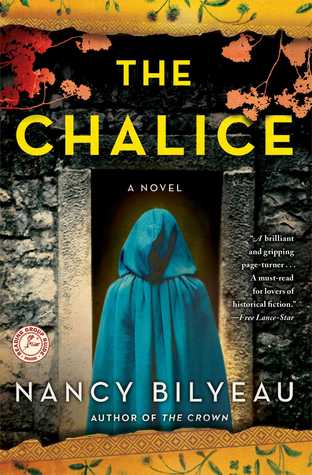
The new novel The Chalice, by Nancy Bilyeau, sends readers on a page-turning historical quest. Set in Henry VIII's England, the story is driven by plot twists, deceptions, spiritual searching and romantic tension. Readers fall in love with protagonist Joanna Stafford, a Catholic novice forced to leave her priory and find her answers. "She is strong and determined and very likable," says one blogger. "Exhilarating," says Good Housekeeping, and "The novel is riveting and provides fascinating insight into into the lives of displaced nuns and priests, with fully realized characters," says RT Book Reviews. Launching in paperback on March 18 and available in ebook too.

The Chalice

The Chalice
by Nancy Bilyeau

Publication Date: March 18, 2014
Touchstone Publishing
Paperback; 496p
ISBN-10: 1476708665

Series: Joanna Stafford, Book Two
Genre: Historical Mystery

READ AN EXCERPT.

Between the crown and the cross stands one woman...

IN 1538, ENGLAND is in the midst of bloody power struggles that threaten to tear the country apart. Aristocrat-turned-novice Joanna Stafford knows what lies inside the king’s torture rooms and risks imprisonment when she is caught up in an international plot targeting the king. As the power plays turn vicious, Joanna understands she may have to assume her role in a prophecy foretold by three different seers.

Joanna realizes the life of Henry VIII, as well as the future of Christendom, are in her hands—hands that must someday hold the chalice that lies at the center of these deadly prophecies...

Praise for The Chalice


"A brilliant and gripping page-turner…A fascinating blend of politics, religion, mysticism and personal turmoil. Well-researched and filled with sumptuous detail, it follows Joanna’s early life from Bilyeau’s dĂ©but novel, The Crown, but this book easily stands on its own. Bilyeau fills in the blanks from her earlier work while leaving the reader both wanting to read the first book and eagerly awaiting the next. This is a must-read for lovers of historical fiction." – Free Lance-Star

"English history buffs and mystery fans alike will revel in Nancy Bilyeau's richly detailed sequel to The Crown." – Parade

"The novel is riveting, and provides fascinating insight into the lives of displaced nuns and priests during the tumultuous Tudor period. Bilyeau creates fully realized characters, with complex actions and emotions, driving the machinations of these historic personages." – RT Book Reviews, (Top Pick)

"The human and political battles of Henry VIII's reformation are brought to exhilarating life in The Chalice by Nancy Bilyeau." – Good Housekeeping UK, April 2014

"Bilyeau sends her plucky former novice back into the intrigue-laden court of Henry VIII." – Entertainment Weekly

"Bilyeau continues from her first novel the subtle, complex development of Joanna’s character and combines that with a fast-paced, unexpected plot to hold the reader’s interest on every page . . . history and supernatural mysticism combine in this compelling thriller." – Historical Novel Society

"Joanna Stafford is a young novice caught up in power struggles familiar to readers of Hilary Mantel and C.J. Sansom, but with elements of magic that echo the historical thrillers of Kate Mosse." – S.J. Parris, author of 'Heresy,' 'Prophecy' and 'Sacrilege'

"[A] layered book of historical suspense." – Kirkus Reviews

"The Chalice is an engrossing mix of the complicated politics of the Reformation with the magical elements of the Dominican order, and Joanna--fiery, passionate, determined to honor what she thinks God wants her to do--is a fascinating character. Fans of historical mysteries, Tudor politics and supernatural fiction will all be pleased by the broad scope, quick-moving plot and historical integrity of Bilyeau's second novel." – Shelf Awareness

Watch the Book Trailer


)

Buy the Book


Amazon
Barnes & Noble
Books-a-Million
IndieBound
Simon & Schuster

About the Author
Nancy Bilyeau

Nancy Bilyeau has worked on the staffs of InStyle, Rolling Stone, Entertainment Weekly, and Ladies Home Journal. She is currently the executive editor of DuJour magazine. Her screenplays have placed in several prominent industry competitions. Two scripts reached the semi-finalist round of the Nicholl Fellowships of the Academy of Motion Pictures Arts and Sciences. Her screenplay "Zenobia" placed with the American Zoetrope competition, and "Loving Marys" reached the finalist stage of Scriptapalooza. A native of the Midwest, she earned a bachelor's degree from the University of Michigan. THE CROWN, her first novel, was published in 2012; the sequel, THE CHALICE, followed in 2013.

Some earlier milestones: In 1661, Nancy's ancestor, Pierre Billiou, emigrated from France to what was then New Amsterdam when he and his family sailed on the St. Jean de Baptiste to escape persecution for their Protestant beliefs. Pierre built the first stone house on Staten Island and is considered the borough's founder. His little white house is on the national register of historic homes and is still standing to this day.

Nancy lives in New York City with her husband and two children.

Author Links


Website
Blog
Facebook
Twitter
Pinterest
Goodreads

Sign up for Nancy Bilyeau's Newsletter.

Nancy Bilyeau Gives an Inside Peek Behind THE CHALICE


Book Blast Schedule


Tuesday, March 18
A Book Geek
Kinx's Book Nook
Passages to the Past
Book Lovers Paradise
To Read or Not to Read
Oh, for the Hook of a Book
Historical Fiction Obsession


Wednesday, March 19
Closed the Cover
A Chick Who Reads
The True Book Addict
A Dream within a Dream


Friday, March 21
A Bookish Affair
The Maiden's Court
Let Them Read Books
Historical Fiction Connection


 photo 904c6cb0-05eb-4f67-919a-4bd6105034ca.png

Giveaway

To enter to win one of 10 copies of The Chalice please complete the Rafflecopter giveaway form below. Giveaway is open to US residents only.

Giveaway will run from March 17-21. You must be 18 or older to enter.
Winners will be chosen via Rafflecopter on March 22 and notifiied via email.
Winners have 48 hours to claim prize or new winner is chosen.

a Rafflecopter giveaway

February 20, 2014

Nancy Bilyeau's The Chalice - Book Blast

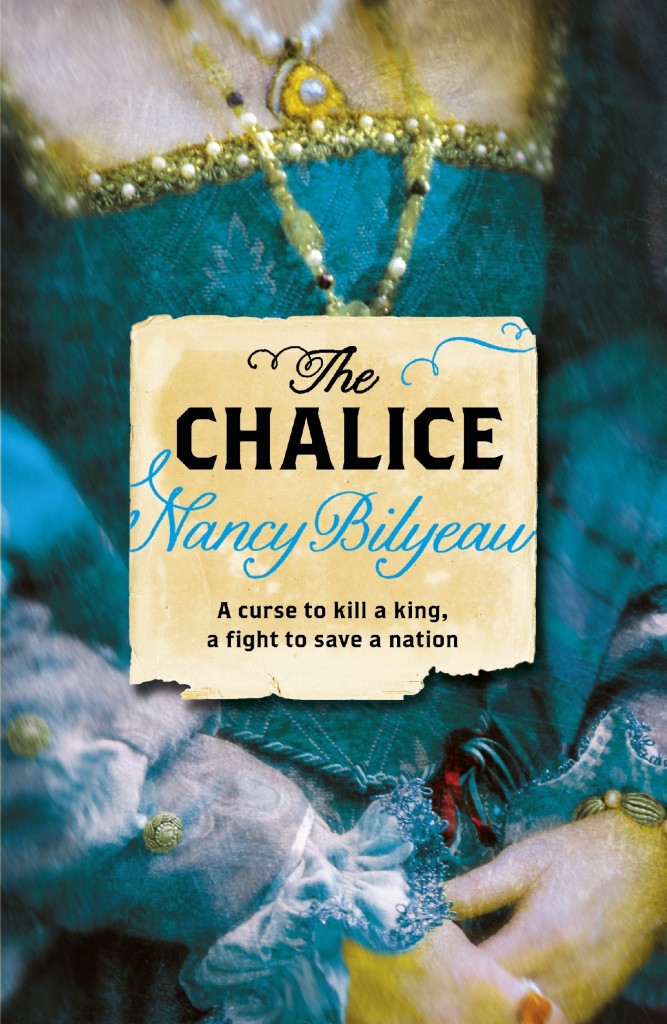
The Chalice UKThe Chalice
by Nancy Bilyeau

Paperback Publication Date: February 13, 2014
Orion Publishing
Paperback; 432p
ISBN-13: 978-1409135807

Series: Joanna Stafford, Book Two
Genre: Historical Mystery

A curse to kill a king, a fight to save a nation. Follow young Joanna Stafford right into the dark heart of King Henry VIII's court in this stunning Tudor thriller.

England, 1538. The nation is reeling after the ruthless dissolution of the monasteries by King Henry VIII.

Cast out of Dartford Priory, Joanna Stafford - feisty, courageous, but scarred by her recent encounter with rebellion at court - is trying to live a quiet life with her five-year-old charge, Arthur. But family connections draw her dangerously close to a treasonous plot and, repelled by violence and the whispered conspiracies around her, Joanna seeks a life with a man who loves her. But, no matter how hard she tries, she cannot escape the spreading darkness of her destiny. She must make a choice between those she cares for most, and taking her part in a mysterious prophecy foretold by three compelling seers.

Joanna embarks upon a testing journey, and, as she deciphers the meaning at the core of the prophecy, she learns that the fate of a king and the freedom of a nation rest in her hands.

Praise for The Chalice

"Expect treason, treachery, martyrs and more." — Choice magazine

"A time in which no one at all can be trusted and everyday life is laced with horror. Bilyeau paints this picture very, very well." — Reviewing the Evidence

"Bilyeau creates the atmosphere of 1530s London superbly." — Catholic Herald

"Bilyeau continues from her first novel the subtle, complex development of Joanna Stafford's character and combines that with a fast-paced, unexpected plot to hold the reader's interest on every page. — Historical Novel Society

"Joanna Stafford is a young novice caught up in power struggles familiar to readers of Hilary Mantel and C.J. Sansom, but with elements of magic that echo the historical thrillers of Kate Mosse." — S.J. PARRIS, author of HERESY, PROPHECY, AND SACRILEGE

"Second in this compelling and highly readable Tudor thriller series following the 16th century adventures of (now cast out) nun Joanna Stafford. Treason, conspiracies and a dangerous prophecy draw Joanna back from the quiet life she had made for herself after being cast out of Dartford Priory - but she isn’t prepared for the gravity of the situation she finds herself in or the responsibility she now holds. Nancy Bilyeau has followed up her impressive debut with an accomplished historical thriller perfect for fans of C. J. Sansom, Philippa Gregory and S. J. Parris." — Lovereading UK

“Sharply observed, cleverly paced and sympathetically written, this book more than fulfils the promise of THE CROWN, itself named as last year's most impressive debut novel by the CWA Ellis Peters judges. If Joanna Stafford is to return to see out the final years of Henry's tempestuous reign and the accession of his Catholic daughter Mary, I am sure I will not be alone in waiting eagerly for her.” — crimereview.co.uk

“A stunning debut. One of the best historical novels I have ever read — ALISON WEIR

THE CHALICE offers a fresh, dynamic look into Tudor England's most powerful, volatile personalities: Henry VIII, the Duke of Norfolk, Stephen Gardiner and Bloody Mary Tudor. Heroine and former nun Joanna Stafford is beautiful, bold and in lethal danger. Bilyeau writes compellingly of people and places that demand your attention and don't let you go even after the last exciting page” — KAREN HARPER, bestselling author of MISTRESS OF MOURNING

“Rarely have the terrors of Henry VIII's reformation been so exciting. Court intrigue, bloody executions, and haunting emotional entanglements create a heady brew of mystery and adventure that sweeps us from the devastation of the ransacked cloisters to the dangerous spy centers of London and the Low Countries, as ex-novice Joanna Stafford fights to save her way of life and fulfill an ancient prophecy, before everything she loves is destroyed.” — C.W. GORTNER, author of THE QUEEN'S VOW

“Bilyeau paints a moving portrait of Catholicism during the Reformation and of reclusive, spiritual people adjusting to the world outside the cloister. This intriguing and suspenseful historical novel pairs well with C. J. Sansom's Dissolution (2003) and has the insightful feminine perspective of Brenda Rickman Vantrease's The Heretic's Wife (2010).” — BOOKLIST

“As in The Crown, Bilyeau's writing style means that the story reads almost flawlessly. The narrative really makes the reader throw themselves into the story, and makes it so the book is really difficult to put down. I was really very impressed with Bilyeau's writing (As I was in The Crown), and honestly can't recommend this book highly enough.” — LOYALTY BINDS ME

“THE CHALICE is a compelling and pacey time machine to the 16th Century. And when you're returned to the present, you'll have enjoyed an adventure and gained a new perspective on a past you'd wrongly thought to be a done deal.” — Andrew Pyper, author of THE DEMONOLOGIST

“The Chalice is a gripping, tightly-plotted mystery, with a beguiling heroine at its heart, that vividly conjures up the complex dangers of Reformation England. Bilyeau's deftness of touch and complete control over her complex material make for a truly exciting and compelling read.”— ELIZABETH FREMANTLE author of QUEEN'S GAMBIT

“THE CHALICE is brimming with sinister portents, twisted allegiances, religious superstition and political intrigue. It's a darkly fascinating Tudor brew that leaves you thirsting for more.” — PATRICIA BRACEWELL, author of SHADOW ON THE CROWN

Watch the Book Trailer


Buy the Book


Amazon UK
Book Depository
Orion Publishing
Waterstones


About the Author

Nancy BilyeauNancy Bilyeau has worked on the staffs of InStyle, Rolling Stone, Entertainment Weekly, and Ladies Home Journal. She is currently the executive editor of DuJour magazine. Her screenplays have placed in several prominent industry competitions. Two scripts reached the semi-finalist round of the Nicholl Fellowships of the Academy of Motion Pictures Arts and Sciences. Her screenplay "Zenobia" placed with the American Zoetrope competition, and "Loving Marys" reached the finalist stage of Scriptapalooza. A native of the Midwest, she earned a bachelor's degree from the University of Michigan. THE CROWN, her first novel, was published in 2012; the sequel, THE CHALICE, followed in 2013.

Some earlier milestones: In 1661, Nancy's ancestor, Pierre Billiou, emigrated from France to what was then New Amsterdam when he and his family sailed on the St. Jean de Baptiste to escape persecution for their Protestant beliefs. Pierre built the first stone house on Staten Island and is considered the borough's founder. His little white house is on the national register of historic homes and is still standing to this day.

Nancy lives in New York City with her husband and two children.


Author Links

Website
Blog
Facebook
Twitter
Pinterest
Goodreads
Sign up for Nancy Bilyeau's Newsletter.

Nancy Bilyeau Gives an Inside Peek Behind THE CHALICE


Book Blast Schedule


Monday, February 17
Mari Reads
Book Drunkard
Closed the Cover
Historical Tapestry
Royalty Free Fiction
Passages to the Past
Just One More Chapter

Tuesday, February 18
Princess of Eboli
Words and Peace
Big Book, Little Book
Curling Up By the Fire
Peeking Between the Pages
Oh, For the Hook of a Book
Historical Fiction Obsession

Wednesday, February 19
Broken Teepee
Kincavel Korner
A Bookish Affair
CelticLady's Reviews
The True Book Addict
Teresa's Reading Corner

Thursday, February 20
Drey's Library
Booktalk & More
Must Read Faster
Reading the Ages
The Maiden's Court
Historical Fiction Connection
Sharon's Garden of Book Reviews

Friday, February 21
HF Book Muse-News
On the Tudor Trail
Flashlight Commentary
Ageless Pages Reviews
Muse in the Fog Book Reviews
Confessions of an Avid Reader

 photo 8d69ec32-0ed9-4d41-a9de-0454da321c2c.png

June 18, 2013

(Giveaway) The Altarpiece (The Cross and The Crown Series, #1) by Sarah Kennedy

Knox Robinson Publishing, March 2013
The Altarpiece (The Cross and The Crown Series, #1) by Sarah Kennedy
It is 1535, and in the tumultuous years of King Henry VIII's break from Rome, the religious houses of England are being seized by force. Twenty-year-old Catherine Havens is a foundling and the adopted daughter of the prioress of the Priory of Mount Grace in a small Yorkshire village. Catherine, like her adoptive mother, has a gift for healing, and she is widely sought and admired for her knowledge.

Catherine’s hopes for a place at court have been dashed by the king’s divorce, and she has reluctantly taken the veil. In the remote North, the nuns enjoy the freedoms unavailable to other women. England is their home, but the times have changed, and now the few remaining nuns dread the arrival of the priory’s new owner, Robert Overton. When the priory’s costly altarpiece goes missing, Catherine and her friend Ann Smith find themselves under increased suspicion.

King Henry VIII’s soldiers have not had their fill of destruction, and when they return to Mount Grace to destroy the priory, Catherine must choose between the sacred calling of her past and the man who may represent her country’s future.


Why Margery Kempe? 


When I tell people that I am fascinated by the medieval mystic Margery Kempe, and that I have given a copy of her autobiography to my fictional nun, Catherine Havens, in my novel The Altarpiece, they often ask, “Why?” Why not her more subdued contemporary, Julian of Norwich, who assured us that “all manner of thing shall be well”?

Well, in Henry VIII’s England, all was not well, and Margery Kempe was, for me, the mystic for the Tudor era. The historical monastery at Mount Grace, which I used as the setting for my novel, actually did have a copy of the Book of Margery Kempe! My nun, Catherine, insists on the value of this early story of a self-determined mother, and it’s a good thing that people like Catherine existed, because we now recognize the Book of Margery Kempe as the one of the first autobiographies by an English woman. Margery’s life was actually recorded by monks, because Margery herself was apparently illiterate. It begins when Margery has had her first child and falls into what we would now call post-partum depression. A priest is called to hear her confession, and when he fails to pardon her, she falls into such a state that she must be tied to her own bed. Jesus appears to her, saying “Why hast thou forsaken me and I forsook never thee?” After this vision, Margery regains her wits.

Over the years, Margery starts several businesses (they all fail) and has fourteen children. She separates from her husband and goes on pilgrimage to Jerusalem. She’s robbed and abandoned by her maid while they’re in Rome. She meets up with an Irish hunchback named Richard, who kindly accompanies her home. Oh, and she’s dragged to York to be tried for heresy.

Pretty exciting, isn’t it? So why don’t more readers love brash, independent Margery? It’s the weeping bit. Margery developed “holy tears,” and while it may sound lovely, the condition was a constant annoyance to her neighbors. She also refers to Jesus as her “husband” and invites him into her bed for lovemaking. People tend to get very squirmy when they read these passages, and some are downright offended.

It’s important to remember, though, that in the Middle Ages and early Renaissance the notion of being a “bride of Christ” was a European metaphor for humanity’s relationship to the divine. All of humankind was seen either as a collective child to the parents of the Godhead or as the collective wife to Christ. This “feminized” humanity—even as it laid the path for the decreased power of wives after the Reformation, when the position of men in families was enhanced to fill the role vacated by priests.

In Margery Kempe’s time, Christ was commonly thought of as the husband of the church, and she takes this metaphor to its literal meaning. Margery may not be able to run a business, but she can be loved by God as passionately as any human being. And she maintains that her life is as worth recording as anyone’s, even down to the last days of her marriage, when she moves back in with her husband, now grown incontinent and feeble-minded, until his death. Margery Kempe was unashamed of compassion and of her ability to experience the divine physically.

This combination of compassion for others and confidence in her female self is what my nun Catherine values in Margery Kempe. Was Margery crazy? Maybe. But if she was, her “insanity” was caused by a holiness so intense that the banal world could not contain it.

  Author bio:
Sarah Kennedy is a professor of English at Mary Baldwin College in Staunton, Virginia and the author of seven books of poems. She holds a PhD in Renaissance Literature and an MFA in Creative Writing. Sarah has received grants from both the National Endowment for the Arts and the Virginia Commission for the Arts and is currently a contributing editor for Shenandoah. Sarah will publish a series of novels with Knox Robinson centering around the sixteenth century closure of the monasteries and convents of England by King Henry VIII. You may be able to meet her at some of the events she'll be attending this summer.

~~~~~~~~~~GIVEAWAY!~~~~~~~~~~
Open to HF-Connection followers in USA, the author's publicist is offering a giveaway of The Altarpiece to one lucky winner! Enter via the Rafflecopter form below. Please take note that there are TWO mandatory entries in order to be considered for the raffle.

a Rafflecopter giveaway